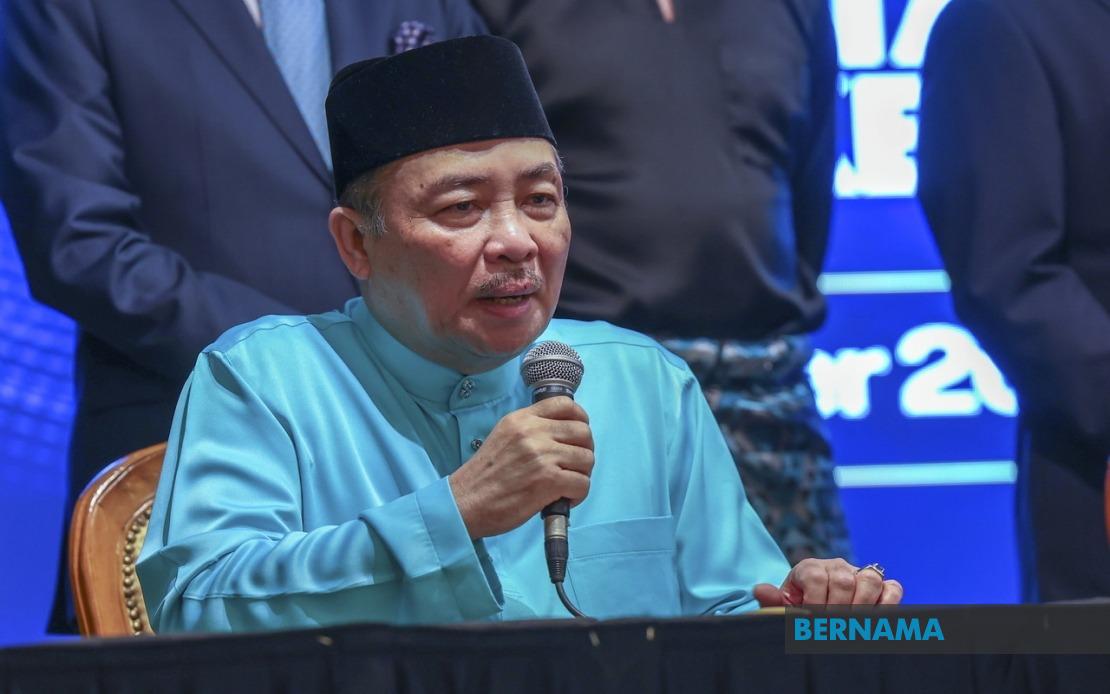
Sabah Chief Minister Datuk Seri Hajiji Noor has announced a substantial investment in human capital development through education, with the state government dedicating more than RM100 million to scholarships in the current financial year. The commitment addresses both the continuation of existing support and the expansion of opportunities, enabling 2,182 new students to access state-funded educational assistance alongside the 13,389 already enrolled in the Sabah State Government Scholarship (BKNS) programme.
The scale of this investment underscores Sabah's strategic positioning on education as a cornerstone of state progress and economic competitiveness. Hajiji framed the scholarship allocation as integral to the broader development agenda, emphasising that education creates the skilled workforce necessary for driving industrial advancement and attracting investment to the state. This perspective aligns with Malaysia's national emphasis on producing graduates capable of contributing to high-value economic sectors and emerging industries that demand technical expertise and innovation.
Among the priority fields receiving enhanced focus through these scholarships are science, technology, engineering and mathematics disciplines. The state government's deliberate channelling of resources towards STEM subjects reflects recognition that these fields remain critical for addressing skills gaps in Malaysia's labour market and positioning Sabah to participate in regional economic opportunities. As Southeast Asian economies undergo digital transformation and compete for talent in technology-driven sectors, states investing early in STEM education capability are positioning themselves to capture higher-value employment and entrepreneurial opportunities.
Beyond the primary BKNS scheme, Sabah has developed a comprehensive ecosystem of education assistance programmes introduced since 2021 to address multiple barriers students face. These initiatives include one-off grants for higher education registration through the BUDI programme, special examination assistance via BAKTI, computer provision through BAIK, subsidised air travel for students through GRS-SUBFLY, and ongoing higher education contribution support under SENTOSA. This diversified approach acknowledges that financial barriers extend beyond tuition fees to encompass registration costs, examination expenses, technology access and travel — particularly significant challenges in a state where geographic dispersal creates logistical complications for students pursuing tertiary education.
The timing of this scholarship expansion carries particular relevance given Malaysia's cost-of-living pressures affecting households across income strata. Hajiji explicitly linked the scholarship programme to alleviating financial strain on students and families contending with rising education and living expenses. For many Sabahan families, especially in rural and semi-urban areas, such comprehensive support removes critical barriers that might otherwise prevent talented students from progressing to higher education, thereby ensuring talent is not lost through financial constraint rather than academic merit.
The Chief Minister's emphasis on nurturing graduates for strategic future sectors reveals forward-looking economic planning. His identification of oil, gas and energy industries as priorities reflects Sabah's resource-based economy and the state's continued reliance on hydrocarbon revenues, while simultaneously acknowledging that technical and vocational education training (TVET) remains essential for developing a skilled trades workforce. Most significantly, his inclusion of artificial intelligence as a strategic focus area signals Sabah's recognition that emerging technologies will reshape employment patterns and competitive advantage in the coming decade.
This scholarship investment carries implications extending beyond individual student advancement. By committing substantial budgetary resources to education, Sabah is making a public statement about long-term priorities and development philosophy during a period when state resources face competing demands. Education spending generates multiplier effects across the economy through graduate earnings, improved household incomes, and tax contributions — benefits that accumulate over decades and strengthen fiscal foundations. For a resource-dependent state, building human capital represents a hedge against commodity price volatility and a foundation for economic diversification.
The reach of the BKNS programme, now supporting over 13,000 students across all education levels, demonstrates scale that shapes demographic cohorts and influences educational pathways for significant portions of Sabah's youth population. When scholarship programmes achieve this scale, they influence labour market outcomes, career choices, and ultimately the talent pool available to employers. Sabah's investment therefore serves both immediate poverty alleviation and medium-term workforce development objectives simultaneously.
Contextually, this scholarship initiative reflects a pattern across Malaysian states of increasing emphasis on education funding as demographic realities and global competition intensify pressure to improve educational outcomes. As younger cohorts shrink relative to older populations, states competing for talent must invest in education quality and accessibility to retain human resources. Sabah's approach demonstrates recognition that attracting and retaining talent requires making education affordable and accessible, particularly in competitive fields that offer multiple geographic options.
The diversity of beneficiaries across education levels — from secondary through tertiary and vocational training — ensures the scholarship system addresses the entire educational pipeline rather than focusing narrowly on university-bound students. This comprehensive approach acknowledges that quality vocational and technical education produces graduates equally valuable to employers and economic development, while expanding pathways for students with varying academic orientations and career aspirations.
Looking forward, the sustainability of such programmes depends on consistent budgetary allocation and programme administration quality. As education costs continue escalating and demand for scholarships likely grows, maintaining the breadth and depth of assistance requires long-term fiscal commitment. For Malaysian policymakers monitoring education investment trends across states, Sabah's sustained allocation provides a model of prioritising human capital development despite competing fiscal pressures.
The Chief Minister's statement reflects broader recognition among Malaysian political leadership that education represents not merely social spending but strategic investment in state capacity and competitiveness. By expanding scholarship access while prioritising emerging fields and strategic industries, Sabah is attempting to shape its future labour force composition and economic capabilities. Whether these investments yield expected returns in terms of employment outcomes and economic growth will depend substantially on complementary factors including education quality, workplace demand for graduates, and broader economic conditions affecting job creation.

