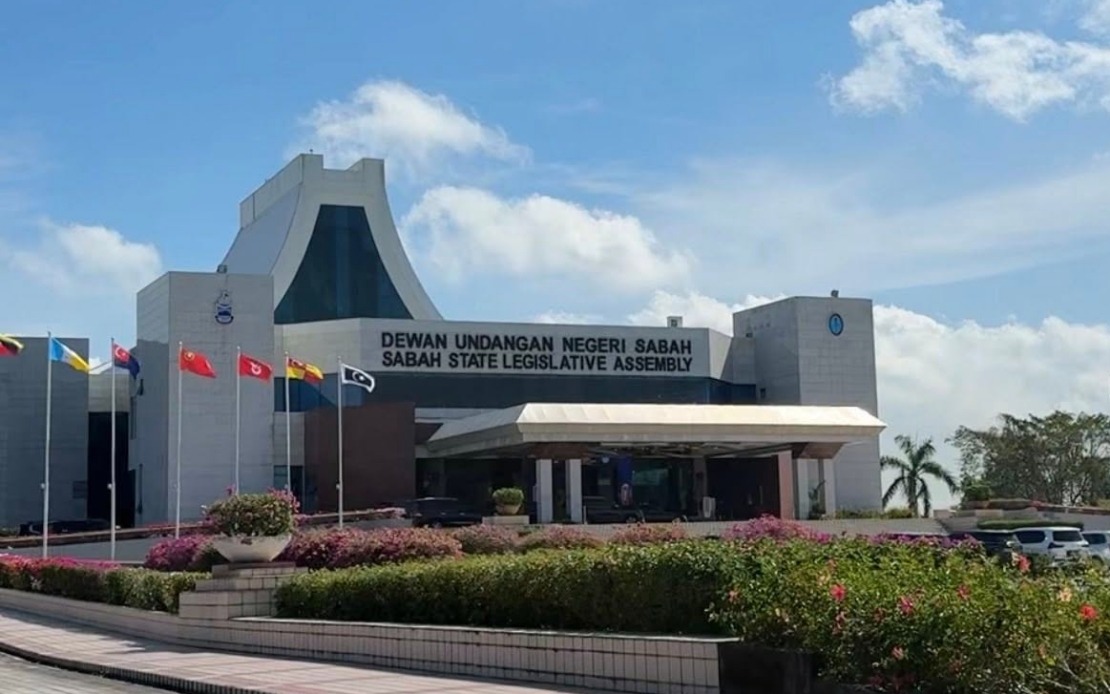
The Sabah Legislative Assembly has successfully enacted two landmark pieces of legislation that reshape how Islamic inheritance matters and indigenous dispute resolution operate within the state. Passed on July 22, both the Muslim Succession Bill 2026 and the Native Courts Bill 2026 represent substantive reforms to legal frameworks that have either never existed in their current form or operated largely unchanged for decades. The measures reflect Sabah's determination to align its judicial institutions with contemporary governance standards while maintaining cultural and religious integrity, a balancing act of particular significance for Malaysia's only Muslim-majority state in Borneo.
The Muslim Succession Bill 2026 breaks new constitutional ground as Malaysia's first comprehensive legislation dedicated exclusively to the administration of Muslim estates under Syariah Court jurisdiction. Unlike federal provisions that operate across diverse legal contexts, this enactment tailors Islamic succession law specifically to Sabah's demographics and administrative structures. Minister Datuk Dr Mohd Arifin Arif, who steered both bills through the assembly as Local Government and Housing Minister while holding the Islamic Affairs portfolio, articulated four foundational objectives underpinning the legislation. The framework prioritises systematic administration of inheritance, ensuring that the complex process of distributing a deceased Muslim's estate proceeds with clarity and legal certainty rather than ambiguity or procedural delays.
Protecting the legitimate interests of all heirs represents the second pillar of the Bill's design. Islamic inheritance law, grounded in Quranic principles, mandates specific distributions among spouses, children, parents, and extended relatives according to established shares. The legislation formalises mechanisms ensuring these entitlements are honoured, preventing scenarios where estate administrators exploit their position to favour certain beneficiaries or misappropriate assets. This protection extends beyond immediate family to encompass other parties holding legitimate claims or interests in an estate, acknowledging that complex modern estates often involve trusts, business partnerships, and creditor interests that cannot be ignored.
Streamlining administration according to Syariah principles constitutes the third objective. By creating a dedicated legal framework, the Bill eliminates uncertainty about which procedures must be followed and which authorities possess decision-making power. Administrators of Muslim estates can now reference clear guidelines, reducing the likelihood of costly disputes or challenges based on procedural irregularities. This administrative efficiency benefits not only the estates themselves but the broader community, as faster, more certain processes allow heirs to receive their inheritance and move forward with financial planning and family arrangements without prolonged legal limbo.
Enforcement mechanisms form the legislation's fourth dimension, addressing a perennial weakness in estate administration: the concealment, misuse, or unauthorised disposal of assets. The Bill establishes monitoring and compliance requirements that deter administrators from diverting estate property for personal benefit, a concern that takes on heightened importance when dealing with substantial assets or vulnerable heirs such as children or spouses dependent on inheritance. This enforcement architecture signals that legitimate heirs have legal recourse if administrators breach their fiduciary duties.
The Native Courts Bill 2026 represents an equally transformative development for Sabah's customary justice system, which had operated under legislation unchanged since 1992. Over three decades, Malaysian society and judicial practice have evolved substantially, yet Sabah's native courts operated with structures and procedures designed for a vastly different era. The new enactment modernises this system without abandoning the cultural foundations upon which it rests—a particularly delicate task in a state where indigenous peoples comprise a significant portion of the population and customary law remains central to their governance and dispute resolution traditions.
The reformed courts hierarchy introduces three tiers: the Native District Court handling initial disputes, the Native High Court providing appellate review, and the Native Court of Appeal offering final recourse. This tiered structure mirrors Malaysia's secular court system and provides litigants with meaningful opportunities for review, reducing the risk that initial judicial errors become final judgments. Previously, the system lacked this graduated review mechanism, potentially entrenching injustices or allowing poor legal reasoning to become unreviewable precedent. The new architecture reflects modern judicial best practices while remaining contextualised to Sabah's unique cultural and legal environment.
A crucial innovation concerns judicial appointments. Historically, native court judges were selected primarily on the basis of administrative position—individuals elevated because they held executive office rather than because they demonstrated particular expertise in customary law or judicial temperament. The reformed system establishes a Native Judicial Appointments Advisory Committee charged with evaluating candidates through multiple criteria: transparency of process, merit-based assessment, formal qualifications, practical experience in customary matters, substantive knowledge of native law, and personal integrity. This represents a significant professional upgrade, signalling that judicial work requires specialised expertise not automatically conferred by administrative rank.
For Malaysian and Southeast Asian readers, these reforms carry broader implications. Sabah's legislative agenda demonstrates how regional jurisdictions can modernise legal institutions while preserving cultural distinctiveness—a challenge facing numerous societies across the region wrestling with tensions between tradition and contemporary governance standards. The Muslim Succession Bill offers a model for how Islamic-majority jurisdictions can formalise inheritance administration without importing wholesale foreign legal concepts, instead rooting reform in religious principles interpreted through modern administrative methodology. Similarly, the native courts reform illustrates how indigenous legal systems can gain professional credibility and institutional coherence without abandoning their customary foundations.
The passage of both bills followed substantial parliamentary debate, with five assemblymen discussing the Muslim Succession measure and twelve engaging with the native courts proposal, suggesting these were not rubber-stamp exercises but substantively contested measures receiving genuine legislative scrutiny. The debate occurred under the watch of State Assembly Speaker Datuk Seri M Kadzim Yahya and Deputy Speaker Datuk Richard Wong We Kong, ensuring procedural propriety and parliamentary oversight. This deliberative process lends legitimacy to the final enactments.
For practitioners, legal professionals, and members of Sabah's diverse communities, these bills represent substantial operational changes requiring careful study and transition management. Estate administrators must understand new obligations and procedures; native court officials require training in reformed hierarchical structures and appointment criteria; and heirs, litigants, and indigenous peoples must recognise that the legal landscape has shifted significantly. Implementation will prove as important as enactment, requiring clear guidelines, adequate resourcing, and judicial education programs ensuring that the legislation's aspirations translate into practice.

