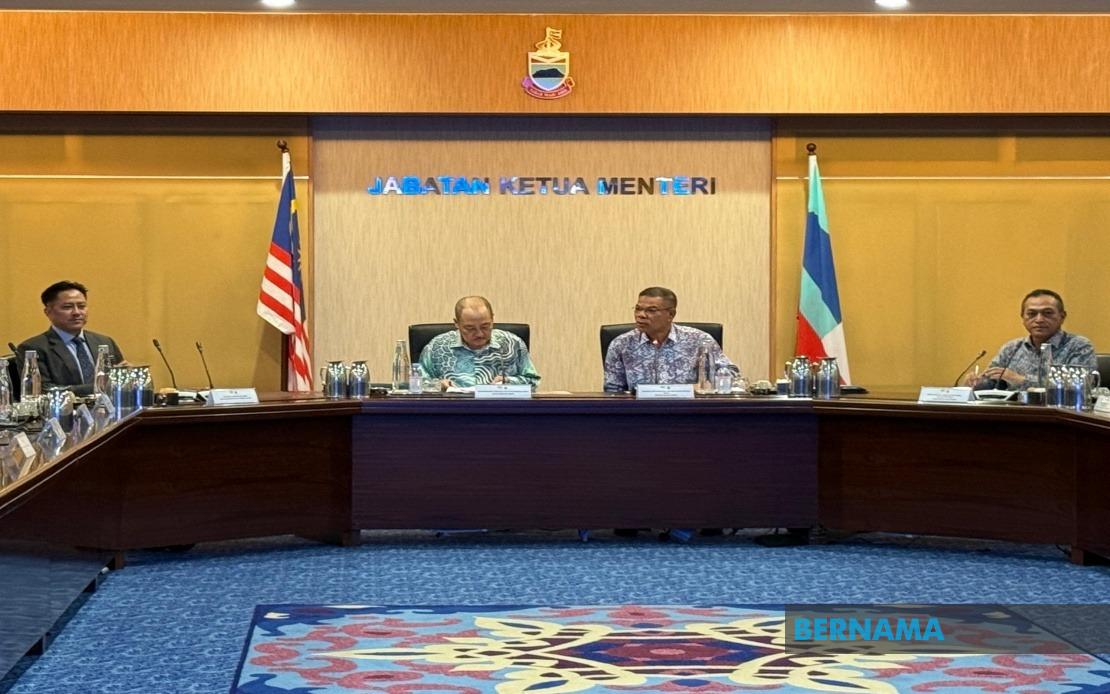
Sabah's leadership is mounting a coordinated diplomatic campaign aimed at persuading foreign governments to soften their travel warnings for the state's eastern region, citing substantial improvements in security conditions and operational effectiveness. Chief Minister Datuk Seri Hajiji Noor emphasised during a strategic security meeting in Kota Kinabalu that direct communication channels with international missions must be leveraged to highlight the positive trajectory of safety in Eastern Sabah, particularly regarding the complete absence of kidnap-for-ransom incidents since the start of 2020.
The push reflects a broader recognition that travel advisories, regardless of their basis in current security assessments, can severely constrain economic activity and undermine recovery efforts in regions seeking to rebuild international tourism. Foreign governments typically issue and maintain travel warnings as a precautionary measure, often lagging behind ground-level improvements due to the conservative institutional approach to citizen safety. Sabah's initiative seeks to narrow this gap through what officials describe as "effective communication" with foreign embassies and high commissions, presenting concrete evidence of security milestones achieved over the past several years.
Hajiji's statement underscores a critical linkage between security perception and economic opportunity for Malaysian regions. Eastern Sabah, encompassing coastal areas and islands historically vulnerable to cross-border maritime threats, has long struggled with its international reputation despite strengthened enforcement. The Chief Minister's recent inspection tour of six islands with security installations served as a fact-finding mission to validate operational readiness and assess the physical infrastructure supporting the security apparatus.
The Eastern Sabah Security Zone, commonly referred to as the ESS Zone, represents one of Malaysia's most strategically sensitive areas. The zone operates under a dedicated command structure, ESSCOM, which coordinates between multiple federal and state agencies including the Royal Malaysia Police, Malaysian Armed Forces, and Malaysian Maritime Enforcement Agency. This integrated approach has reportedly yielded measurable results, with security forces maintaining what officials characterise as a zero-kidnapping record stretching across six years.
The timing of Sabah's diplomatic initiative aligns with a high-level security coordination meeting co-chaired by Home Minister Datuk Seri Saifuddin Nasution Ismail, signalling that the federal government supports state-level efforts to reshape international perceptions. This alignment demonstrates the strategic importance placed on Eastern Sabah's security profile at both governmental levels, particularly as Malaysia seeks to maintain its position as a reliable destination for international visitors and investors.
From an economic perspective, travel advisories function as powerful deterrents that ripple through multiple sectors. Tourism operators, hospitality businesses, and maritime industries all experience reduced demand when foreign governments maintain elevated warnings, regardless of actual current risk levels. For Sabah, a state substantially dependent on tourism revenue and marine-based economic activities, the persistence of travel advisories represents a continuing economic penalty even as ground conditions have markedly improved.
The security achievements cited by Hajiji deserve contextual examination within Southeast Asia's maritime security landscape. The region has historically confronted challenges related to transnational organised crime, including piracy and kidnapping operations spanning international waters. The Philippines and Indonesia, neighbouring countries with significant maritime borders, have also undertaken substantial security operations to suppress similar activities. Sabah's apparent success in preventing kidnappings over six years reflects sustained investment in naval assets, intelligence capabilities, and cross-border cooperation.
The Chief Minister's recognition of security personnel contributions highlights the human dimension of these achievements. Personnel stationed along Sabah's frontier zones operate in demanding conditions, often far from urban centres and essential services. Hajiji's commitment to upgrading security assets and prioritising personnel welfare suggests an institutional understanding that sustained operational effectiveness depends on adequate resources and morale. This framing may also serve to bolster public support for continued government investment in security infrastructure.
For Malaysia's diplomatic community, the initiative presents an opportunity to demonstrate how improved security conditions should translate into revised policy assessments by foreign governments. The argument underlying Sabah's push rests on a rational proposition: that advisories should reflect current conditions rather than historical vulnerability patterns. Foreign ministries typically maintain conservative stances precisely because security threats can emerge unexpectedly, yet Sabah's uninterrupted six-year record without major incidents provides substantial empirical evidence supporting a reassessment.
The involvement of multiple federal and state security apparatus representatives at the joint committee meeting reinforces institutional commitment to the security mission and to the diplomatic objective of reshaping international perceptions. This unified approach reduces the likelihood of contradictory messaging reaching foreign diplomatic missions and increases the credibility of claims regarding improved conditions.
For Malaysian business and tourism stakeholders, the outcome of these diplomatic efforts carries direct implications. Reduced travel advisories would remove a significant barrier to visitor arrivals and potentially unlock investment in hospitality and tourism infrastructure. The Sabah government's proactive engagement with international missions represents recognition that improved security conditions alone prove insufficient; reputational rehabilitation requires deliberate diplomatic effort to communicate progress to foreign audiences accustomed to older threat assessments.
The diplomatic push also reflects lessons learned elsewhere in Southeast Asia regarding the persistence of outdated security perceptions. Other countries have successfully negotiated advisory downgrades through sustained engagement with foreign governments and transparent reporting of security metrics. Sabah's emphasis on concrete achievements such as zero kidnappings, rather than generic claims of improvement, provides foreign missions with measurable benchmarks against which to reassess risk profiles.
Looking forward, Sabah's initiative may establish a template for how Malaysian states and the federal government coordinate to reshape international security perceptions. The effectiveness of this diplomatic campaign will likely influence how Malaysia approaches similar reputation challenges in other regions, while potentially serving as a case study for other Southeast Asian countries seeking to balance legitimate security concerns with the economic costs of outdated travel warnings.

