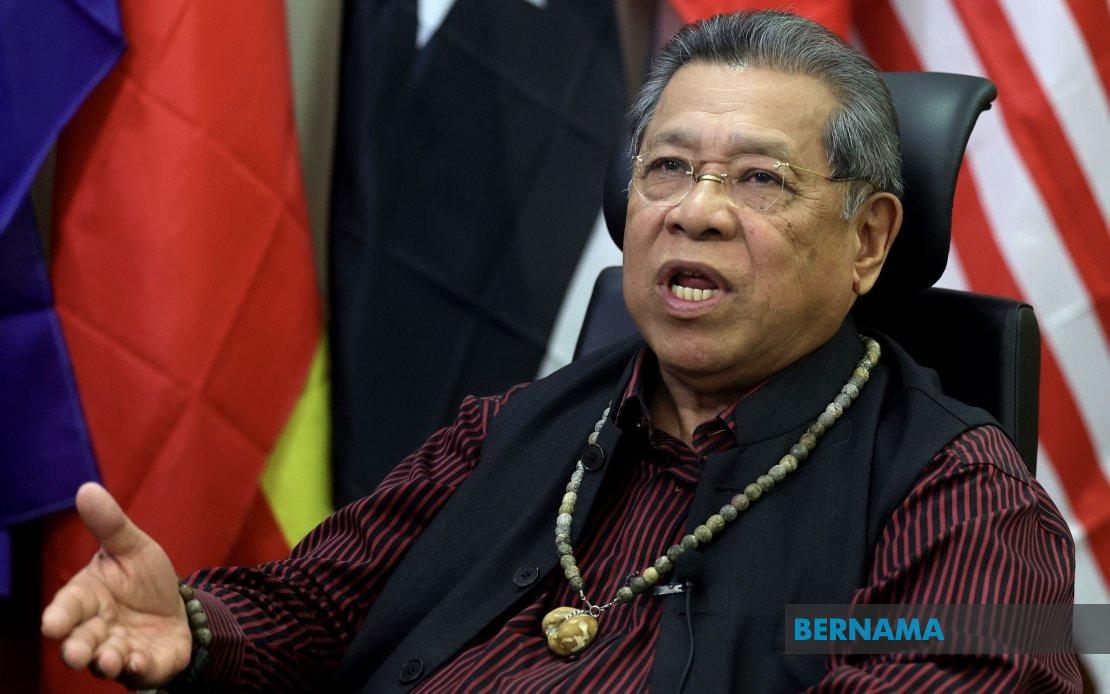
The Malaysian government's commitment to Sabah's development trajectory has intensified through a significant reallocation of federal resources, signalling a strategic pivot toward accelerating growth in the East Malaysian state. Speaking at the 2026 PKR National Congress in Melaka this week, United Sabah National Organisation (USNO) president Tan Sri Pandikar Amin Mulia underscored how increased federal funding would unlock a wave of development initiatives directly benefiting Sabahans and, by extension, strengthening Malaysia's broader economic performance.
Prime Minister Datuk Seri Anwar Ibrahim disclosed during his presidential policy address that federal allocations destined for Sabah have expanded dramatically by 35 per cent, climbing from RM13 billion in 2022 to RM17.6 billion in 2026. This trajectory represents a tangible shift in resource distribution, with the additional RM4.6 billion earmarked for projects spanning infrastructure, social services, and economic development across the state's diverse regions. For a state long positioned as economically peripheral to peninsular development corridors, the figures represent a meaningful opportunity to bridge investment gaps and modernise critical systems.
Pandikar Amin framed the funding increase within a broader political narrative, suggesting that the continuity of the MADANI administration—under Anwar Ibrahim's leadership—remains essential for both Malaysia's international standing and domestic stability. His endorsement reflects calculations within Sabah's political establishment about the risks and rewards of coalition alignment. By backing Anwar at a PKR congress, the USNO leader signals that Sabah's interests are being advanced through current government structures, a positioning that carries implications for inter-party negotiations and state-level coalition dynamics in the approach toward the next general election.
The Prime Minister's presentation directly addressed recurring criticism that certain states receive disproportionate attention or face deliberate resource starvation under the MADANI framework. Anwar countered such allegations by asserting that allocations reflect differentiated state priorities rather than arbitrary favouritism, and that increases have materialised across the board during his tenure. This rhetorical framing attempts to recast the distribution model as needs-based and transparent, though sceptics may note that perceptions of inequity often persist regardless of official narratives around allocation methodology.
For Sabah specifically, the enlarged federal envelope carries substantial practical ramifications. The state has historically struggled with infrastructure deficits—from road networks connecting rural areas to healthcare and educational facilities—that constrain economic diversification beyond commodity extraction. Additional federal capital can address bottlenecks in project delivery, permit simultaneous advancement of multiple initiatives, and create multiplier effects through employment and local procurement. The question for observers remains whether implementation will match aspiration, and whether project selection reflects technical merit or political patronage considerations.
The timing of this announcement carries strategic weight within Malaysia's political calendar. As speculation grows regarding potential snap elections and coalition realignments, the visible delivery of resources to Sabah serves dual purposes: it demonstrates government capacity to deliver on promises and strengthens the MADANI coalition's narrative of inclusive governance. For USNO and other Sabah-based parties, secured federal commitment provides leverage in negotiations about political alignment and cabinet representation, making the funding announcement less purely developmental and more instrumentally political.
Sabah's demographic and geographic circumstances lend particular urgency to coordinated infrastructure investment. The state comprises multiple constituencies with competing development needs—coastal commercial hubs requiring port modernisation, agricultural zones needing irrigation systems and market access, and interior regions facing chronic service delivery challenges. A RM4.6 billion injection, if deployed strategically, could catalyse transformative outcomes; conversely, dilution across too many competing projects risks modest incremental impacts without catalytic economic structural change.
The allocation increase also reflects broader Southeast Asian competitive dynamics. As Indonesia, Thailand, and other regional peers accelerate development spending to attract investment and talent, Malaysia faces pressure to demonstrate comparable commitment to emerging states. Sabah's advancement carries symbolic importance for Malaysian federal cohesion; perceptions of marginalisation fuel separatist sentiment and reduce cohesive national identity, particularly in ethnically diverse border regions. Strategic resource deployment thus serves state-building objectives alongside narrower political calculations.
Monitoring implementation will prove crucial for assessing the substance behind the funding announcement. Project timelines, budget execution rates, and local employment outcomes will determine whether the 35 per cent increase generates genuine transformative benefit or simply expands notional allocations without corresponding on-ground impact. Accountability mechanisms and transparency in project selection remain institutional gaps that, if unaddressed, risk converting expanded budgets into sources of patronage rather than development.
Pandikar Amin's public backing of the MADANI administration and its resource strategy reflects calculated judgement that Sabah's interests are currently best served through existing coalition arrangements. However, such political calculations shift with electoral cycles and inter-party negotiations. The federal government's sustained commitment to the announced funding levels—particularly if economic conditions tighten or national budget pressures intensify—will ultimately determine whether this initiative becomes a defining achievement or another announcement that fades during implementation.
Moving forward, stakeholders in Sabah would be prudent to establish independent monitoring of fund deployment, ensuring that project selection criteria are publicly articulated and adhered to. Community participation in priority-setting and project governance could enhance legitimacy and outcomes. The expanded federal allocation represents genuine opportunity; translating it into sustainable development outcomes requires vigilance beyond political rhetoric and commitment to institutionalised delivery mechanisms that transcend electoral cycles.

