Sabah has collected RM1.38 billion in state sales tax across its major economic sectors by the end of June this year, according to data presented to the State Legislative Assembly. The figure underscores the continued reliance of Sabah's fiscal framework on natural resource extraction, particularly the twin pillars of crude palm oil production and petroleum operations that together account for the vast majority of state-level tax revenues.
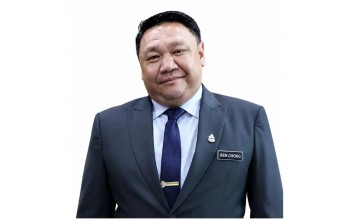
In a response delivered to the assembly on July 21, Sabah's Assistant Finance Minister Datuk Chong Chen Bin @ Ben Chong provided a detailed breakdown of where these collections originated. Crude palm oil, including palm biomass, generated the single largest contribution at RM703.55 million, reflecting the sector's longstanding importance to Sabah's economy. This figure reveals the continued dominance of the agricultural commodity in state finances, despite ongoing environmental debates and market volatility that characterise the global palm oil industry. The revenue stream demonstrates how central this sector remains to Sabah's ability to fund public services and infrastructure projects.
Petroleum products formed the second pillar of state tax revenues, contributing RM679.45 million to the treasury. This nearly equivalent revenue source highlights the geographic advantage Sabah possesses through its offshore hydrocarbon reserves and refining capacity. Together, these two sectors represent the foundation of Sabah's tax base, demonstrating the state's structural dependence on commodity exports and the inherent vulnerabilities this concentration carries. Fluctuations in global crude oil prices or demand for palm oil directly translate into revenue pressures for the state government.
By contrast, fishery commodities generated only RM4.22 million in state sales tax collections, a stark differential that reflects both the smaller economic footprint of marine product exports relative to oil and palm, as well as the potential for this sector to develop into a more significant revenue contributor. The disparity raises questions about whether Sabah's marine sector—abundant in resources given its extensive coastline—is being optimally developed or whether existing tax structures inadvertently disadvantage fishing and aquaculture industries.
Meanwhile, Sabah's forestry sector remains entirely exempt from state sales tax imposition, a policy decision that has remained in place despite the sector's historical significance to the region's economy. This exemption represents a conscious fiscal choice by the state government, though the reasoning behind the exclusion was not elaborated in the assembly response. The decision may reflect legacy arrangements from earlier periods or policy objectives to encourage forestry activities, but it effectively removes a potential revenue stream that other Malaysian states might seek to capture.
The question raising this revenue disclosure came from Datuk Donald Peter Mojuntin of Moyog, who sought transparency regarding tax collections across the state's primary economic sectors. The parliamentary query reflects broader legislative interest in understanding how state finances map onto different industries, particularly as economic diversification remains a stated policy goal for Sabah despite its overwhelming reliance on natural resources.
Looking ahead, Datuk Chong indicated that the state finance ministry intends to refine its approach to state sales tax policy. The ministry is developing a proposal to review state sales tax rates applicable to certain sectors with the explicit goal of enhancing competitiveness and strengthening Sabah's industrial base. This signals recognition that current tax structures may be inhibiting development in particular areas or creating disadvantages relative to competing jurisdictions. Any rate adjustments would need to balance revenue maintenance against the desire to make Sabah a more attractive location for business investment and industrial expansion.
Finance Minister Datuk Seri Masidi Manjun intervened in the assembly discussion to clarify the distinction between federal and state-level taxation, noting that the sales and service tax is imposed by the federal government while state sales tax remains a state government responsibility. This clarification is important for Malaysian readers accustomed to navigating both federal and state fiscal systems, as it delineates which revenue authorities control different tax streams. Masidi's additional comment that the state government is currently reviewing its own tax rates further indicates active policy work underway to reshape Sabah's fiscal landscape.
Separately, Education Minister Datuk James Ratib addressed preparations for admitting six-year-old students to Year One beginning in the 2027 school session, marking a significant structural change to Malaysia's education system. The Sabah State Education Department has undertaken comprehensive planning to accommodate younger entrants, including strategic deployment of newly qualified teachers from the Bachelor of Teaching Degree Programme and the Postgraduate Diploma in Education Programme. The state is also contracting additional teachers on service agreements to meet anticipated classroom demands, recognizing that lowering the primary entry age will require substantial expansion of teaching capacity.
To ease implementation pressures on existing educators, Ratib explained that the Education Ministry and the Sabah State Education Department are jointly evaluating a proposal to expand the role of student management assistants. These support personnel would assume responsibility for non-academic administrative tasks, freeing teachers to concentrate exclusively on instruction and curriculum delivery. This reflects an understanding that simply increasing student numbers without adding ancillary support would overburden classroom teachers and potentially compromise educational quality.
Physical infrastructure expansion represents another critical component of Sabah's preparation strategy. The state is constructing additional classrooms to accommodate the incoming cohort, simultaneously renovating and upgrading existing facilities to modern standards. Where existing physical infrastructure cannot accommodate expanded student populations, the state intends to implement two-session schooling arrangements, enabling schools to operate distinct morning and afternoon programmes. This approach maximises utilisation of existing facilities while expansion work proceeds.
The assembly response came in reply to Justin Wong Yung Bin, the Warisan member for Sri Tanjong, whose question reflected legitimate legislative oversight regarding the practical readiness of Sabah's education system for this fundamental systemic change. The multi-layered preparation outlined—encompassing teacher recruitment and deployment, support staff augmentation, and capital infrastructure investment—suggests the state government has invested significant planning effort in a transition that will reshape how Sabah's youngest students enter formal education.

