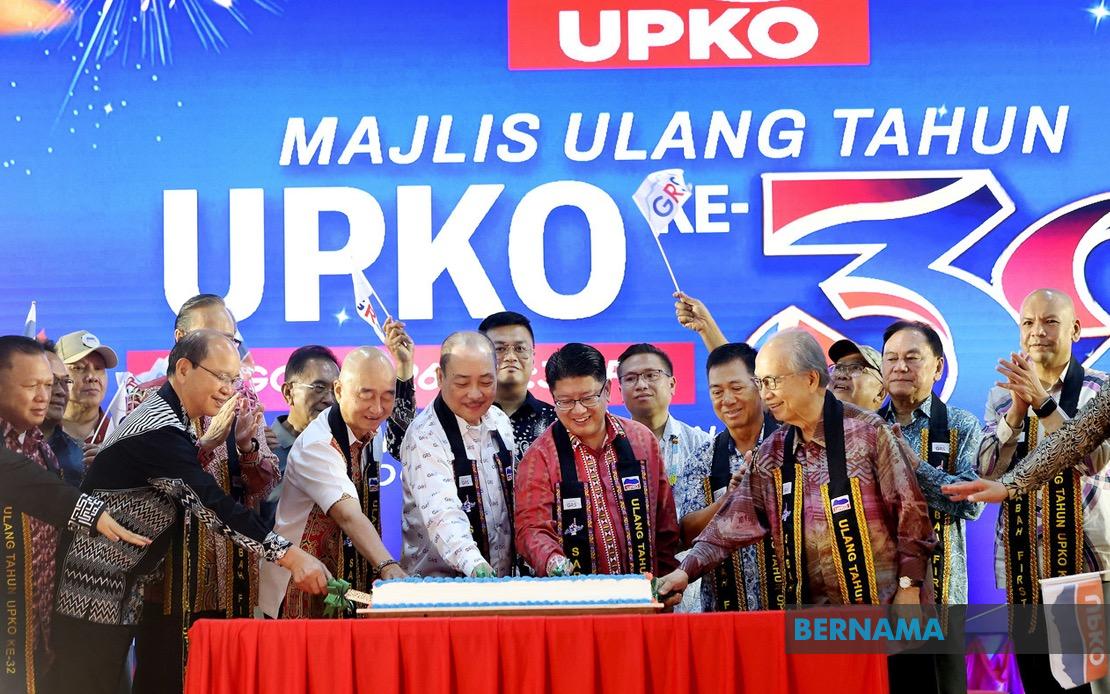
Sabah's Chief Minister Datuk Seri Hajiji Noor has pledged that funds received from Putrajaya will be returned directly to the state's residents through a combination of targeted incentives, financial assistance and tangible development projects. Speaking at the 32nd anniversary celebration of the United Progressive Kinabalu Organisation and the opening of its 17th Triennial Delegates Conference in Kota Kinabalu, Hajiji emphasised the government's commitment to translating federal allocations into measurable improvements in the lives of ordinary Sabahans.
The commitment comes as the state prepares to harness a significantly expanded interim special grant arrangement worth RM1.5 billion annually, representing a marked increase from previous disbursement levels. Prime Minister Datuk Seri Anwar Ibrahim's decision to boost this allocation underscores the federal government's recognition of Sabah's development needs and strategic importance within Malaysia's broader economic framework. For a state that has long sought greater federal investment, this injection of capital presents both an opportunity and a responsibility to demonstrate effective resource management.
Hajiji outlined a comprehensive spending agenda that prioritises basic infrastructure deficiencies across rural and urban areas. The planned construction of additional paved roads and concrete bridges directly addresses longstanding connectivity challenges that have constrained economic activity and limited access to services in many Sabahan communities. These foundational works form the backbone of any sustainable development strategy, enabling commerce, facilitating education access and improving emergency response capabilities throughout the peninsula and island districts.
Energy and water security represents another critical frontier for the state's development priorities. By committing substantial resources to electricity supply improvements and water infrastructure enhancement, the government acknowledges that reliable utilities are prerequisites for attracting investment and supporting population growth. For Malaysian investors evaluating regional opportunities, reliable power and water services remain decisive factors in location decisions, making this commitment strategically important beyond its immediate welfare implications.
The government has also outlined plans to expand the Rumah Mesra Sabah Maju Jaya programme, which addresses housing shortages affecting low-income households. This initiative represents targeted poverty alleviation rather than universal subsidy, focusing resources on households most in need of accommodation support. The expansion signals an understanding that housing security influences educational outcomes, employment stability and overall social cohesion—outcomes that resonate across Southeast Asia's development agenda.
Complementing housing initiatives is the Sentuhan Kasih Rakyat (SYUKUR) programme, which channels assistance directly to vulnerable populations. While specific programme details remain limited in the available statements, such welfare schemes typically address immediate household economic pressures, providing breathing room for families navigating inflationary pressures and cost-of-living increases that characterise the contemporary Malaysian economic landscape.
Beyond the interim grant announcement, Hajiji highlighted the state government's ongoing efforts to strengthen its own revenue generation capacity. Annual collections have been maintained at RM7 billion since 2022, with projections suggesting an increase to RM8 billion during the current year. This revenue trajectory reflects improved tax compliance, expanded economic activity and more efficient collection mechanisms. For a resource-rich state like Sabah, strengthening internal revenue sources reduces dependency on federal allocations and provides flexibility in long-term fiscal planning.
The emphasis on Sabah's economic resilience carries particular significance given the volatile global environment and domestic economic fluctuations that have characterised recent years. Despite commodity price volatility, supply chain disruptions and persistent inflationary pressures, the state government projects continued economic expansion. This optimism, while requiring careful scrutiny, suggests that diversification efforts beyond traditional palm oil and timber sectors may be yielding measurable results, potentially encompassing tourism recovery, manufacturing expansion and emerging sectors.
Positioning Sabah as a strategic investment destination requires consistency between rhetorical commitments and actual resource deployment. Infrastructure improvements, reliable utilities and stable governance create the foundations necessary for attracting manufacturing investment, tourism development and technology sector growth. For Malaysian policymakers and investors, Sabah's trajectory carries implications extending beyond state boundaries, affecting regional competitiveness within Southeast Asia and Malaysia's ability to capture high-value economic activities.
The alignment between federal and state government priorities, as evidenced by the interim grant expansion and Hajiji's articulated spending plans, suggests improved coordination in addressing Sabah's development backlog. This alignment, while not guaranteed to eliminate implementation challenges, creates institutional conditions favouring effective capital deployment. Malaysia's ability to deliver on its Vision 2050 aspirations depends substantially on whether resource-rich states like Sabah can convert financial allocations into sustained infrastructure and capacity improvements.
The UPKO platform chosen for announcing these commitments carries symbolic weight, given the organisation's historical role in Sabahan politics and governance. By anchoring these pledges to a prominent political gathering, Hajiji signals that resource commitments extend beyond short-term political cycles, aiming instead for programmatic consistency. However, translating political rhetoric into sustained institutional performance remains a persistent challenge across Malaysia's federal system, requiring rigorous monitoring and transparent accountability mechanisms to ensure commitments materialise as promised.

