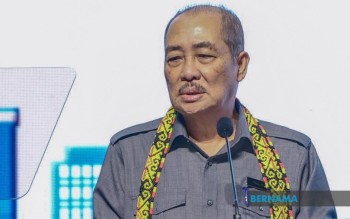
Sabah Chief Minister Datuk Seri Hajiji Noor has disclosed that the state government is poised to take a substantial 40 per cent ownership stake in a floating liquefied natural gas facility through a forthcoming accord with national oil corporation Petronas. The announcement, made while launching a public engagement programme in Kalabakan, signals a significant shift in how the resource-rich state intends to benefit from its hydrocarbon wealth going forward. The signing of the formal agreement is anticipated within the coming months, marking another milestone in Sabah's evolving relationship with its federal counterpart over oil and gas resources.
The development represents the culmination of sustained negotiations between Sabah's administration and Petronas, built upon a framework established through earlier cooperative arrangements. These preceding accords granted the state government expanded participation rights in the oil and gas industry, moving beyond the traditional role of revenue recipient toward that of active stakeholder and decision-maker. Hajiji attributed the progress to strengthened ties between state and federal authorities, emphasizing that collaborative governance has unlocked tangible economic benefits for Sabah and its residents. This partnership approach contrasts with historical grievances about resource extraction, where producing states have historically felt inadequately compensated for depletion of their natural endowments.
Beyond the FLNG venture, the agreement encompasses additional petroleum assets under Petronas management. The state has secured entitlement to a 20 per cent stake in an oil and gas field located in Sandakan, broadening Sabah's portfolio of direct ownership interests. This dual arrangement demonstrates a comprehensive restructuring of the state's involvement across multiple hydrocarbon projects. The combined stakes position Sabah as more than a spectator in its own resource development, granting the state government seats at the table during critical operational and investment decisions. For a jurisdiction historically dependent on commodity exports, such equity positions could eventually translate into dividend streams that buffer state finances against commodity price volatility.
The timing of these announcements reflects broader positioning within Malaysia's energy landscape. Petronas, facing international pressure to transition toward cleaner energy while managing legacy fossil fuel assets, may view increased state participation as a means of building political consensus for major capital projects. FLNG technology represents a significant shift from onshore and conventional offshore operations, offering flexibility in deployment and potentially lower initial environmental footprint. For Sabah, the technology promises to unlock gas reserves that conventional infrastructure might deem commercially marginal, thereby extending the productive life of aging basins and creating employment in skilled technical roles.
Hajiji separately highlighted Sabah's success in attracting foreign investor attention, noting that approximately 40 diplomatic envoys and high commissioners have engaged with state leadership over the preceding five years. This diplomatic interest underscores growing recognition of Sabah as an emerging investment destination within Southeast Asia. The chief minister attributed this momentum to deliberate policy positioning favoring enterprise and capital inflow. Such diplomatic engagement often precedes significant foreign direct investment, suggesting that announcements regarding industrial expansion and infrastructure development may soon be accompanied by concrete foreign commitments. For Malaysia's broader economic narrative, Sabah's trajectory as an investment hub carries implications for regional economic dynamism and federal-state resource allocation.
Infrastructural constraints that previously hindered Sabah's economic expansion are gradually being addressed through targeted development initiatives. The Kota Kinabalu Industrial Park and Sipitang Oil and Gas Industrial Park are reportedly operating at near-maximum occupancy, indicating robust demand for manufacturing and processing capacity. This capacity strain has compelled the state government to pursue industrial expansion into underutilized territories, particularly along Sabah's east coast. The strategic dispersion of industrial zones reduces geographical bottlenecks and distributes economic benefits across regions previously marginal to the state's growth narrative. Such spatially distributed development may also ease social pressures arising from uneven prosperity and migration to overcrowded urban centers.
Complementing industrial diversification, the state government is pioneering a novel blue economy-oriented industrial park in the state's northern reaches. This initiative acknowledges growing global demand for sustainable aquaculture, marine biotechnology, and ocean-based renewable energy. By positioning Sabah as a destination for blue economy enterprises, the state taps into expanding international investment flows directed toward maritime industries. This sectoral pivot also offers an alternative development pathway to hydrocarbon-dependent growth, reducing long-term exposure to energy market downturns and climate policy headwinds. For Southeast Asia, Sabah's blue economy initiative adds to regional momentum in ocean-based economic development, complementing similar initiatives in other coastal jurisdictions.
The proposed Kalabakan township, encompassing approximately 1,000 acres, represents an ambitious attempt to catalyze economic activity along Sabah's southwestern border with Indonesia. Positioned strategically at a transnational frontier, the township aspires to function as a cross-border commercial hub, facilitating bilateral trade and investment. Infrastructure supporting this vision includes planned customs, immigration, and quarantine facilities alongside road connectivity improvements linking Kalabakan to the border itself. Such infrastructure typically generates multiplier effects throughout surrounding regions, as traders, transporters, and service providers establish operations to capture border trade opportunities. Cross-border economic zones have proven effective in other Southeast Asian contexts in lifting peripheral regions into growth trajectories.
The border infrastructure component holds particular significance for regional connectivity within Southeast Asia. Improved transport links between Sabah and Indonesian territories strengthen the broader ASEAN economic architecture by reducing transaction costs for bilateral commerce. Enhanced customs and quarantine facilities streamline the movement of goods, reducing delays that typically inflate prices for end consumers and reduce profit margins for traders. For Malaysian policymakers, such infrastructure investments yield benefits beyond Sabah itself, as they facilitate supply chain integration across the broader region and enhance Malaysia's role as a trading hub. Investment in border infrastructure thus represents not merely a state-level priority but also a contribution to regional economic architecture.
The cumulative effect of these announcements—equity stakes in hydrocarbon projects, industrial park expansion, blue economy development, and border infrastructure—suggests a conscious effort by Sabah's administration to diversify economic foundations while deepening state agency in resource management. The emphasis on investor-friendly policies and diplomatic engagement indicates recognition that sustained growth requires external capital and expertise. However, the simultaneous assertion of state equity ownership in major projects demonstrates unwillingness to cede developmental control entirely to federal or private entities. This balance between openness and assertiveness may offer instructive lessons for other Malaysian states navigating similar tensions between autonomy and integration within the broader national economy.
For Malaysian readers, Sabah's trajectory merits attention as a test case for federal-state resource cooperation and subnational economic development strategy. The outcomes of these initiatives will influence perceptions of whether resource-rich states can secure equitable returns while maintaining effective governance and environmental stewardship. Success could strengthen the federation by demonstrating that competing interests can be reconciled through negotiated frameworks. Conversely, implementation challenges or disappointing returns could reignite historical grievances about resource distribution. The stakes extend beyond Sabah, touching fundamental questions about equity, federalism, and sustainable development that resonate across Malaysia's diverse states and regions.

