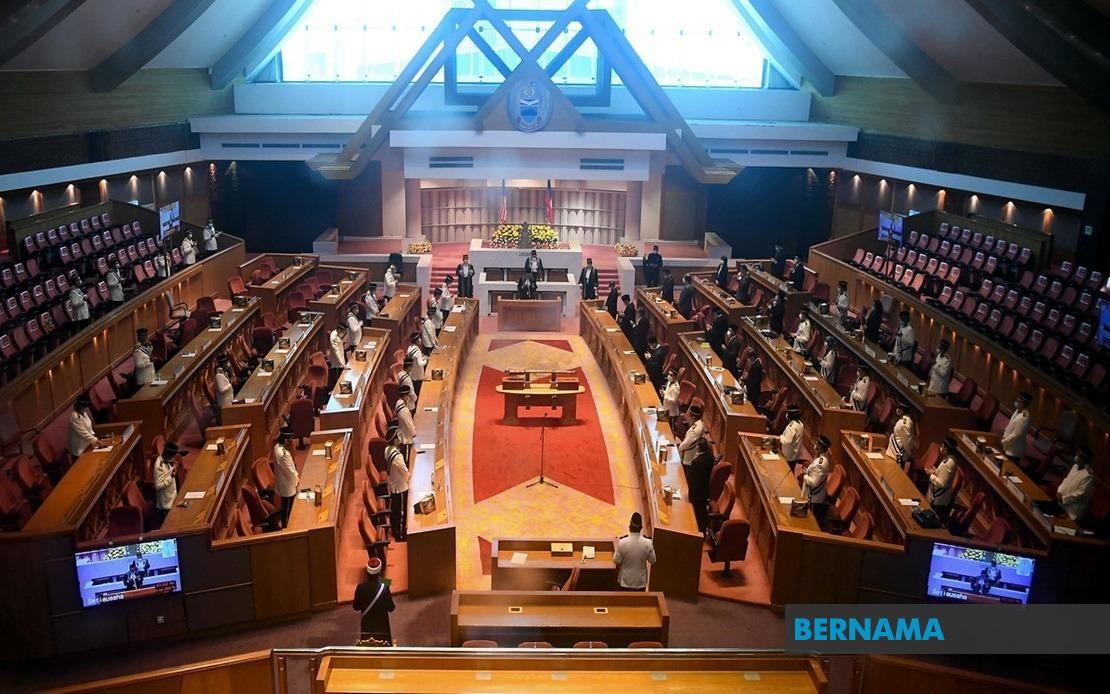
Sabah's water authority is pursuing an aggressive plan to slash non-revenue water losses, targeting a reduction from the current 59.6 per cent rate down to 45 per cent within the next six years. The ambitious goal, announced in the state legislative assembly, represents a significant effort to tackle one of Malaysia's most persistent infrastructure challenges: the loss of treated water before it reaches consumers' taps. According to Assistant Minister of Works and Utilities Datuk Limus Jury, the Sabah Water Department has mobilised multiple strategies to transform the sector's operational efficiency.
Non-revenue water—the volume of water produced by utilities but not billed to customers due to leaks, theft, and metering errors—remains a critical concern across Malaysia's water systems. Sabah's 59.6 per cent rate is among the highest in the country, meaning nearly three of every five litres treated and pumped through the network never generate revenue or reach intended recipients. This inefficiency represents both financial losses for the utility and wasted resources in a region where water security and infrastructure investment are paramount. The target of 45 per cent, while still substantially above best-practice levels achieved in developed nations, would constitute meaningful progress if realised.
The Sabah Water Department's strategy encompasses multiple complementary approaches designed to address different sources of water loss. Illegal connections—a persistent problem in Southeast Asian urban and peri-urban areas—represent a significant component of unaccounted water. The department has implemented integrated operational systems to identify and eliminate these unauthorised taps, which drain water outside formal billing channels and undermine revenue collection. Simultaneously, the utility has embarked on systematic infrastructure renewal, replacing critical pipeline sections that have deteriorated over time and become prone to fissures and seepage.
Metering failures compound the challenge. The department has identified faulty consumer meters or those exceeding seven years in age as contributors to measurement inaccuracy and unrecorded consumption. Replacing this ageing equipment enables more precise tracking of water flows and consumption patterns, revealing hidden losses that older instruments might miss. Pressure management adds another dimension: controlling water pressure throughout distribution networks reduces stress on pipelines and fittings, minimising leakage at vulnerable points. These mechanical interventions are complemented by proactive detection mechanisms, with trained personnel systematically searching for leaks rather than responding only to customer complaints.
Funding for these initiatives flows through multiple channels. The 13th Malaysia Plan allocates Federal Government resources to support a holistic non-revenue water programme encompassing 18 districts statewide. The state government's own budget covers an additional 12 districts, ensuring comprehensive geographic coverage. This dual-funding model reflects the recognition that water infrastructure renewal requires sustained investment beyond any single budget cycle. The financial commitment signals Sabah's determination to address what has become an increasingly critical issue as the state's population and economic activity expand.
Three major urban centres have become focal points for intensive intervention under the NRW Rehabilitation, Monitoring and Maintenance Active Leakage Control Project. Kota Kinabalu, the state capital and largest city, has undergone renewal since September 2022, with completion anticipated by September 2024. The project targets a reduction of 10 million litres daily—a substantial volume that underscores the scale of losses in major population centres. This milestone would be meaningful given Kota Kinabalu's status as Sabah's economic and administrative heart, where water quality and supply reliability directly affect business operations and quality of life.
Tawau and Lahad Datu, two other significant commercial and administrative hubs, entered their rehabilitation phase in February 2024, with completion scheduled for February 2027. These longer timelines reflect the complexity of interventions required. Tawau's project targets 14 million litres daily of loss reduction, making it the most ambitious in terms of absolute volume. Lahad Datu aims for 10 million litres daily. Collectively, these three district initiatives could recover approximately 34 million litres of water daily—equivalent to supplying a small city's entire consumption, illustrating the magnitude of current inefficiencies.
For Malaysian readers and policymakers, Sabah's undertaking carries regional implications. Water scarcity and infrastructure efficiency increasingly influence development patterns, investment decisions, and quality-of-life outcomes across Borneo and the broader Southeast Asian region. Sabah's experience and outcomes will provide valuable lessons for other Malaysian states and neighbouring jurisdictions wrestling with similar challenges. The state's willingness to invest substantially in water system modernisation—rather than accepting current loss rates as inevitable—suggests a longer-term development vision prioritising sustainability.
The 45 per cent target by 2030, while representing genuine improvement, also warrants frank acknowledgment that significant losses would persist. Global best practices typically achieve non-revenue water rates between 15 and 25 per cent in well-managed systems. Sabah's 2030 goal, therefore, represents progress but not transformation. Sustaining momentum beyond 2030 will require continued infrastructure investment and may necessitate technological innovations, particularly in remote or rural districts where losses may prove technically difficult or economically challenging to address.
The broader context involves competing demands on state finances and the technical capacity to execute large-scale infrastructure programmes. Water department effectiveness depends not only on budgetary allocation but on workforce skills, equipment availability, contractor quality, and management systems. Sabah's announcement reflects bureaucratic commitment, yet implementation success remains contingent on sustained administrative focus amid other provincial priorities. Residents and businesses affected by water supply interruptions during rehabilitation works will measure progress through practical experience rather than statistical targets.
Sabah's initiative also reflects growing recognition throughout Malaysia that water security represents a foundational development issue. Unlike energy systems where efficiency improvements might seem peripheral, water losses directly constrain the resource available for expanding supply to underserved populations. By reducing non-revenue water, the state effectively increases the productive utility of its existing treatment and distribution capacity without building expensive new infrastructure. This efficiency-first approach increasingly informs water policy across the region as urbanisation and population growth intensify demand pressures.

