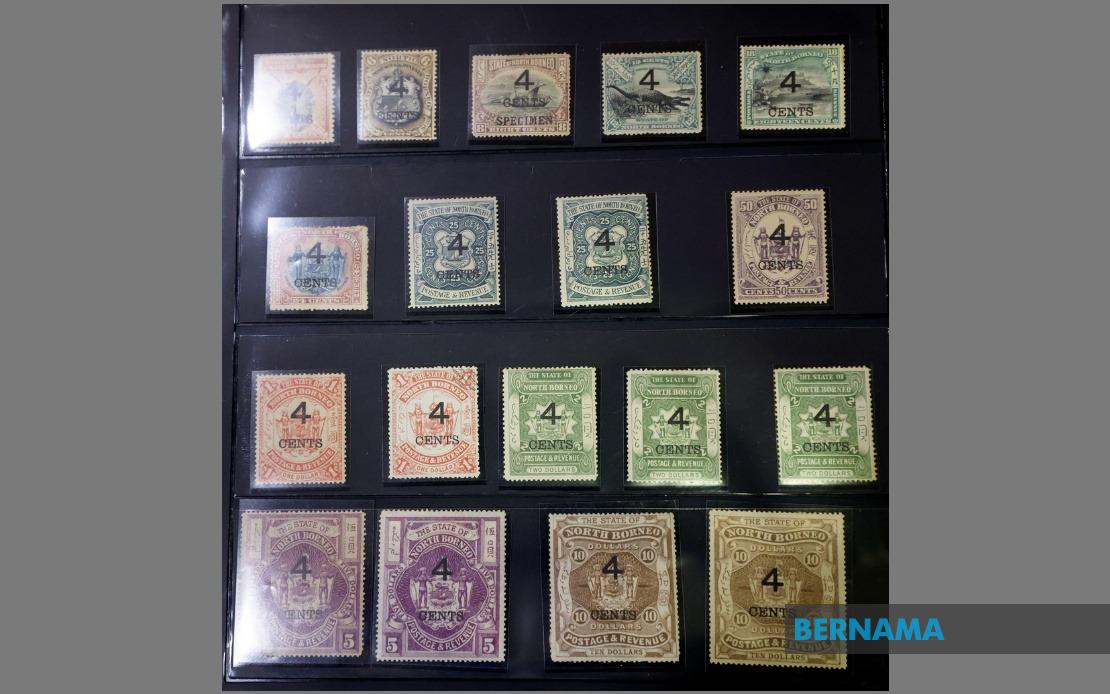
The northeastern corner of Borneo holds more than just geographical significance—it contains a fragile treasury of philatelic heritage that scholars and collectors fear may vanish entirely within a generation. North Borneo stamps, issued over a span of eighty years beginning in 1883, represent far more than decorative postage; they form what historians describe as a "living archive" chronicling Sabah's transformation under colonial administration and into the modern era. Dr Shari Jeffri, founder and president of the Borneo History Association, has become increasingly vocal about the urgency of preservation efforts as these artifacts grow scarcer and interest among younger generations continues to wane.
The challenge facing custodians of this heritage is multifaceted and acute. A survey conducted in antique establishments across Kota Kinabalu revealed that genuine North Borneo stamps have become extraordinarily difficult to locate. When available, prices escalate dramatically depending on factors including age, physical condition, and rarity classification. One notable discovery during this survey included an album housing a six-cent North Borneo stamp portraying Queen Elizabeth II alongside a Dusun woman, alongside a ten-cent denomination depicting logging scenes, both specimens originating from the 1954 to 1961 period. Such finds have become exceptions rather than routine occurrences.
Dr Shari's personal journey into philately illuminates how generational knowledge transmission is faltering. His grandfather, employed at the Recreation Club Jesselton during the 1920s, developed an enthusiasm for stamp collecting after witnessing British officers pursue the hobby with dedication. This inheritance passed down to young Shari at age seven, though he did not become an active collector until his secondary school years, when he and fellow students began systematically acquiring specimens. Nearly forty years of sustained engagement has transformed him into a regional authority, yet he remains deeply concerned that such pathways to discovery barely exist anymore.
Today's digital natives inhabit a world fundamentally different from the one that nurtured earlier collectors. Electronic communication has rendered handwritten correspondence almost obsolete, severing the everyday connection between postal systems and public consciousness. The practice of stamp collecting, once a near-universal childhood pursuit, has contracted to a niche hobby commanding minimal attention. Dr Shari's observation that "only a few are really interested, and the number of enthusiasts is also decreasing" reflects a broader cultural shift with specific implications for heritage preservation in Southeast Asia, where institutional support for such archival work remains inconsistent.
The stamps themselves tell intricate stories through their evolving designs and technical specifications. When the British North Borneo Chartered Company introduced stamps in 1883, they initially featured maritime imagery including sailing boats rendered in brown ink, often bearing postmarks that enhanced their historical authenticity and value. These earliest emissions, particularly the two-cent denomination from 1883, remain among the most coveted pieces in any serious collection. The rarity reaches museum-piece status; collectors regard any assemblage lacking 1883 specimens as fundamentally incomplete, regardless of other holdings.
During the subsequent decades, designers progressively reimagined these postage documents to reflect Sabah's distinctive character and resources. Through the 1880s and into the 1890s, stamps depicted lions, boats, and tigers alongside ceremonial mottos. Around 1894, a significant aesthetic shift introduced native flora, fauna, and wildlife as dominant themes, more explicitly celebrating Borneo's natural environment and biodiversity. By 1935, the imagery shifted once more toward designs that crystallized Sabah's emerging identity during a period of changing governance and economic emphasis. Denominations expanded across a broad spectrum from two sen to one dollar, enabling commerce at multiple scales.
Authenticity and preservation demand specialized knowledge increasingly difficult to transmit. Dr Shari has invested considerable effort in seeking guidance from international experts, including Singapore-based specialists Voon Kyam Foh and Tan Chun Lim, while consulting authoritative references such as Commonwealth & British Empire Stamps catalogues. Understanding the technical details of philatelic materials—the precise composition of stamp paper, adhesive properties, and watermark variations—separates serious collectors from casual observers. Stamps bearing complete postal cancellations indicating mailing date, originating post office, time, and location represent the apex of documentary value, as they provide comprehensive context for historical research.
Conservation practices have become increasingly critical as the surviving examples age further. Dr Shari emphasizes that acid-free albums constitute the essential minimum standard for storage, as conventional albums allow oxidation processes that cause gradual fading and deterioration. The materials employed in original production—particularly adhesive composition and paper quality—serve as diagnostic tools for confirming authenticity while simultaneously affecting preservation requirements. Each specimen demands individualized assessment and handling appropriate to its specific vulnerabilities.
The implications of potential loss extend beyond nostalgic attachment to historical artifacts. These stamps function as primary documentary sources revealing patterns of commerce, territorial governance, and cultural expression during critical periods of Borneo's history. The transition from early colonial iconography to later designs emphasizing indigenous elements reflects broader political and social transformations. When entire categories of evidence disappear from the historical record—as threatens to occur if preservation efforts stagnate—future scholars lose irreplaceable perspectives on how communities negotiated identity, sovereignty, and modernization.
Sabah faces a particular vulnerability in this context, as regional institutional support for specialized collections remains underdeveloped compared to Peninsular Malaysia or Singapore. The Borneo History Association's efforts, while commendable, operate without secure institutional backing or dedicated conservation facilities. Museums and archives across Malaysia would benefit from systematic acquisition programs targeting philatelic materials before private collections disperse or deteriorate beyond recovery. The window for preservation is measurably closing as aging collectors pass away and younger generations remain largely unaware of these materials' existence.
Educational initiatives could reverse current trajectory by reconnecting communities to postal heritage's concrete relevance for understanding local history. Schools might employ stamp collections as entry points for teaching territorial history, economic systems, and visual culture analysis. Public exhibitions showcasing North Borneo specimens alongside contextual narratives could generate enthusiasm among demographics currently untouched by traditional collector communities. Digital cataloguing and online access would democratize knowledge while reducing pressure on fragile physical originals through excessive handling.
The stakes transcend philatelic circles to touch upon broader questions of cultural memory and historical preservation in Southeast Asia. North Borneo stamps embody specific moments when external powers and local populations negotiated identity, governance, and development trajectories. Allowing these visual and material records to vanish represents not merely aesthetic loss but an impoverishment of documentary resources crucial for understanding how the modern region took shape. Dr Shari's decades of careful stewardship demonstrate what individual commitment can achieve, yet institutional support and generational transmission remain desperately inadequate to the magnitude of the challenge confronting heritage preservation in Sabah.

