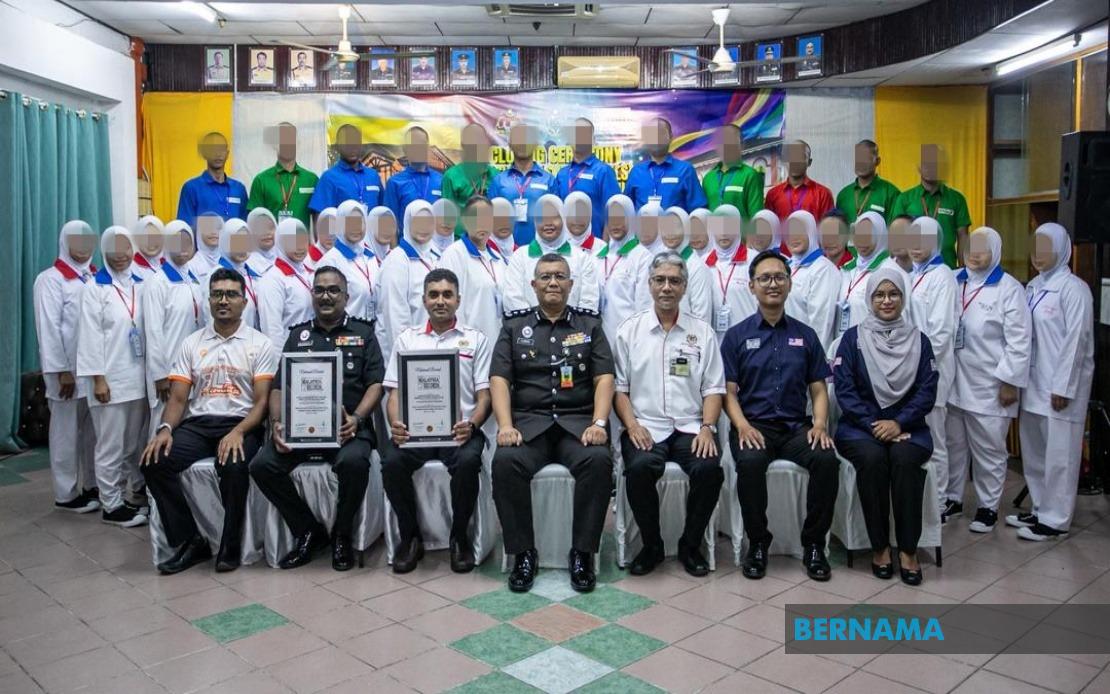
Home Minister Datuk Seri Saifuddin Nasution Ismail has publicly commended the Malaysian Prisons Department for achieving recognition in the Malaysia Book of Records, specifically highlighting the accomplishment of the Batu Gajah Correctional Centre in successfully conducting a comprehensive Basic Life Support and Automated External Defibrillator training programme that engaged 42 inmates. This achievement marks a significant milestone in the department's ongoing efforts to demonstrate that custodial institutions can serve a purpose far beyond conventional punitive functions.
The training initiative carries broader implications for how Malaysia's correctional system approaches inmate development and future reintegration into society. Rather than viewing incarceration as an end in itself, the programme exemplifies the growing recognition that skills acquisition during detention significantly enhances an individual's prospects for successful rehabilitation and social reintegration. The fact that the course garnered formal recognition through Malaysia Book of Records underscores the scale and quality of the undertaking, setting a benchmark for similar initiatives across other facilities in the country.
Saifuddin's commendation emphasises a philosophical shift that has been gaining traction within the Malaysian correctional system. By equipping inmates with certified life-saving competencies, the programme accomplishes multiple objectives simultaneously: it provides tangible skills with immediate applicability, it instills values centred on compassion and social responsibility, and it builds the self-confidence necessary for individuals contemplating their return to civilian life. These elements work synergistically to address the complex psychological and practical dimensions of rehabilitation that extend far beyond the walls of any correctional facility.
The Basic Life Support and Automated External Defibrillator certification represents more than mere technical knowledge. Such qualifications carry genuine market value in the employment landscape, increasing the likelihood that programme graduates will secure gainful employment upon release. This practical dimension is crucial for reducing recidivism rates, as economic stability has long been identified as a critical factor in preventing individuals from reoffending. When inmates leave prison with recognised, transferable skills and enhanced employment prospects, the entire equation of rehabilitation shifts towards success.
The minister's remarks highlight the importance of infusing discipline and personal responsibility into the rehabilitation framework. The training process itself demands commitment, sustained focus, and the ability to work collaboratively with peers and instructors. These behavioural elements, cultivated through structured programme participation, create lasting changes in how individuals approach challenges and interact within communities. The psychological benefits of demonstrating mastery of technical competencies cannot be understated, particularly for individuals whose pre-incarceration experiences may have been marked by repeated failure or marginalisation.
From a policy perspective, the Batu Gajah initiative demonstrates how correctional institutions can become active agents of social change rather than passive warehousing facilities. The recognition through Malaysia Book of Records serves as an incentive for other facilities to develop comparable programmes, potentially creating a demonstration effect throughout the national prison system. When achievements are formally acknowledged and publicly celebrated by senior government figures, they become aspirational benchmarks that inspire broader institutional transformation.
The humanitarian dimension embedded in life-saving training carries particular significance in Malaysian society, where community cohesion and social responsibility remain important cultural values. By enabling inmates to acquire capabilities that could literally save lives, the programme reframes their identity from individuals who have violated societal norms to individuals capable of contributing positively to collective welfare. This psychological reframing has proven efficacy in supporting genuine attitudinal and behavioural change among programme participants.
Saifuddin's emphasis on preparing inmates to become productive societal members reflects the Malaysian government's broader commitment to reducing the social costs associated with mass incarceration. Each successful reintegration case represents not merely an individual success story but a reduction in the burden on the criminal justice system, lower victimisation rates, and enhanced community stability. When scaled across multiple facilities and programmes, these individual successes accumulate into measurable improvements in public safety and social cohesion.
The initiative also addresses a critical gap in Malaysia's skills landscape. With unemployment and underemployment remaining challenges for certain demographic segments, the incorporation of accredited training programmes within correctional institutions creates pathways through which incarcerated populations can access skill development opportunities typically unavailable to disadvantaged communities outside prison. This democratisation of skills training, albeit occurring within a controlled environment, has the potential to yield significant long-term returns on investment through reduced reoffending and increased tax contributions from successfully reintegrated individuals.
The recognition extended to the Batu Gajah Correctional Centre sends an important signal to correctional staff that their work in facilitating rehabilitation is valued and acknowledged at the highest levels of government. Such public recognition enhances staff morale, reinforces institutional commitment to rehabilitation-focused approaches, and strengthens the professional identity of personnel working within the system. These psychological and institutional benefits often translate into improved programme quality and participant outcomes.
Looking forward, the success of this initiative raises important questions about scaling and sustainability. Can Malaysia's correctional system expand such programmes across all facilities while maintaining quality standards? How can partnerships with external organisations, educational institutions, and potential employers be structured to support ongoing skill development? These questions will determine whether the Batu Gajah achievement represents an isolated success or the foundation for systematic transformation of the Malaysian penal system's approach to rehabilitation.

