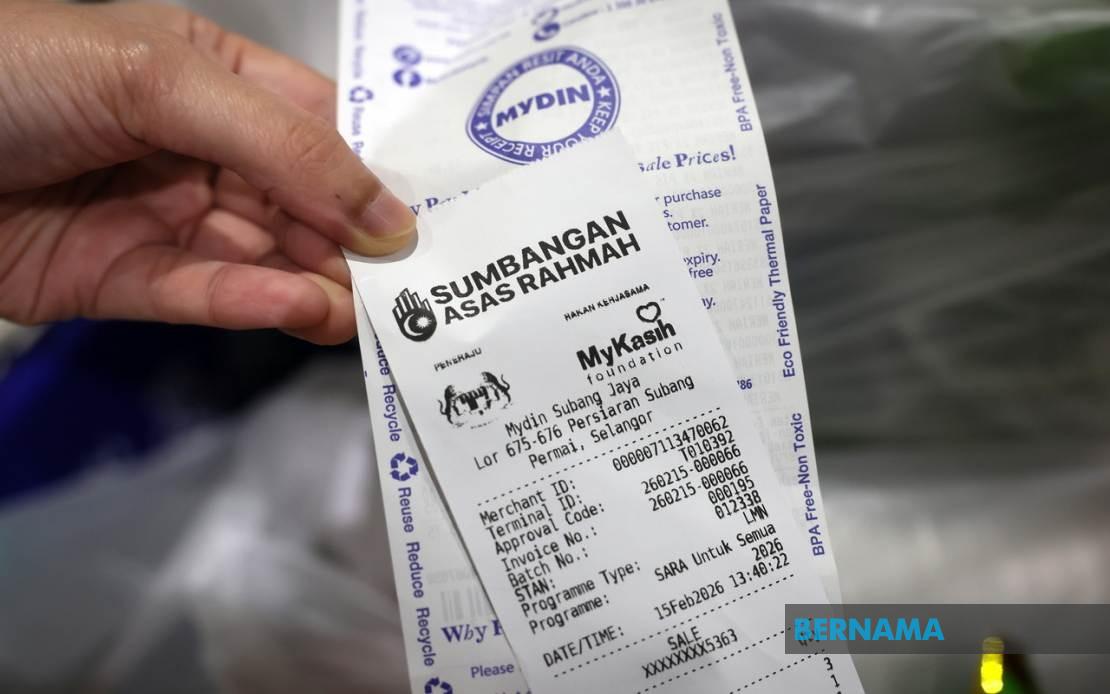
Malaysia's Sumbangan Asas Rahmah (SARA) programme has demonstrated robust adoption rates, with the Ministry of Finance revealing that 99 per cent of nearly nine million monthly Sumbangan Tunai Rahmah (STR) recipients are actively utilising the cashless benefits scheme. The take-up figures underscore the government's success in reaching vulnerable populations with targeted financial support, as total transaction volumes have now surpassed RM3.45 billion since the initiative's launch this year. These metrics were disclosed by the Ministry in parliamentary documentation responding to questions from Datuk Aminolhuda Hassan, the Member of Parliament for Sri Gading, regarding programme performance indicators and effectiveness measurements.
The broader SARA Untuk Semua component of the assistance framework has proven equally successful in stimulating consumer activity within domestic markets. Approximately 22 million individuals—representing 87 per cent of all eligible recipients—have participated in the scheme, channelling over RM1.77 billion into transactions at registered outlets. This widespread participation reflects both the accessibility of the programme and the genuine purchasing power it provides to households grappling with inflation and elevated living costs. The high engagement levels suggest that beneficiaries view the initiative as meaningful economic relief rather than token assistance, a critical distinction for policy efficacy.
SARA operates as a cashless disbursement system delivered through MyKad credits, functioning as an innovative mechanism for directing government transfers toward necessities rather than discretionary purchases. The scheme's architecture enables citizens to redeem credits exclusively at authorised SARA Rakan Niaga merchants stocking fifteen essential product categories, encompassing basic foodstuffs, personal hygiene items, household cleaning materials, and pharmaceutical products. This carefully calibrated restriction serves multiple policy objectives simultaneously: it ensures funds address genuine hardship, prevents diversion toward non-essential consumption, and supports a designated network of small retailers throughout the country. For Malaysian authorities, this technological approach represents a modernised alternative to traditional cash transfers, offering superior transparency and administrative oversight.
The Ministry emphasised that spending performance across both STR and SARA constitutes a principal barometer for assessing programme impact on household cost-of-living challenges. Strong utilisation rates among lower and middle-income demographics signal that the financial transfers are successfully alleviating economic pressures faced by wage earners and fixed-income households. Beyond direct poverty alleviation, the Ministry flagged the multiplier effect generated through beneficiary spending within local economies. When families use SARA credits to purchase goods from neighbourhood merchants, those retailers in turn spend revenues on inventory restocking and business operations, creating a secondary wave of economic activity that extends benefits beyond initial recipients.
The government has progressively expanded its commitment to these assistance schemes, with annual budget allocations nearly doubling between 2024 and the projected 2026 allocation. The rise from RM10 billion to RM15 billion represents a tangible policy signal that social safety net strengthening remains a priority amid persistent economic headwinds affecting household purchasing capacity. This budgetary trajectory suggests policymakers view the programmes as structural responses to sustained inflation and cost pressures rather than temporary expedients. For beneficiaries across Malaysia's urban and rural communities, the expanded allocation translates into either broader coverage of currently eligible populations or enhanced benefit levels for existing recipients, contingent upon scheme design modifications.
The mechanics of SARA delivery through MyKad technology provide government administrators with unprecedented visibility into programme disbursement and utilisation patterns. Transaction data captured through registered merchants enables the Ministry to verify that funds reach intended recipients and are deployed for stipulated purposes. This technological infrastructure represents a departure from legacy welfare delivery systems vulnerable to leakage, fraud, or inefficient administration. Malaysian policymakers have consequently embraced digital-first approaches to social protection, recognising that technology investments yielding improved targeting and transparency ultimately enhance public sector efficiency and citizen confidence in government programmes.
The 99 per cent uptake figure warrants contextualisation within Malaysia's broader welfare landscape and demographic patterns. Near-universal utilisation among eligible STR recipients indicates that beneficiaries either face acute material need justifying the effort required to access the scheme or have been successfully integrated into a system that minimises access barriers and administrative friction. Either interpretation suggests programme design has achieved its foundational objectives of identifying vulnerable populations and providing practical relief mechanisms. However, the slight one per cent non-utilisation rate, though marginal, merits investigation into whether particular communities face barriers—geographic isolation, digital literacy challenges, or language complications—that might warrant remedial attention.
From a macroeconomic perspective, the RM3.45 billion in SARA transactions represents measurable stimulus injected into retail and consumer goods sectors. In an economy experiencing moderate growth rates, this demand impulse becomes consequential for merchants and distributors serving lower-income customer segments. Food retailers, pharmacies, and household goods suppliers integrated into the SARA Rakan Niaga network have benefited from sustained customer traffic and transaction volumes potentially exceeding pre-programme baselines. This constituency represents an influential stakeholder group with strong incentives to support programme continuity and expansion, creating political economy dynamics favouring ongoing investment in the initiative.
Southeast Asian observers monitoring Malaysia's approach to targeted social protection may discern lessons applicable to their own contexts. Many regional economies struggle with comparable inflation challenges, underdeveloped social safety nets, and populations vulnerable to economic shocks. SARA's deployment of cashless technology, merchant networks, and digital oversight offers a replicable template for countries seeking to modernise welfare delivery systems. The 99 per cent utilisation rate and RM1.77 billion in local market transactions provide quantifiable evidence supporting the proposition that well-designed, accessible assistance programmes can effectively reduce poverty while stimulating domestic consumption and supporting small businesses.
Moving forward, the Ministry of Finance has pledged continued monitoring of both STR and SARA mechanisms to ensure support flows efficiently to populations most severely affected by cost-of-living pressures. This commitment to ongoing oversight suggests policymakers view these programmes as dynamic instruments requiring regular evaluation and potential refinement rather than static bureaucratic initiatives. Future monitoring should encompass not merely quantitative metrics such as utilisation rates and transaction volumes but qualitative assessments of whether beneficiary households report sustained improvements in food security, healthcare access, and overall material wellbeing. The interplay between programme utilisation statistics and lived experience among recipients ultimately determines whether SARA achieves its ultimate objective of dignified, sustainable poverty mitigation across Malaysian society.

