Works Minister Datuk Seri Alexander Nanta Linggi has confirmed that construction of the Sarawak Cancer Centre will commence in January 2027, contingent upon the successful awarding of the contract to a builder. The major healthcare infrastructure project, strategically located in Kota Samarahan, represents a significant investment in cancer treatment capacity for the state and will help address a critical gap in specialist oncology services across Sarawak and the broader East Malaysian region.
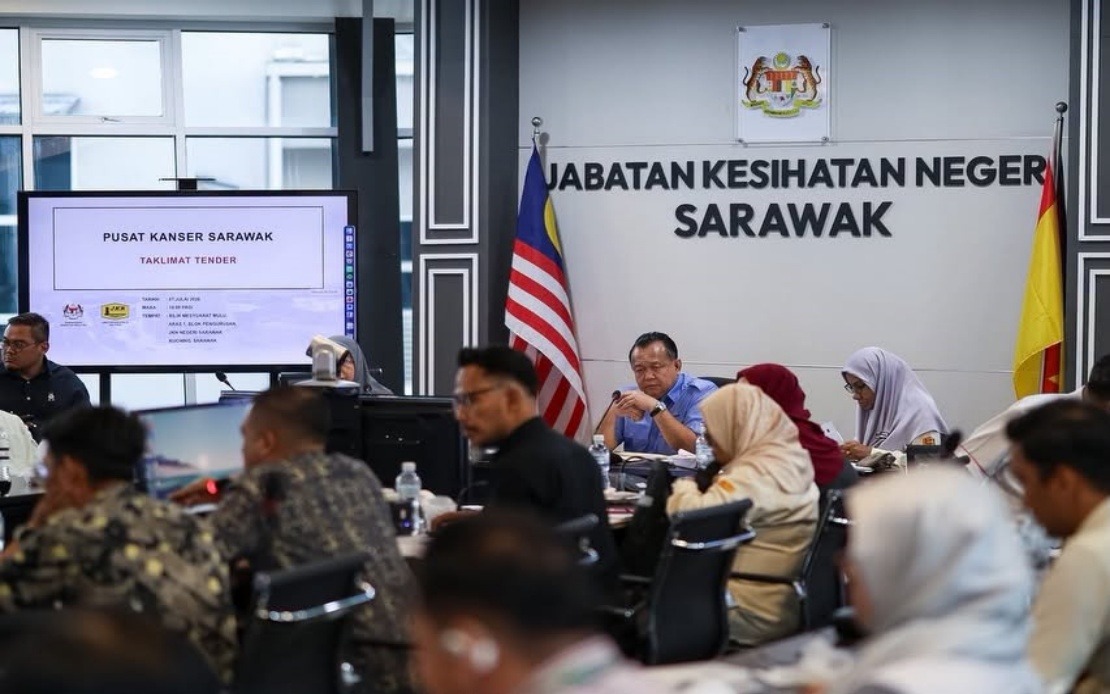
The project is currently progressing through a design-and-build tendering process, a contracting methodology that combines architectural and engineering design with construction delivery under a single entity. This approach can accelerate project completion and streamline decision-making compared to traditional sequential procurement models. Ten contractors have advanced beyond the pre-qualification stage, demonstrating they meet the technical and financial criteria necessary to execute a project of this scale and complexity. These firms have attended detailed briefings to familiarise themselves with the facility's specifications and operational requirements before preparing their competitive bids.
Nanta indicated that prospective builders will have approximately three months to develop and submit their proposals, with formal evaluation beginning thereafter. The tender assessment will likely examine not only price competitiveness but also construction methodology, project management capability, timeline feasibility, and compliance with technical standards. The timeline envisages that subject to a successful evaluation process, the Letter of Acceptance confirming the winning contractor should be issued in early January 2027, allowing mobilisation and detailed design finalisation to proceed immediately.
Once appointed, the successful contractor will operate under a 60-month (five-year) contract period covering both design refinement and construction works. This duration is realistic for a facility of this scope and complexity. Following practical completion of the works, the builder will enter a two-year Defects Liability Period, during which responsibility for rectifying construction defects and performance issues remains with the contractor. This standard arrangement protects the Sarawak state government's interests during the critical early operational phase of the new facility.
The design specifications for the cancer centre are subject to stringent requirements established by Malaysia's Health Ministry, ensuring alignment with national standards for oncology facilities and patient safety protocols. Nevertheless, the design is being conceived with contemporary architectural and operational concepts, indicating that the facility will incorporate modern patient-centred care environments and efficient clinical workflows rather than replicating conventional hospital layouts. This forward-thinking approach should enhance the patient experience and operational efficiency once the centre becomes operational.
The facility will occupy a 10.9-hectare site adjacent to the Sarawak Heart Centre, an existing specialist hospital also located in Kota Samarahan. Co-locating cancer and cardiovascular services creates valuable operational synergies, as cancer patients frequently require cardiological assessment and monitoring due to the cardiotoxic effects of certain chemotherapy regimens. The geographic proximity also rationalises support services and infrastructure, benefiting both facilities. The cancer centre will accommodate 310 beds, positioning it as a regional facility capable of serving not only Sarawak but potentially drawing patients from neighbouring jurisdictions across Borneo.
The 310-bed capacity reflects careful planning to balance current demand with anticipated growth in cancer incidence over the coming decade. The facility will provide both outpatient and inpatient services, recognising that while some cancer treatments are delivered on an ambulatory basis, patients with acute complications or undergoing intensive therapies require overnight hospitalisation. This comprehensive service model will enable the centre to function as a tertiary referral hub for the state, managing complex cases and providing specialist services unavailable elsewhere in Sarawak.
Project costs are anticipated to exceed RM1 billion, a substantial but justifiable investment given the facility's size, specialised medical systems, sophisticated imaging and radiation therapy equipment, and compliance with international oncology standards. The Sarawak state government has committed RM1 billion in funding for the project, with arrangements in place for reimbursement from other sources according to a pre-agreed mechanism, likely involving cost-sharing arrangements with the federal government or other funding partners. This financial structure demonstrates commitment to the project while distributing the fiscal burden across multiple stakeholders.
The establishment of a dedicated cancer centre in Sarawak addresses a significant healthcare gap for the state's residents. Presently, Sarawakians diagnosed with cancer often face lengthy travel to Peninsula Malaysia or overseas for specialist treatment, imposing substantial financial and emotional burdens on patients and families. The new facility will keep advanced oncology services within the state, improving accessibility and outcomes while reducing the economic drain of medical tourism for cancer care. For Malaysian healthcare policy, this project exemplifies the strategic decentralisation of specialist services to major population centres beyond the Klang Valley.
The project's timeline extending into 2027 represents part of Malaysia's broader infrastructure development agenda aimed at strengthening public healthcare capacity in less developed regions. As Sarawak's economy grows and its population demographics shift toward greater cancer incidence—reflecting ageing and development-related risk factors—this investment reflects sound planning and forward-thinking healthcare administration. The facility will also generate employment during construction and create permanent jobs in specialist medical fields upon opening, contributing to economic development alongside health sector strengthening.
Successful delivery of this project will depend on maintaining momentum through the tender process and ensuring the winning contractor possesses sufficient expertise in healthcare facility construction. The five-year execution timeline is ambitious but achievable with proper project management. Once operational, the Sarawak Cancer Centre will significantly enhance the state's healthcare landscape and position it as a regional oncology hub, improving treatment outcomes and quality of life for cancer patients across Sarawak and East Malaysia.

