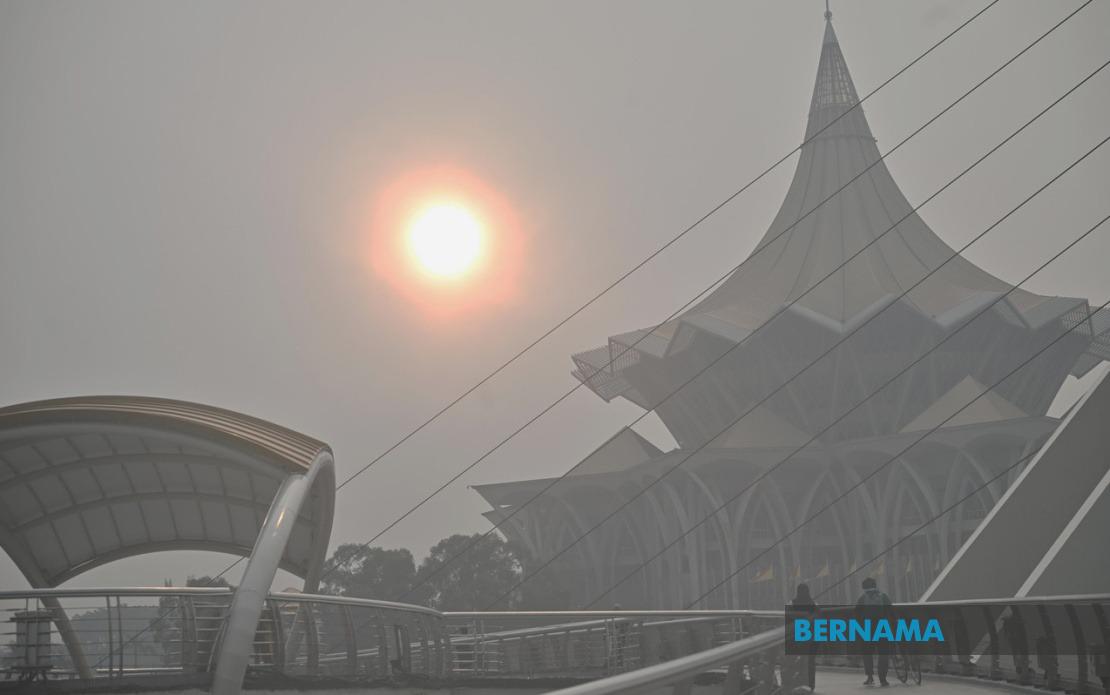
Nearly 600 educational institutions across Sarawak have been shuttered in response to a worsening weather crisis that has left authorities scrambling to manage public health and environmental risks. The Sarawak Education Department announced the temporary closure of 591 schools—comprising 509 primary institutions and 82 secondary schools—affecting a combined pupil population exceeding 197,000 students. The two-day suspension, which commenced on August 20, represents a significant disruption to the academic calendar and reflects mounting concerns about conditions severe enough to warrant such drastic intervention.
The geographic scope of the closure spans a substantial portion of Sarawak's administrative framework, encompassing ten District Education Offices responsible for pupil welfare and curriculum delivery. Affected regions include the state capital district of Kuching alongside surrounding areas such as Padawan, Bau, and Lundu on the coastal fringe, extending inland to Samarahan, Simunjan, and Serian, with further coverage across Sri Aman, Lubok Antu, and Betong. This distribution underscores how the hot and dry weather phenomenon has penetrated multiple zones simultaneously, rather than remaining localized to a particular region.
The decision to close schools reflects a precautionary approach rooted in legitimate environmental and public health considerations. Prolonged exposure to extreme heat combined with poor air quality poses genuine risks to young people whose physiological systems are still developing. Outdoor activities—typically central to the school day—become hazardous under such conditions, while the psychological burden of attending classes under duress may undermine pedagogical effectiveness. The scale of disruption, however, also illuminates the vulnerability of educational systems to climatic variability, a pattern increasingly familiar across Southeast Asia as weather patterns grow more erratic.
The underlying meteorological conditions creating this crisis have emerged from what the Sarawak State Disaster Management Committee characterizes as a prolonged hot and dry spell. This atmospheric pattern, beyond merely creating uncomfortable conditions, establishes preconditions for cascading environmental threats. Sustained high temperatures coupled with low rainfall suppress soil moisture content and elevate vegetation desiccation levels, transforming forests and peatland into tinderboxes vulnerable to ignition from minimal spark sources. Such conditions have historically preceded major fire seasons throughout Southeast Asia, including the catastrophic episodes that affected the region in previous decades.
Forest and peatland fire risk represents perhaps the gravest concern animating official responses. Peatlands, in particular, store vast quantities of accumulated organic material that, once ignited, can smoulder for extended periods while generating substantial smoke that blankets surrounding territories. The environmental and health consequences extend far beyond immediate fire zones, with smoke dispersal affecting air quality across state boundaries and into neighboring jurisdictions. Malaysia and Indonesia have experienced transboundary haze episodes that snarled regional diplomacy and caused respiratory distress throughout populations, making fire prevention a matter of urgent interstate concern.
Air quality deterioration has already become evident across multiple monitoring locations. By afternoon on August 20, nine distinct areas were recording unhealthy Air Pollutant Index readings, with Serian, Kuching, and Lubok Antu each registering API measurements of 195, 191, and 191 respectively—all reaching the threshold classifying air as unhealthy for the general population. Samarahan, Sri Aman, and Tebedu hovered near this boundary, while Sarikei and Sibu experienced elevated but marginally better conditions. These readings translate into tangible health impacts: respiratory irritation increases, individuals with asthma and cardiovascular conditions face heightened risk, and vulnerable populations including children and the elderly require protective interventions.
Water resource strain constitutes an additional dimension of the crisis. Extended hot, dry periods reduce precipitation recharging groundwater aquifers and surface reservoirs that supply municipal systems. Sarawak, despite being one of Malaysia's wetter regions, remains susceptible to seasonal droughts when typical weather patterns are disrupted. Competition for limited water supplies intensifies between domestic consumption, agricultural irrigation, and industrial requirements, creating potential bottlenecks that could cascade through economic activity if supply disruptions persist beyond brief periods.
The Sarawak State Disaster Management Committee has positioned itself in a continuous monitoring posture, maintaining real-time surveillance of eighteen locations as conditions evolve. This institutional vigilance reflects recognition that environmental crises can accelerate rapidly; hotspots requiring careful attention today may ignite into conflagrations tomorrow. The committee's stated commitment to strengthening monitoring, preparedness, and prevention measures across high-risk areas represents standard crisis management protocol, though its effectiveness depends ultimately on resource allocation and coordination among multiple government agencies operating with sometimes-competing priorities.
For Malaysia's broader regional standing, events unfolding in Sarawak carry implications extending beyond state boundaries. As a nation heavily invested in environmental stewardship and increasingly vulnerable to climate variability, Malaysia's capacity to manage localized crises while preventing escalation into regional emergencies shapes its credibility in ASEAN forums addressing transboundary environmental challenges. School closures, while protective in the immediate sense, also disrupt economic activity as parents adjust childcare arrangements, potentially triggering cascading workplace absences that ripple through the economy. The incident serves as a reminder that climate resilience requires not merely reactive crisis management but fundamental investment in infrastructure, early warning systems, and adaptive institutional capacity to accommodate increasingly severe weather volatility.
The situation in Sarawak exemplifies how climate variability intersects with institutional vulnerability in ways that conventional governance structures struggle to address. Educational systems designed around stable seasonal patterns face mounting pressure to accommodate extremes that disrupt normal operations. Water infrastructure predicated on historical precipitation averages faces strain during extended dry periods. Air quality standards established when pollution sources were less severe now prove inadequate under conditions intensified by regional fire activity. These systemic stresses accumulate, creating compound challenges that single-sector responses cannot fully resolve, demanding instead integrated approaches spanning environmental management, public health, education, and disaster preparedness.

