The Sarawak Disaster Management Committee has stepped up guidance for those planning public and private events, asking them to carefully examine current air quality metrics before committing to holding gatherings. Datuk Amar Douglas Uggah Embas, who chairs the SDMC and serves as Sarawak Deputy Premier, stressed that while event organisers retain the final say on whether to go ahead, they bear responsibility for making choices that protect attendee health, especially when outdoor programmes are involved.
Currently, no blanket prohibition exists on holding events throughout Sarawak, meaning individual venues and organisers maintain discretionary power. However, the SDMC has provided clear benchmarks to guide decision-making. When the Air Pollutant Index reaches 200 or higher, outdoor activities involving physical exertion—particularly those drawing children, elderly participants, or medically vulnerable attendees—warrant serious reconsideration. This threshold represents the boundary between "unhealthy" and "hazardous" air quality categories that pose measurable risks to human respiratory and cardiovascular systems.
The committee has recommended that organisers explore practical alternatives to cancellation, including relocating events indoors where possible, modifying activity formats to reduce physical intensity, or rescheduling for when atmospheric conditions improve. This middle-ground approach acknowledges both the economic and social importance of community gatherings while prioritising public health safeguards. For Malaysian organisers familiar with haze episodes, the guidance reflects lessons learned from previous years when uncoordinated event policies created confusion and inconsistency across states.
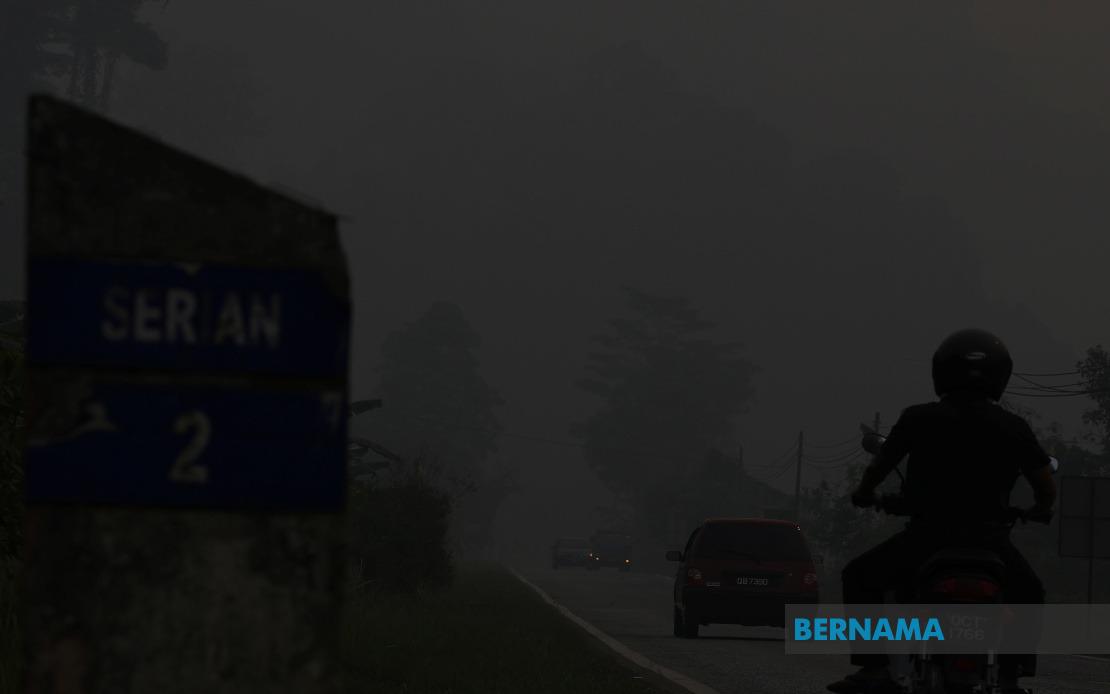
Thursday's air quality snapshot painted a concerning picture across Sarawak's populated regions. Serian district recorded the most severe readings, with the police headquarters monitoring station registering an API of 412—firmly in the hazardous zone. Samarahan followed at 332, while Kuching, the state capital, reached 304. These figures represent a dramatic deterioration from morning conditions, indicating the haze episode was intensifying rather than dispersing as the day progressed. Such rapid changes complicate planning for event organisers operating on tight schedules.
Beyond the three most severely affected areas, numerous districts experienced unhealthy air quality that, while not classified as hazardous, still poses respiratory challenges. Sarikei registered 197, Sibu 190, Bintulu 183, Mukah 176, and Samalaju 175. Even traditionally cleaner areas like Kapit (161), Miri (159), and the Miri Industrial Training Institute monitoring point (156) showed concerning levels. This widespread distribution underscores that haze impacts are not localised to specific zones but reflect region-wide atmospheric conditions, likely stemming from transboundary pollution sources typical during Southeast Asian haze seasons.
The SDMC has indicated that if pollution escalates further, more drastic measures will follow. Should the API surpass 500—the threshold for a full environmental disaster—authorities possess guidelines permitting the closure of government and private workplaces except for essential services. Such declarations require formal pronouncement by the National Disaster Management Committee, Malaysia's federal coordinating body for major emergencies. This tiered approach allows for proportional responses calibrated to pollution severity, avoiding premature economic disruption while preparing for worst-case scenarios.
Monitoring capabilities play a central role in this response framework. The Department of Environment's Air Pollutant Index Management System portal provides real-time readings, enabling both authorities and the public to track conditions continuously. However, the concentration of monitoring stations in urban and commercial areas means coverage remains uneven across rural Sarawak. Event organisers in remote communities may face challenges accessing reliable API data, potentially creating pockets where decisions rest on incomplete information or local observation alone.
The SDMC's emphasis on continued coordination between state and federal agencies reflects the cross-jurisdictional nature of haze management in Malaysia. Air quality degradation often originates from activities beyond state boundaries, particularly agricultural burning in neighbouring regions. Effective response therefore requires information-sharing, diplomatic engagement, and harmonised messaging across administrative levels. Sarawak's position as Malaysia's largest state, with significant land area and dispersed population centres, makes such coordination particularly critical.
For Malaysian businesses, tourists, and residents planning to visit or operate in Sarawak, the current advisory signals a period of uncertainty regarding outdoor activities. Airlines, hospitality venues, tour operators, and sporting bodies will likely monitor API trends closely. Previous haze episodes have demonstrated that air quality crises can dramatically disrupt economic activity, from flight cancellations to tourism revenue losses. The SDMC's guidance provides a framework, but actual implementation will depend on how quickly conditions either improve or deteriorate further.
The timing of this haze episode—late August—aligns with patterns observed in recent years, when the transition between monsoon seasons creates atmospheric conditions conducive to smoke accumulation. Climate patterns and land-use practices in the broader Southeast Asian region continue to drive these seasonal phenomena. Malaysian policymakers have long advocated for regional cooperation on transboundary haze prevention, yet solutions remain elusive. Individual state-level responses like Sarawak's advisory represent necessary short-term adaptation, though long-term air quality improvement requires continental-scale action.
Event organisers interpreting the SDMC guidance should recognise that the committee has stopped short of issuing mandatory cancellations, reflecting a deliberate policy choice balancing autonomy with safety. This places responsibility squarely on individual venues to exercise judgment. Those proceeding with outdoor events at API levels of 200-299 accept elevated health risks; proceeding above 300 becomes increasingly indefensible. Documentation of decisions made and precautions taken may become important if participants later report health complications. The committee's clarification that directives remain discretionary unless formally issued by relevant authorities creates legal and ethical space for organisers to make contextualised choices, yet also exposes them to accountability should decisions prove negligent.

