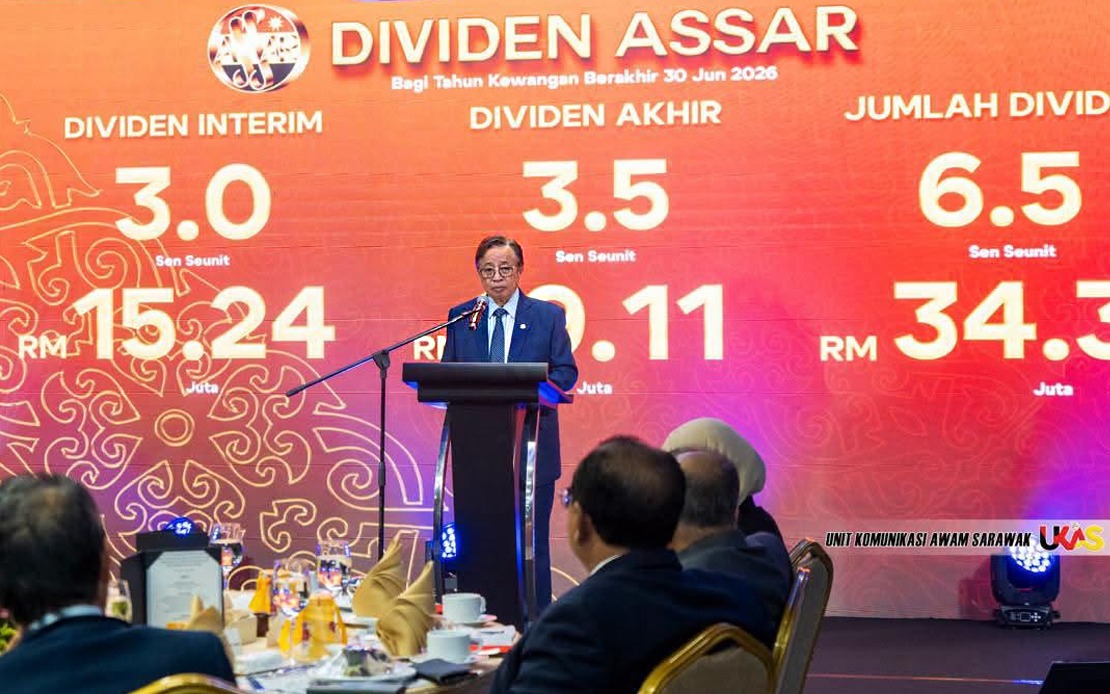
Sarawak's government is moving to broaden access to one of its flagship investment vehicles, signalling a shift towards more economically inclusive policymaking. Tan Sri Abang Johari Tun Openg, the state premier, announced on July 13 that officials are examining the feasibility of extending Amanah Saham Sarawak (ASSAR) to non-Bumiputera citizens through what would be termed ASSAR 2, drawing inspiration from the model employed by Malaysia's national investment company Permodalan Nasional Berhad (PNB).
The announcement, made during the ASSAR Dividend Announcement ceremony for the financial year ending June 30, 2026, reflects a deliberate policy pivot away from the scheme's current restrictive framework. For decades, ASSAR has functioned as a Bumiputera-exclusive savings and investment instrument, mirroring broader affirmative action policies across Malaysia. The proposal to introduce a parallel fund structure would preserve the original scheme's foundational purpose whilst simultaneously creating pathways for other communities to participate in state-level wealth accumulation vehicles.
Abang Johari framed the initiative within Sarawak's broader commitment to inclusive governance, emphasising that economic opportunity should be distributed across demographic lines. His remarks underscore recognition among the state's political leadership that resource constraints and demographic composition require pragmatic adjustments to traditional policies. Rather than abandoning targeted programmes, the proposed dual-track system would allow simultaneous pursuit of both equity objectives and broader economic participation.
The rationale underlying this expansion centres on capital mobilisation and economic deepening. By opening investment opportunities to non-Bumiputera Sarawakians, the state government would substantially increase the asset base available for deployment into regional economic development projects. Sarawak, with its substantial oil and gas revenue streams and growing downstream industrial base, represents an attractive investment destination for all demographic groups within its borders. Expanding the investor pool would enhance liquidity and potentially generate stronger returns across both fund structures.
The PNB model cited by Abang Johari offers instructive precedent. Permodalan Nasional Berhad operates multiple investment vehicles serving different market segments and demographic groups, with varying mandates and investment approaches. This diversified portfolio approach has enabled PNB to accumulate substantial assets whilst maintaining targeted support for specific communities. A comparable structure in Sarawak would allow the state to pursue dual objectives: maintaining dedicated investment channels for Bumiputera citizens whilst simultaneously mobilising capital from broader segments of the population.
The proposal's advancement to the ASSAR board of directors and management for feasibility assessment indicates that detailed groundwork now commences. Questions requiring resolution include governance structures, fee arrangements, dividend distribution mechanisms, and regulatory compliance frameworks. Additionally, authorities must consider whether ASSAR 2 would maintain identical investment mandates and risk profiles as the original scheme or adopt differentiated strategies tailored to the expanded investor base. Such structural decisions would significantly influence both the scheme's viability and its appeal to prospective investors.
For Malaysian and Southeast Asian observers, Sarawak's initiative demonstrates how state-level governments within Malaysia's federal framework are innovating policy delivery models. As East Malaysian states exercise considerable autonomy over economic and investment matters under the Malaysian Constitution, Sarawak's approach may influence similar discussions within Sabah and other states contemplating inclusive investment vehicle expansion. The precedent carries particular significance given ongoing conversations across Southeast Asia regarding how developmental states can simultaneously maintain equity-focused programmes whilst expanding economic participation more broadly.
The timing of this announcement coincides with global discussions regarding wealth distribution, intergenerational equity, and inclusive capitalism. Sarawak's exploration reflects recognising that sustainable economic development requires broad-based stakeholder participation. When citizens from all communities possess direct stakes in state economic success through equity instruments, political economy dynamics shift favourably towards continued investment in institutional quality, transparency, and sound economic management.
Implementation challenges should not be underestimated, however. Regulatory frameworks governing Bumiputera investment schemes carry constitutional and statutory protections rooted in Malaysia's foundational social contract. Creating parallel structures for non-Bumiputera investors necessitates careful navigation of these sensitivities whilst ensuring ASSAR 2 meets fiduciary standards and regulatory expectations. Political economy considerations also emerge—how both Bumiputera and non-Bumiputera communities perceive differential treatment across the fund structures will influence longer-term sustainability of both initiatives.
The stated rationale emphasises Sarawak's robust economic growth trajectory, which leadership positions as justifying expanded investment opportunities. The state's strategic importance as an energy producer and manufacturing hub within Southeast Asia creates compelling economic fundamentals. Allowing broader constituencies to participate in state-level wealth creation mechanisms aligns with developmental interests. Residents holding equity stakes in ASSAR 2 would develop stronger identification with the state's economic success and political stability, potentially yielding benefits extending beyond purely financial considerations.
If implemented successfully, ASSAR 2 could emerge as a replicable model within Malaysian federalism and across Southeast Asia. The scheme would demonstrate how targeted equity policies and broader inclusion can coexist rather than represent zero-sum trade-offs. As other jurisdictions grapple with similar tensions between demographic parity and developmental inclusion, Sarawak's experiment may offer valuable lessons regarding institutional design and political feasibility. The proposal merits close monitoring by policy practitioners, investors, and observers tracking Malaysia's evolving approach to managing economic opportunity distribution within culturally plural societies.

