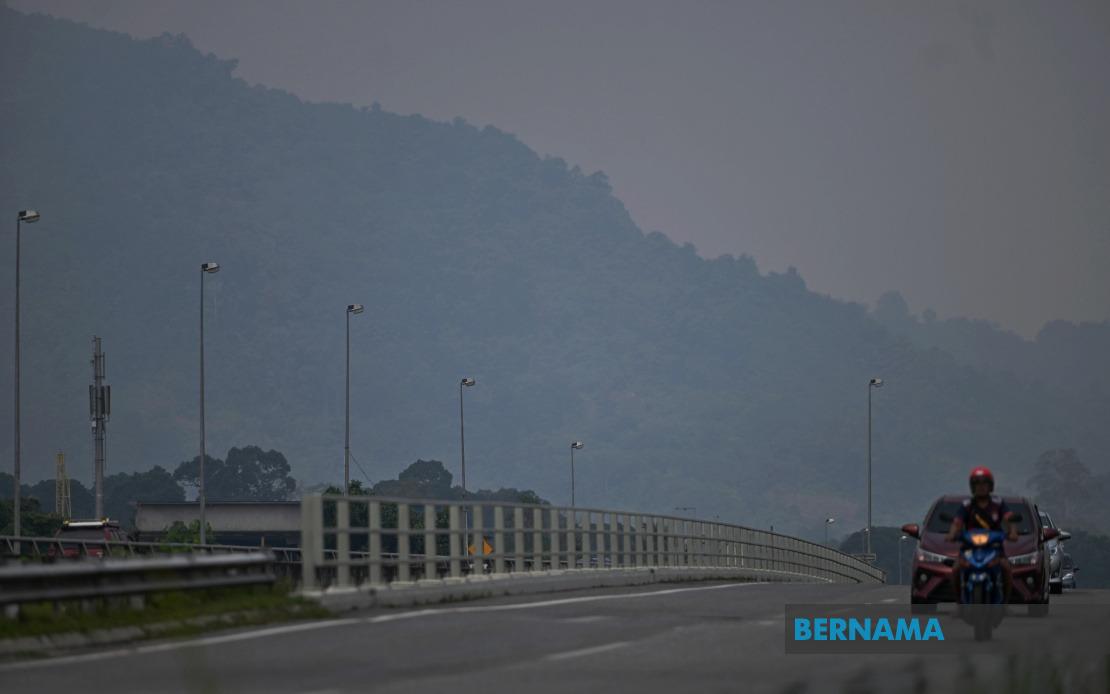
Air quality has sharply deteriorated across Sarawak, with nine district-level monitoring stations reporting unhealthy Air Pollution Index readings on August 21. The situation has grown most critical in Serian, where API measurements reached 227 as of 2 pm—a very unhealthy threshold that poses immediate risks to vulnerable populations including children, the elderly, and those with respiratory conditions. The scale of the pollution event underscores the escalating regional air quality crisis affecting Southeast Asia during this haze season.
According to Department of Environment deputy director-general Azuri Azizah Saedon, the geographic distribution of poor air quality across Sarawak reveals a systematic pattern of haze ingress from the south. Sri Aman recorded the second-worst conditions at 187, while Kuching, the state capital, registered 176—concerning given its population density and economic importance as a commercial hub. The remaining affected areas—Samarahan (175), Sarikei (174), Sibu (157), the industrial twin stations of Bintulu and Samalaju (154 each), and the inland stations of Kapit and Mukah (130)—paint a picture of widespread air contamination spanning coastal, urban and rural monitoring points throughout Sarawak.
The underlying cause of this deterioration traces directly to transboundary smoke plumes originating from active burning in neighbouring Indonesian territory. The ASEAN Specialised Meteorological Centre detected 288 hotspots in Kalimantan as recently as August 20, alongside 53 in Sumatra and two within Malaysia—one each in Sarawak and Terengganu. These figures illustrate the disproportionate concentration of fire activity across the Indonesian side of the Borneo island, where land clearing for agriculture and other commercial purposes generates seasonal haze that inevitably drifts northward into Malaysian airspace.
Meteorological analysis from ASMC indicates that regional weather patterns are actively facilitating the transport of smoke. The organisation's Regional Haze Map documented a persistent belt of dry conditions across the southern ASEAN region, conditions that sustain and intensify open burning. A critical exception exists in northeastern Borneo and northern Sumatra, where rainfall has provided some relief from fire activity. However, the absence of comparable precipitation across Sarawak means that weather systems alone offer no respite. Moderate to dense smoke plumes have been explicitly tracked moving northward from West Kalimantan into western Sarawak—a direct atmospheric corridor through which pollutants flow largely unimpeded.
The Malaysian authorities have responded by mobilising a coordinated governmental framework specifically designed to address transboundary haze events. The Department of Environment has intensified ground-level enforcement operations, deploying patrols to areas with documented open burning potential. Simultaneously, the National Open Burning Action Plan and National Haze Action Plan have been formally activated, mechanisms that enable federal coordination among multiple agencies—from the Department of Environment to state-level environmental units and the Fire and Rescue Department. This interagency approach seeks to suppress domestic burning sources while simultaneously monitoring and responding to the external haze component.
For Malaysian readers, particularly those in Sarawak and neighbouring states, the implications of very unhealthy air quality extend beyond mere statistics. API readings at or above 200 trigger health advisories recommending that at-risk groups remain indoors, limit outdoor exertion, and utilise protective equipment. Schools and workplaces may adjust operations. Outdoor events face cancellation. The economic costs accumulate silently—reduced productivity, increased healthcare demand, and suppressed tourism. For a state whose economy depends substantially on resource extraction and cross-border commerce, sustained air quality degradation translates into tangible business disruption.
The recurring nature of this phenomenon—Sarawak's vulnerability to transboundary haze during dry seasons—reflects a structural vulnerability embedded in the region's geography and the neighbouring nation's land-use practices. While Malaysia has progressively tightened domestic open burning regulations, the majority of smoke originates from Indonesian territory beyond direct enforcement reach. This asymmetry has prompted Malaysia to engage through ASEAN channels, though bilateral pressure and diplomatic coordination remain imperfect mechanisms for addressing land-management decisions in Indonesia.
The public has been provided with clear reporting mechanisms for open burning incidents: the Fire and Rescue Department's emergency line at 999 and the Department of Environment's dedicated hotline at 1-800-88-2727. These channels theoretically enable rapid response to domestic contributors to air pollution. However, the predominance of transboundary sources in current readings suggests that domestic open burning suppression, while important, addresses only a fraction of the problem.
Looking forward, the persistence of unhealthy API readings across Sarawak serves as a reminder that regional air quality remains hostage to weather patterns and land-management practices across political boundaries. Until transboundary fire sources are substantively reduced—through Indonesian enforcement, international agreements, or shifts in agricultural practices—Sarawak and other border regions will continue experiencing seasonal haze events. The activation of national action plans represents a necessary response, but sustained improvement requires addressing root causes in the generating regions rather than managing symptoms in downwind territories.

