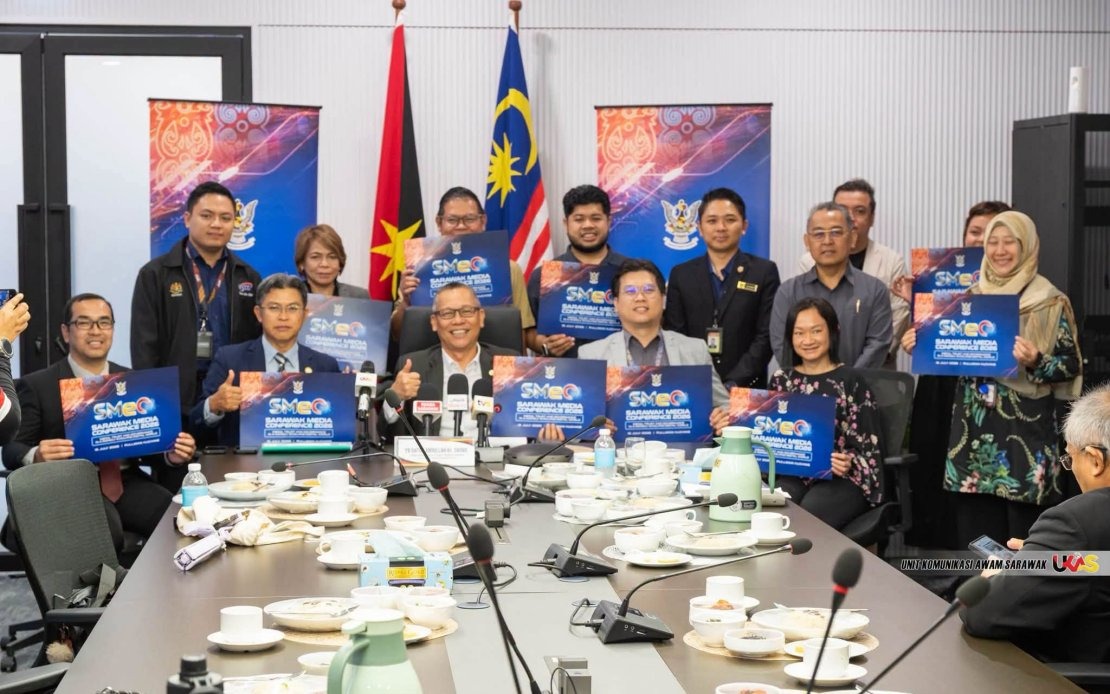
Kuching will host a significant gathering of media and communications professionals later this month as the Sarawak Government prepares to stage the inaugural Sarawak Media Conference 2026, drawing an anticipated 800 attendees from across the media industry, academia, government and student ranks. The event represents a major effort by regional authorities to create space for substantive dialogue on the future of journalism and media institutions amid accelerating technological change and shifting public confidence in news sources.
Organised by the Sarawak Public Communications Unit under the Premier's Department, the conference will be formally opened by Sarawak Premier Tan Sri Abang Johari Tun Openg and carries the thematic focus "Media, Trust and Governance in a Rapidly Evolving Digital World." This framing reflects broader concerns across Southeast Asia about the intersection of journalistic integrity, institutional credibility and technological disruption—issues that have become increasingly urgent as misinformation spreads rapidly through social platforms and artificial intelligence reshapes content creation.
According to Datuk Abdullah Saidol, Deputy Minister in the Sarawak Premier's Department overseeing corporate affairs and communications, the three-day conference will prioritise strengthening public confidence in media institutions while examining ethical journalism standards in an era of algorithmic content distribution. The conference agenda recognises that building and maintaining trust requires both traditional journalistic principles and adaptive responses to digital-age realities, including the emergence of AI-generated content and synthetic media.
The conference will feature speakers of considerable standing within Malaysia's media ecosystem. SOL Digital founder Lunnie Gan and Malaysian Media Council deputy chairman Premesh Chandran are among the confirmed participants, bringing perspectives from both digital innovation and media accountability sectors. Their presence signals an intent to bridge conversations between those developing new media technologies and those responsible for industry standards and self-regulation.
Beyond the main conference sessions, the event carries added ceremonial weight through its pairing with the Sarawak-level National Journalists' Day celebration, known as HAWANA 2026. This dual focus underscores state recognition of journalism's public role while simultaneously honouring individual practitioners. Deputy Prime Minister Datuk Seri Fadillah Yusof's planned attendance at the accompanying dinner demonstrates federal-level engagement with media governance discussions happening in the state.
The conference programme includes recognition of journalists and media workers across multiple disciplines through the Sarawak Premier's Special Appreciation Awards, which span five categories: editor, journalist and stringer; photographer; videographer; radio news presenter and broadcaster; and social media influencer. This categorisation reflects the diversification of news production and distribution in contemporary media landscapes, where traditional reporting roles coexist with visual journalism and digital content creation.
For Malaysian and Southeast Asian observers, SMeC 2026 carries significance beyond its immediate regional scope. Sarawak's initiative to host a dedicated media conference addresses substantive challenges facing journalism across the region: how newsrooms adapt to digital-first audiences while maintaining editorial standards, how trust erodes in polarised information environments, and what governance mechanisms might preserve institutional credibility as traditional revenue models collapse. These are not parochial concerns but structural pressures affecting media systems throughout Asia.
The focus on artificial intelligence within broader media discussions is particularly timely. As AI systems generate increasing volumes of text, imagery and video, journalists and news organisations must determine how to integrate these tools responsibly while maintaining human editorial judgment and accountability. The conference provides a platform for Malaysian practitioners to exchange experiences and strategies with regional counterparts facing identical challenges.
The scale of attendance—800 participants—suggests serious institutional commitment to the conference rather than a ceremonial exercise. This level of participation creates scope for substantive working discussions among editors, journalists, academics studying media systems, government officials responsible for information policy, and younger professionals entering the field. The inclusion of students indicates an intent to shape future media practice and thinking beyond current practitioners.
Governance represents another crucial thematic thread woven through SMeC 2026. As media ownership concentrates, digital platforms exert increasing editorial influence, and state-sponsored information campaigns proliferate, questions about appropriate governance frameworks—both industry self-regulation and policy-level structures—become increasingly contested. The conference offers opportunity to examine these tensions across Malaysian and potentially broader regional contexts.
The timing of this initiative also reflects growing recognition among Malaysian state governments that media policy and digital communication strategy warrant dedicated institutional attention. Rather than treating journalism and communications as peripheral policy domains, Sarawak's investment in SMeC 2026 positions media development and digital literacy as central governance concerns requiring sustained engagement with industry stakeholders, academics and policymakers.
As the conference proceeds, outcomes could shape media practice and policy conversations throughout Malaysia and the broader region. Recommendations emerging from discussions about trust-building, ethical standards for digital-age journalism, and governance frameworks might influence both newsroom practices and regulatory approaches. For Malaysian readers and media observers, SMeC 2026 represents an important moment in deliberating the future of journalism under conditions of rapid technological and social change.

