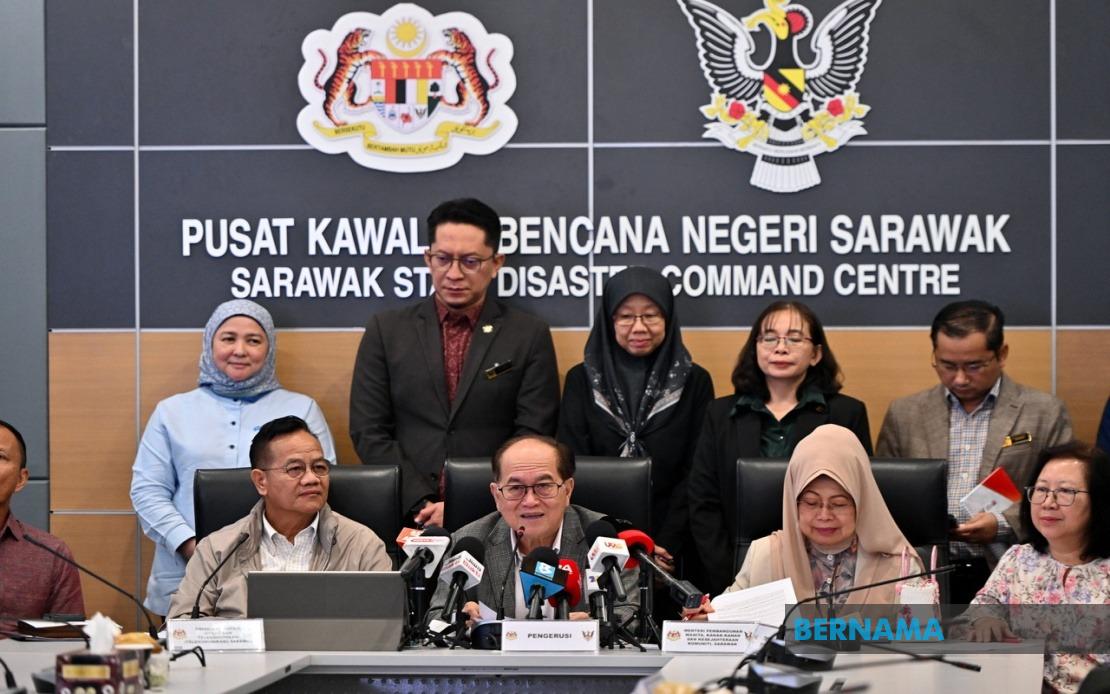
Sarawak has established a clear threshold for declaring a state of emergency in response to worsening air quality, with an Air Pollutant Index reading of 500 marking the point at which authorities will activate comprehensive crisis protocols. Datuk Amar Douglas Uggah Embas, the state's Deputy Premier and chairman of the Sarawak State Disaster Management Committee, outlined the escalation procedures during a media briefing in Kuching following a committee meeting on August 31. Once this critical threshold is breached, the situation will be escalated immediately to the National Disaster Management Agency headquartered in Kuala Lumpur, triggering federal-level disaster management procedures that are already established within Malaysia's emergency response framework.
The emergency declaration would have sweeping consequences for daily life across the impacted zones, fundamentally reshaping how Sarawakians work and conduct their affairs. Should the emergency be activated, all government offices will cease operations except for designated essential services, while private sector businesses in the affected areas will also be instructed to close their doors to the public. This represents a significant economic disruption, preventing normal commerce and administrative functions, though it reflects the severity of health risks posed by extreme air pollution. The restriction to essential services only ensures that critical infrastructure—such as hospitals, utilities, and security services—continue functioning to protect public welfare during the crisis period.
Uggah emphasised that the cross-border haze phenomenon presents a regional challenge requiring multilateral cooperation rather than unilateral state action. The Sarawak State Disaster Management Committee has proactively engaged Natural Resources and Environmental Sustainability Minister Datuk Seri Arthur Joseph Kurup, who serves as the committee's deputy chairman, to ensure that the state's concerns are properly documented and channelled through appropriate governmental structures. This coordination strategy reflects Malaysia's understanding that transboundary air pollution, particularly during Southeast Asia's burning season, cannot be addressed by individual states acting in isolation. The diplomatic approach leverages established ASEAN mechanisms and channels, positioning Sarawak's advocacy within a broader regional dialogue framework rather than as a standalone complaint.
The involvement of federal-level authorities through diplomatic channels represents an acknowledgment that haze mitigation requires engagement with neighbouring countries, particularly Indonesia where much of the regional burning originates. By routing Sarawak's concerns through Natural Resources and Environmental Sustainability Minister Kurup and formal ASEAN protocols, the state ensures that its specific challenges receive consideration in bilateral and multilateral discussions at the appropriate level. This systematic approach prevents ad hoc responses and maintains consistency with Malaysia's overall foreign policy positions on environmental matters. The committee has committed to ongoing cooperation with the federal government to ensure that representations made by Sarawak receive proper weight in national and regional forums where such matters are negotiated.
Cloud seeding operations represent Sarawak's proactive attempt to mitigate haze effects and address compounding environmental challenges simultaneously. Scheduled to commence on September 3 and continue through September 5, assuming weather conditions permit, these operations serve a dual purpose that extends beyond immediate haze reduction. The initiative is designed to replenish water resources across the state, particularly targeting reservoirs and water supply infrastructure that have experienced dangerous depletion due to the prolonged dry spell affecting the region. This multi-objective approach demonstrates strategic thinking, recognising that the haze episode coincides with water scarcity issues affecting critical infrastructure.
The water crisis has reached concerning levels across four key catchment areas that supply Sarawak's communities and industrial sectors. Simunjan, Lingga, Spaoh and Lijok catchments are all experiencing measurable depletion, creating a parallel crisis that demands immediate attention. Cloud seeding offers a potential solution to both problems simultaneously—artificial rain from seeding operations can help clear particulate matter from the atmosphere while simultaneously recharging depleted water sources. This efficiency makes the September schedule particularly strategic, allowing authorities to address two pressing environmental emergencies through a single intervention. However, the success of cloud seeding operations remains dependent on atmospheric conditions cooperating with technical requirements, which explains why the committee framed the timeline as provisional and subject to actual weather patterns.
The establishment of clear API thresholds and emergency procedures reflects Malaysia's evolving approach to air quality management and disaster response. Rather than relying on ad hoc declarations during crisis moments, the systematic framework allows authorities to respond swiftly and consistently when predetermined conditions are met. This institutional clarity provides businesses and residents with foreknowledge of what triggers emergency measures, enabling advance preparation and planning. For Malaysian readers, particularly those in Sarawak and other states vulnerable to transboundary haze, understanding these protocols offers transparency about government response mechanisms and the severity at which different interventions activate.
The regional dimension of this crisis cannot be overstated for Malaysian observers and policymakers. Sarawak's geographic position places it directly in the path of haze-carrying wind patterns from Indonesia, making it among the most severely affected Malaysian regions during burning season. The state's population of approximately three million residents faces regular health threats from poor air quality, yet the causes remain substantially beyond Sarawak's direct control. This vulnerability underscores Malaysia's dependence on successful diplomatic engagement with regional neighbours to manage environmental externalities that cross borders without regard for jurisdiction or sovereignty.
The committee's emphasis on working through federal channels and ASEAN mechanisms also reflects practical recognition that Sarawak lacks independent diplomatic standing in international negotiations. While the state government can advocate forcefully and coordinate local response efforts, binding agreements with Indonesia regarding land use, burning restrictions, and haze mitigation must be negotiated at the federal level by Kuala Lumpur. This layered governance approach—combining state-level emergency management with federal-level diplomacy—represents the standard Malaysian mechanism for handling transnational environmental challenges. For regional observers, this structure demonstrates how federal systems balance local autonomy with the need for coordinated national action on matters affecting multiple states and international relations.
Moving forward, the effectiveness of Sarawak's emergency protocols will depend substantially on factors beyond the state government's immediate control. While the API 500 threshold and corresponding emergency procedures are clear, preventing such conditions from occurring requires sustained regional cooperation on land management and agricultural practices in Indonesia. The success of cloud seeding operations will hinge on weather cooperation and technological efficacy. Simultaneously, addressing water scarcity through artificial rainfall represents a temporary measure rather than a long-term solution to underlying water resource challenges. These constraints highlight the complex nature of environmental governance in a region where natural phenomena and human activities operate across political boundaries, and where comprehensive solutions require sustained multilateral commitment.

