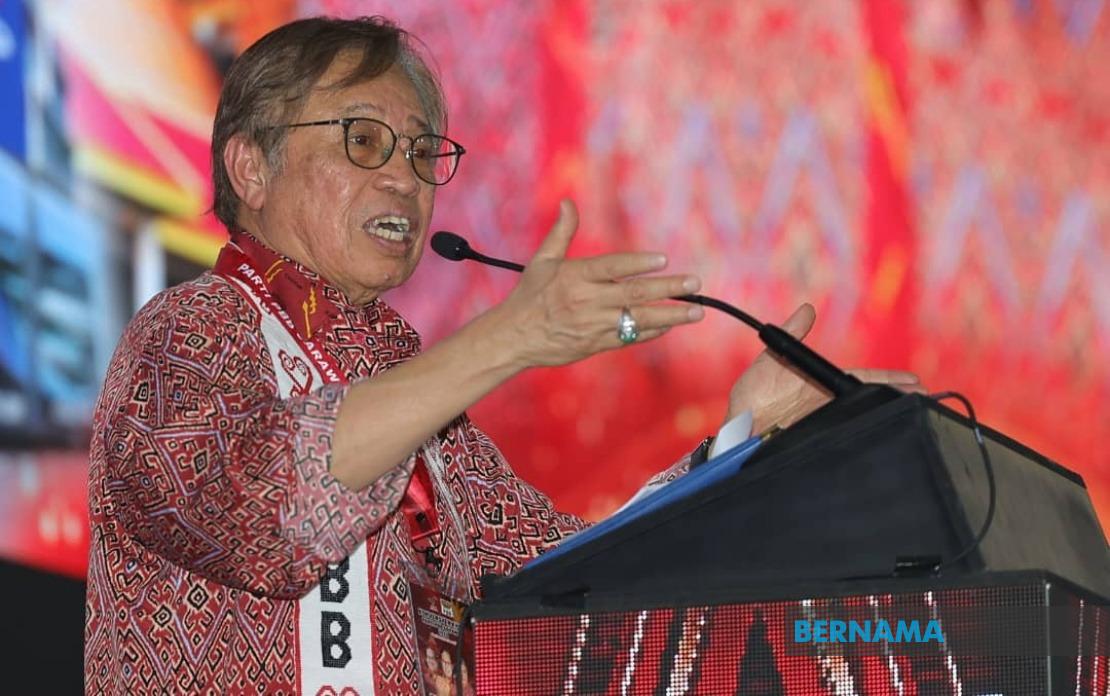
The Sarawak Government has unveiled an ambitious blueprint to transform the Rajang Area Security Command (RASCOM) site in Sibu, a strategically located 3,655.60-hectare tract of land recently transferred from federal ownership. Sarawak Premier Tan Sri Abang Johari Tun Openg announced the comprehensive development plan during a state party convention in Betong, signalling the state's determination to unlock value from previously underutilised federal assets. The handover represents a tangible outcome of the Malaysia Agreement 1963 (MA63) implementation process, reflecting ongoing negotiations between Putrajaya and Kuching over resource and land rights.
The RASCOM site encompasses four distinct communities: Nanga Tada, Nanga Jagau, Nanga Ngungun and Nanga Sekuau, areas where longhouse settlements have grown increasingly congested whilst infrastructure development has lagged significantly behind rural and urban standards. Abang Johari framed the development initiative as a response to genuine community needs, emphasising that overcrowded housing conditions and inadequate services have constrained residents' quality of life. The premier's focus on addressing these on-the-ground challenges reflects a state-level approach to development that prioritises constituent welfare over purely commercial considerations, distinguishing this project from speculative land ventures elsewhere in Malaysia.
The planned development strategy encompasses three interconnected pillars: residential expansion, modern infrastructure rollout, and agricultural expansion. Housing development will be the primary focus, with new residential blocks expected to ease pressure on existing longhouse communities and provide contemporary living facilities. Infrastructure improvements already underway include new road networks designed to facilitate both internal movement within the site and external connectivity to broader regional trade corridors. These transportation investments carry significance beyond the immediate development zone, potentially enhancing accessibility for surrounding communities and supporting the Rajang area's integration into Sarawak's economic ecosystem.
Agricultural development represents the third strategic pillar, leveraging the site's geographical position and land availability. Abang Johari indicated the state has identified considerable potential for farming activities within the designated areas, though specific crop selections and agricultural models remain undisclosed. For a region historically dependent on subsistence agriculture and modest commercial farming, the integration of modern agricultural infrastructure could introduce productivity improvements and market access for smallholder farmers, creating upstream economic multiplier effects throughout the region.
Financing the initiative requires RM1.5 million in allocated capital, a substantial but measured investment reflecting the project's intermediate-scale scope. Responsibility for execution will rest with the Mid-Rajang Regional Development Agency (MIRRDA) working in coordination with multiple state ministries and agencies, ensuring that development decisions align with Sarawak's overarching local development framework. This multi-agency coordination model suggests the state intends to embed the RASCOM project within broader regional planning architecture rather than treating it as an isolated infrastructure intervention.
The land transfer itself represents a milestone in the protracted MA63 implementation process. Minister in the Prime Minister's Department (Sabah and Sarawak) Datuk Mustapha Sakmud had previously announced federal agreement to relinquish the 3,655-hectare holding to Sarawak, with the Ministry of Natural Resources and Environmental Sustainability subsequently confirming Cabinet approval. This bureaucratic progression from federal retention through ministerial announcement to official Cabinet endorsement consumed considerable time, illustrating the administrative complexity surrounding federal-state property transactions in Malaysia's constitutional framework.
Broader context shows the RASCOM transfer forms part of an expanding portfolio of federal land returns to Sarawak. Since 2023, the federal government has approved transfer of 64 distinct land parcels to the state government, indicating a systematic rather than ad hoc approach to resolving outstanding land-related MA63 obligations. The cumulative significance of these transfers extends beyond the immediate parcels involved, signalling federal acknowledgement of legitimate state grievances regarding resource sovereignty and administrative control. For Malaysian federalism, this pattern suggests incremental movement toward rebalancing federal-state dynamics, though progress remains measured rather than transformative.
Abang Johari characterised the handover as the culmination of a deliberate negotiation sequence: initial state government identification of suitable federal land, formal requests to federal authorities, bilateral agreement, and formal transfer. This procedural narrative underscores the negotiated rather than unilateral nature of MA63 implementation, suggesting ongoing engagement between state and federal leadership rather than adversarial posturing. The premier's willingness to publicly acknowledge the collaborative dimension may reflect confidence that Sarawak's political positioning—within Malaysia's current coalition government structure—provides leverage to advance state interests.
The RASCOM project carries implications extending beyond Sarawak's immediate borders. Southeast Asian regional development patterns increasingly feature decentralised decision-making, with sub-national governments directing investment into rural and semi-urban zones previously neglected by central authorities. Sarawak's approach to the RASCOM site may inform development models applicable throughout the region, particularly regarding integration of housing, transport, and agricultural investments at intermediate geographical scales. For Malaysian policymakers observing federal-state dynamics, the RASCOM handover and subsequent state-directed development offers insights into mechanisms for translating constitutional commitments into tangible resource transfers.
The timeline and pace of actual construction and service delivery will ultimately determine the project's success in improving residents' welfare. While the financial allocation and governance structure appear established, execution challenges in remote Rajang communities—ranging from supply chain logistics to skilled labour availability—remain substantial. The project's impact will be measurable through indicators including housing completion rates, road completion and maintenance, agricultural productivity improvements, and community satisfaction metrics, all of which warrant sustained monitoring as implementation progresses.
Sarawak's development strategy for the RASCOM site reflects the state government's orientation toward tangible infrastructure and housing investment in rural constituencies. This contrasts with purely extractive resource models and signals political commitment to integrated regional development. As implementation proceeds, the project will serve as a test case for the effectiveness of MA63-enabled state autonomy in directing federal assets toward local development priorities, with lessons applicable across Malaysia's federal-state relationships and comparable decentralised governance contexts throughout Southeast Asia.

