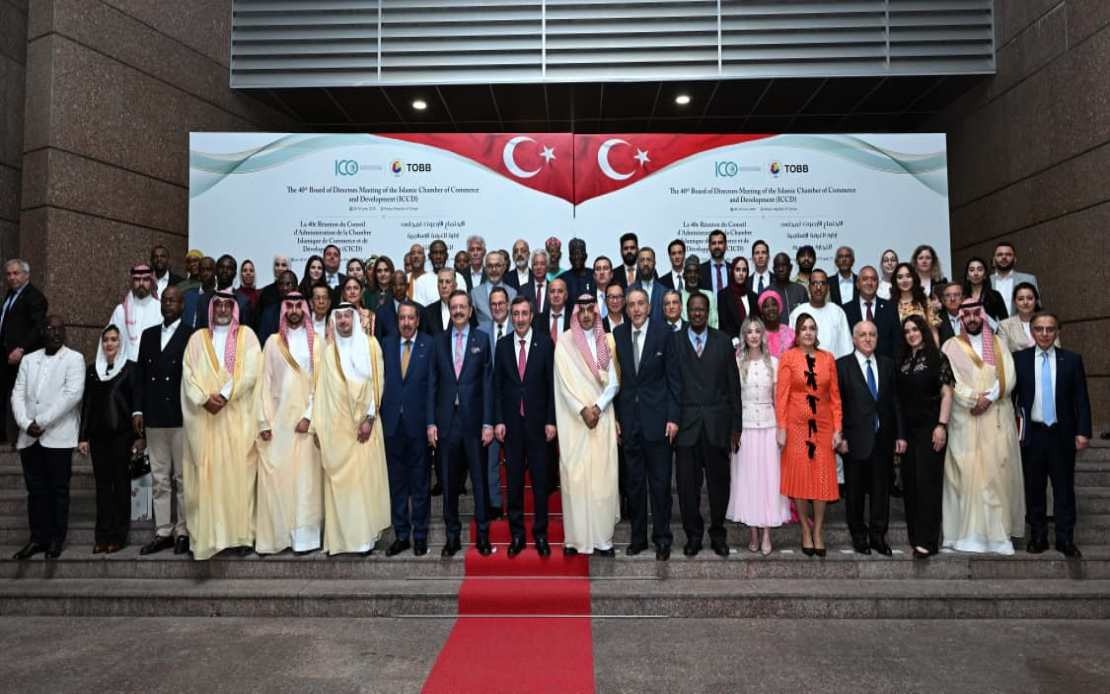
Saudi Arabia is stepping up efforts to deepen economic ties with Muslim-majority economies across the Islamic world, with particular emphasis on partnership opportunities with Malaysia and Indonesia. The push came from Abdullah Saleh Kamel, chairman of the Federation of Saudi Chambers and president of the Islamic Chamber of Commerce and Development, during high-level meetings held in Ankara, Turkiye this week. His remarks underscore Riyadh's strategic pivot toward leveraging the private sector as a vehicle for broader economic integration across the Islamic bloc.
Kamel's intervention at the 40th ICCD Board of Directors Meeting and the 72nd Finance Committee Meeting reflects deepening Saudi ambitions to position itself as a facilitator of commercial growth among member states. The kingdom has long been one of the ICCD's principal financial backers since the organisation's founding, and Riyadh views this institutional role as a platform for advancing its economic diplomacy across the Muslim world. By publicly highlighting Malaysia and Indonesia alongside Saudi Arabia, Kamel signalled that Southeast Asian economies have become essential to any meaningful expansion of intra-Islamic commerce and investment frameworks.
The timing of these remarks carries particular significance for Malaysia, which has been cultivating its own role as a bridge between the Islamic world and global financial markets. Kuala Lumpur's position as a major halal hub and Islamic finance centre makes it a natural partner for any initiative aimed at strengthening trade corridors and investment mechanisms among Muslim nations. Saudi Arabia's explicit reference to Malaysia in the context of long-term economic development suggests Riyadh recognises the country's potential to anchor new commercial partnerships across the region.
According to the statement released following the Ankara meetings, the cooperation initiative focuses on several interconnected areas that resonate deeply with Malaysia's own development priorities. Private-sector expansion, youth entrepreneurship, food security, and sustainable agriculture form the cornerstones of the proposed framework. These elements address demographic and economic challenges common to many Islamic economies: large youth populations seeking employment opportunities, growing domestic food demands requiring agricultural modernisation, and the need for resilient supply chains that can withstand global disruptions. Malaysia's experience in agro-technology and food processing positions it as a potential knowledge-sharing partner for other member states.
Regional trade connectivity emerges as a critical pillar of the Saudi-led initiative. The fragmentation of intra-Islamic commerce has long limited the economic potential of Muslim-majority nations, many of which trade more extensively with non-Muslim partners than with each other. By prioritising connectivity improvements, the ICCD aims to reverse this pattern and create a more integrated economic ecosystem. For Malaysia, enhanced regional trade infrastructure would complement existing ASEAN frameworks and create additional pathways for Malaysian exporters to access growing markets in the Middle East, North Africa, and beyond.
The ICCD's overarching strategy centres on catalysing greater intra-Islamic investment and trade in ways that simultaneously promote economic integration and job creation for younger generations. This dual objective acknowledges that economic cooperation must deliver tangible benefits at the grassroots level to gain traction among businesses and policymakers. Youth entrepreneurship programmes, in particular, offer platforms for Malaysian startups to access capital, mentorship, and market opportunities across the broader Islamic world, while simultaneously attracting foreign investment into Malaysia's own dynamic startup ecosystem.
Beyond immediate commercial objectives, the Ankara meetings addressed institutional development and long-term planning within the ICCD framework. Board members deliberated on structural improvements to chamber operations and examined pipeline projects designed to strengthen collaborative mechanisms. These discussions carry implications for Malaysia's future participation in ICCD governance structures and the country's ability to shape emerging protocols for trade dispute resolution and investment protection among member states.
The ICCD's golden jubilee celebration scheduled for 2027 provides a focal point for these cooperation initiatives. Rather than functioning as a ceremonial milestone, the 50-year anniversary is being positioned as a launching pad for ambitious new economic programmes. Malaysia could leverage this moment to champion specific initiatives addressing Southeast Asian priorities, such as establishing dedicated Islamic finance corridors or formalising supply-chain partnerships in halal and agro-industrial sectors.
For Malaysian policymakers, the Saudi outreach represents both opportunity and challenge. Deepening engagement with ICCD structures could unlock new markets and investment sources, yet requires navigating complex relationships between competing economic interests within the Islamic bloc. The emphasis on private-sector leadership suggests that implementation will depend heavily on Malaysian businesses proactively identifying partnership opportunities rather than waiting for government-to-government facilitation.
The broader geopolitical context cannot be ignored. Saudi Arabia's push for stronger Islamic economic integration reflects wider efforts to position the kingdom as a unifying force within the Muslim world, particularly as regional rivalries complicate traditional diplomatic channels. Malaysia's active participation in these frameworks enhances Kuala Lumpur's standing as a responsible stakeholder in Islamic economic affairs while potentially offsetting pressure from competing regional powers seeking to expand their own influence.
Indonesia's concurrent mention in Saudi Arabia's statement underscores the regional dimension of these initiatives. As the world's largest Muslim-majority nation by population, Indonesia's participation is essential for credibility. The recognition of both Malaysia and Indonesia suggests Saudi strategists view Southeast Asia not as peripheral to Islamic economic cooperation but as central to its success. This perception could accelerate the pace of concrete project development and resource allocation toward the region.
For Malaysia's business community, the immediate priority lies in translating these high-level pronouncements into actionable partnerships. Chambers of commerce, industry associations, and individual enterprises should begin exploring participation in ICCD platforms, submitting project proposals, and establishing connections with counterparts across the Islamic world. The window of opportunity may be open, but it requires active Malaysian engagement to produce meaningful results before 2027's anniversary celebrations.
Ultimately, Saudi Arabia's call for closer cooperation reflects recognition that economic integration offers durable benefits compared to purely diplomatic or political engagement. Malaysia's track record in regional commerce and Islamic finance positions it to become a principal beneficiary of any sustained effort to strengthen intra-Islamic trade and investment networks. The question now is whether Malaysian stakeholders will mobilise sufficiently to capitalise on this moment.

