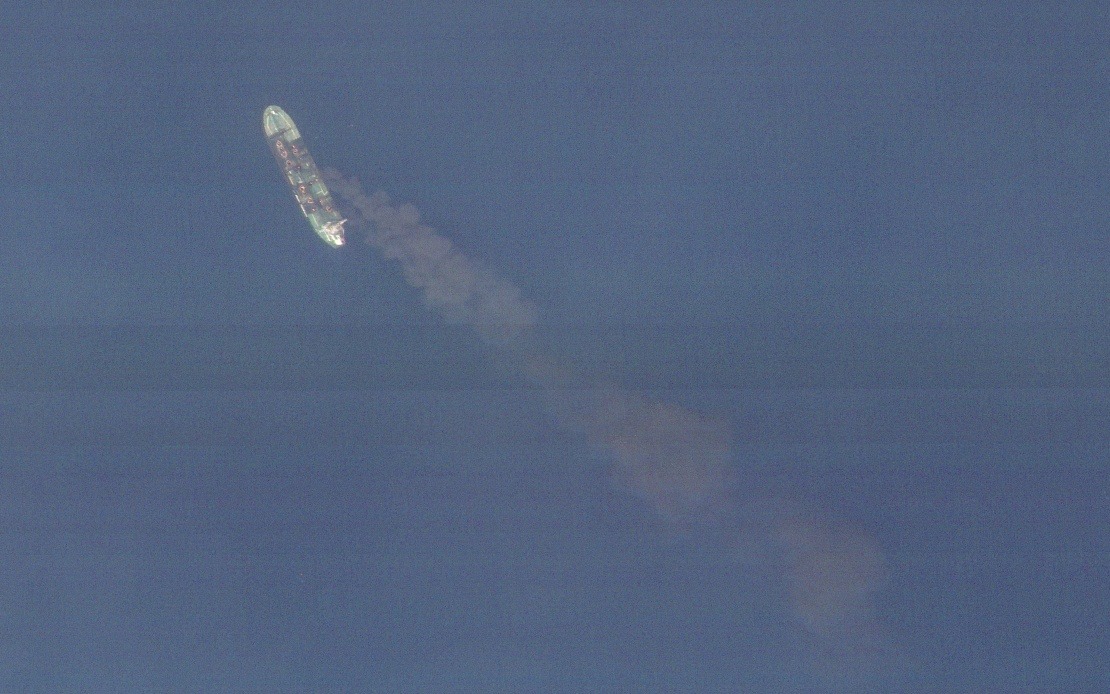
The Saudi-led military coalition operating in Yemen has declared its resolve to maintain freedom of navigation through the strategically vital Bab al-Mandab Strait, pledging robust counteraction against any Houthi interference with commercial shipping. The announcement came hours after the Iran-aligned Houthi movement formally instituted restrictions on Saudi Arabian maritime traffic, representing a significant escalation in regional tensions that threatens one of the world's most critical shipping corridors linking the Suez Canal to the Indian Ocean.
Coalition spokesperson Turki Al-Malki articulated the military response in a statement posted to social media platform X, asserting that the Joint Forces Command is implementing comprehensive operational protocols conforming to international maritime law to ensure unimpeded passage of coalition-affiliated vessels through the contested waterway. Al-Malki characterised the Houthi restrictions as inflammatory rhetoric rather than substantive policy, a framing that underscores the coalition's dismissal of the group's maritime authority whilst simultaneously signalling preparedness for potential military confrontation.
The Saudi Foreign Ministry simultaneously issued a rebuttal challenging the foundational claims underlying the Houthi maritime action. Officials rejected characterisations of Saudi involvement in a blockade of Yemen, contending instead that the kingdom has channelled development assistance and budgetary transfers aimed at ameliorating the humanitarian conditions affecting Yemen's civilian population. This diplomatic counter-narrative attempts to recalibrate international perception of Saudi conduct, particularly among nations concerned about humanitarian implications of maritime restrictions.
Statistical data presented by coalition representatives emphasises the continuation of commercial activity through Houthi-controlled ports despite political tensions. Approximately 300 commercial vessels reportedly transited into ports under Houthi administration during the first six months of the year, conveying essential commodities including foodstuffs and petroleum products. This data point serves a dual rhetorical purpose: demonstrating sustained economic engagement whilst simultaneously undermining Houthi claims of comprehensive Saudi blockade policies.
The Houthis' announced prohibition responded to what their leadership characterised as a protracted Saudi siege spanning nearly twelve years, employing the rhetorical framework of reciprocal restriction—a "blockade for blockade" principle. This framing reflects the group's persistent grievances regarding Saudi military intervention and perceived economic coercion, translating longstanding political disputes into concrete maritime action with substantial implications for regional commerce.
Immediate catalyst for the escalation stemmed from a military operation conducted by the Saudi-backed Yemeni government targeting Sanaa International Airport the preceding week. The operation aimed to prevent an Iranian aircraft transporting senior Houthi delegation members from landing, reflecting broader geopolitical competition for influence within Yemen's fractured polity. In response, the Houthis deployed aerospace assets—specifically missiles and unmanned aerial systems—directed toward Saudi territory, demonstrating their capacity for transnational strikes and willingness to employ them in response to perceived provocations.
Yemen's protracted internal conflict commenced in late 2014 when the Houthi movement captured the capital city of Sanaa and consolidated control over substantial portions of northern Yemen. The Saudi-led coalition subsequently intervened in 2015, initiating a campaign of aerial bombardment and military operations intended to dislodge the Iranian-backed group from power. The resulting civil war has devastated Yemen's infrastructure, displaced millions of civilians, and created one of the world's most severe humanitarian emergencies.
The trajectory from relative stability toward renewed confrontation carries particular significance given the fragile de-escalation framework established through United Nations mediation in 2022. That truce represented an unprecedented diplomatic breakthrough after years of devastating conflict, generating cautious optimism regarding eventual political settlement. Recent military incidents and maritime restrictions suggest this carefully constructed arrangement may be deteriorating, as substantive political negotiations remain stalled and underlying military capabilities continue accumulating on both sides.
For Malaysian stakeholders and regional trading networks, developments in the Bab al-Mandab Strait warrant serious consideration. The waterway constitutes a crucial chokepoint for Southeast Asian maritime commerce, with substantial volumes of Malaysian trade transiting these waters en route to European and African markets. Any sustained disruption would elevate shipping costs across the region, strain supply chains for petroleum-dependent economies, and potentially trigger diversions toward longer alternative routes via the Cape of Good Hope—substantially increasing transit times and operational expenses for regional exporters.
The escalatory dynamic visible in recent Yemeni developments reflects broader patterns of regional contestation between Saudi Arabia and Iran, with Yemen serving as a proxy arena for this competition. The Houthi maritime restrictions represent not merely tactical military maneuvering but rather deliberate signalling of capability to disrupt international commerce and impose costs on adversaries. Coalition responses, likewise, reflect determination to maintain regional hegemony and preserve freedom of navigation in strategic waterways.
International shipping insurers, already navigating substantial premiums associated with Bab al-Mandab transits due to prior Houthi military activity, face renewed uncertainty regarding vessel security and potential escalation. The absence of clear de-escalation mechanisms or diplomatic off-ramps suggests that rhetorical commitments from both sides may translate into concrete military engagements, further destabilising one of Asia's most critical maritime arteries.

