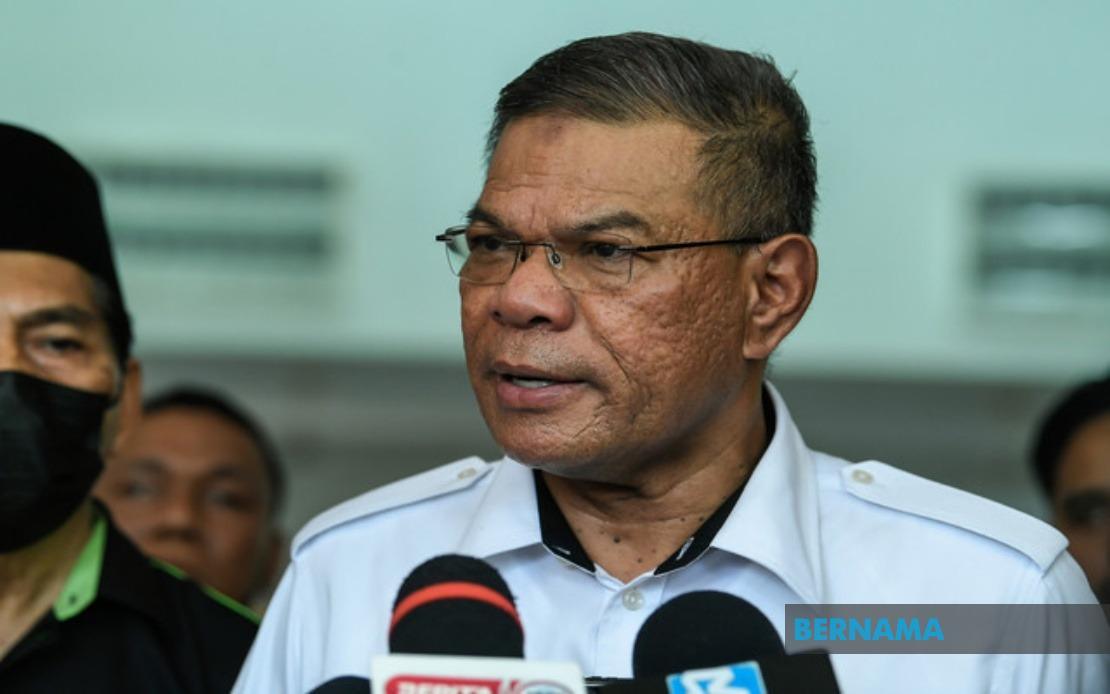
Home Minister Datuk Seri Saifuddin Nasution Ismail has pushed back against the perception that School Liaison Officers focus narrowly on bullying, arguing instead that their remit encompasses the full spectrum of student safety and wellbeing within educational institutions. Speaking in Kulim on July 22 following an inspection of fire-damaged hostel facilities, the minister emphasised that the Royal Malaysia Police's initiative represents a comprehensive approach to school security that extends well beyond the high-profile bullying incidents that periodically capture public attention through social media.
The clarification comes at a moment when Malaysian society has been grappling with troubling cases of student-on-student violence and intimidation that have gained viral traction online, including a recent incident in Cheras that sparked widespread concern among parents and educators. By articulating the wider protective scope of School Liaison Officers, Saifuddin Nasution sought to reassure Malaysians that institutional safeguards are more robust than they might appear from headline-grabbing controversies alone. The presence of police personnel embedded within schools represents an attempt to create a visible security infrastructure that addresses everything from interpersonal conflicts to more serious safety breaches.
School Liaison Officers, drawn from district police headquarters and nearby stations, function as embedded safety coordinators who work in partnership with school administrations, teaching staff, parents, and student bodies. This collaborative framework is designed to build relationships of trust rather than rely solely on enforcement, though the backing of police authority underpins the initiative. Beyond addressing confrontations between students, these officers monitor a spectrum of incidents that might jeopardise the school environment—from accidents and structural hazards to substance-related concerns and mental health crises. The deployment of additional National Anti-Drugs Agency personnel within schools further reinforces this multi-layered protective apparatus.
The minister cited a specific example to illustrate the breadth of this oversight: a recent incident involving a student who fell at a school in Kuala Nerang, which remains under active police investigation. Such cases, while not involving interpersonal violence, nevertheless represent the kinds of situations demanding immediate institutional response and documentation. By highlighting this accident, Saifuddin Nasution underscored that school safety encompasses physical infrastructure, emergency response protocols, and the systematic investigation of incidents that might otherwise receive minimal scrutiny. This approach reflects a recognition that comprehensive school safety requires attention to diverse risk categories.
The initiative has rolled out across the nation as part of the Royal Malaysia Police's strategic commitment to transforming schools into certified safe spaces. Through structured engagement programmes involving students, parents, and staff, these School Liaison Officers aim to create preventive cultures rather than reactive crisis-management systems. The nationwide expansion signals the federal government's intent to position school safety as a priority concern deserving sustained institutional investment and police resource allocation. For parents in Malaysia, the visible presence of designated police liaisons at schools offers some assurance that trained personnel are focused specifically on student protection.
The discussion surrounding School Liaison Officers took on added urgency following the fire that engulfed a hostel block at Sekolah Menengah Agama Tarbiah Diniah near Kulim in the early morning hours. The conflagration, which erupted around 2:30 am, affected 116 boarding students who lost accommodation and personal belongings in the blaze. This disaster illustrated the unpredictable nature of emergencies that schools must manage and the speed with which institutional response mechanisms must be activated. While the fire represents a different category of threat than bullying, it nevertheless demonstrates the complex safety landscape that officials like Saifuddin Nasution must navigate.
In response to the hostel fire, the government mobilised multiple assistance mechanisms within hours. Each affected student received RM500 in immediate cash assistance to purchase essential items and school materials, recognising the sudden displacement these young people experienced. Many students lost everything except the clothing they wore, creating both practical hardship and psychological disruption. The swift disbursement of emergency funds reflected the MADANI Government's stated commitment to responsive crisis intervention, though the adequacy of such assistance for replacing notebooks, uniforms, toiletries, and other school necessities remained uncertain.
Beyond the immediate cash aid, the federal government approved RM200,000 for constructing temporary hostel accommodation, a commitment secured with Prime Minister approval following Saifuddin Nasution's briefing. This capital allocation demonstrates an intention to restore normalcy quickly rather than allow the disruption to extend indefinitely. Such infrastructure investments represent the kind of longer-term response that complements emergency cash transfers. The State Development Office was tasked with expediting these building efforts, suggesting coordination across multiple administrative layers. Additionally, the Home Minister's office contributed RM10,000 to the school's Parent-Teacher Association, acknowledging the association's role in supporting affected families.
The National Registration Department activated mobile services at the school site to assist students whose identity cards were destroyed in the flames, offering replacements at no charge. This administrative support removal service demonstrates how government agencies can coordinate to ease bureaucratic burdens during crises. For boarding students living away from family, possession of valid identification is essential for numerous purposes, from transportation to financial transactions. By bringing replacement services directly to the school rather than requiring displaced students to travel to distant NRD offices, the government acknowledged the particular vulnerabilities of affected young people.
The minister framed these interventions as expressions of the MADANI Government's foundational commitment to placing children's welfare at the centre of policy priorities. He argued that incidents affecting school facilities warrant maximum government attention because such facilities form the institutional backbone of childhood development and learning. By demonstrating rapid, coordinated responses across multiple agencies—police, home affairs, registration, development offices, and the military or disaster management structures that likely assisted with the fire response—the government sought to illustrate that school emergencies receive top-tier treatment. This messaging carries particular importance in Malaysia, where concerns about institutional responsiveness often dominate public discourse.
For Malaysian readers, the clarification regarding School Liaison Officers reflects broader questions about how security and safety are conceptualised within educational contexts. The tension between comprehensive monitoring and maintaining schools as spaces of relative freedom—where students develop independence and resilience—remains unresolved in the policy framework. Whereas bullying incidents generate public outcry and parental anxiety, the quieter work of preventing accidents, addressing mental health concerns, and fostering positive peer relationships receives less fanfare. By insisting that the school safety apparatus extends beyond bullying cases, the Home Minister implicitly acknowledged that modern institutional safety requires attention to multiple overlapping risk categories rather than targeting single concerns.
The hostel fire has inevitably raised questions about fire safety protocols, building inspections, and emergency preparedness at boarding schools nationwide. While the immediate government response focused on victim assistance and temporary accommodation, longer-term scrutiny may examine whether fire safety standards at Malaysian schools meet contemporary benchmarks and whether emergency evacuation procedures had been adequately rehearsed. As schools across Southeast Asia navigate the evolving landscape of student safety—from traditional concerns like bullying to infrastructure vulnerabilities and mental health crises—the Malaysian approach of embedding police liaisons while coordinating multi-agency emergency responses represents one institutional model among several competing frameworks.

