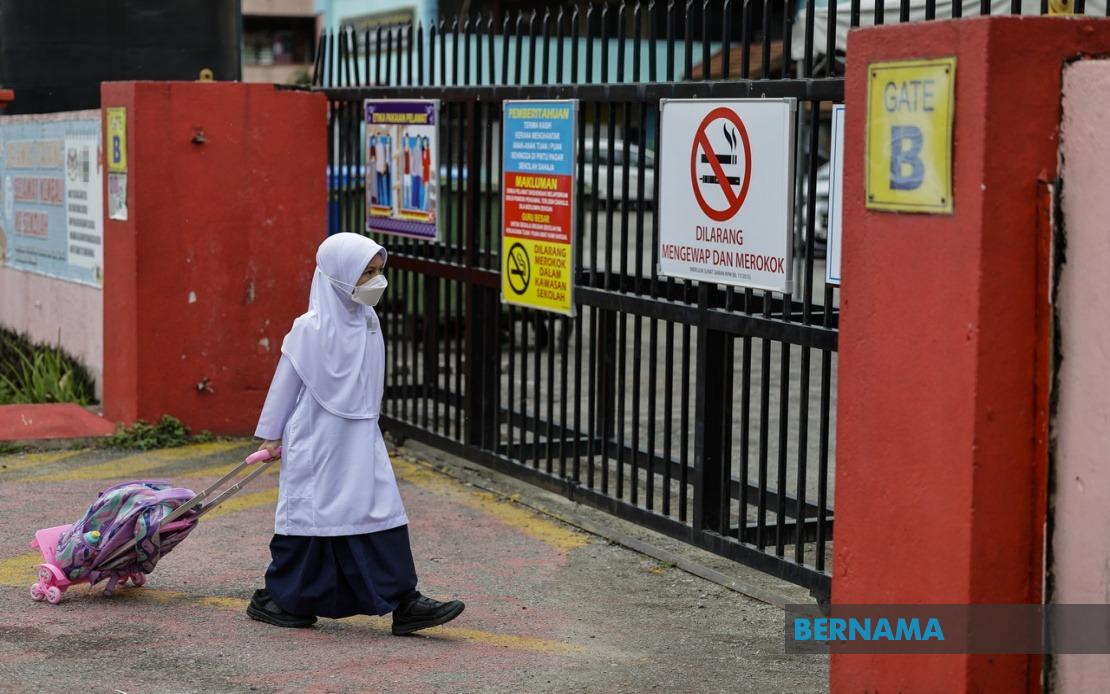
Deputy Education Minister Wong Kah Woh confirmed on Wednesday that Malaysia's schools possess the flexibility to suspend operations whenever Air Pollutant Index readings climb beyond 200, provided principals and headmasters determine closures are warranted based on local atmospheric conditions and guidance from State Education Departments and District Education Offices. The clarification emerged as several regions experienced unhealthy air quality over recent days, prompting fresh inquiries into the Ministry of Education's response protocols.
The Ministry of Education operates under a longstanding framework addressing transboundary haze and air quality emergencies, with formal circulars issued in 2016, 2019, and 2023 establishing the operational hierarchy and decision-making authority. Rather than imposing blanket mandates from Kuala Lumpur, the system delegates responsibility to frontline administrators who understand their schools' specific environments, student demographics, and susceptibility patterns. This decentralised approach reflects recognition that air quality crises affect regions unevenly, and that institutional knowledge at the district level often surpasses centralised oversight.
Wong articulated a graduated response framework wherein API breaches trigger escalating precautions. When readings exceed 100, schools must immediately curtail outdoor activities and suspend mass gatherings of students, effectively halting morning assemblies and outdoor physical education lessons. Athletic competitions and inter-school sports days are postponed, removing the risk of children exerting themselves in contaminated air. These intermediate measures remain in force until air quality improves, creating a holding pattern that maintains educational continuity whilst reducing exposure.
The threshold of 200 represents a substantially elevated contamination level at which respiratory distress and cardiovascular strain become pronounced even in brief exposures. At this tier, decision-makers face a choice: whether the educational benefits of in-person instruction outweigh the demonstrated health risks. By granting principals discretionary authority rather than imposing automatic closures, the framework acknowledges that schools in different geographic zones and with varying student health profiles require tailored responses. A boarding school housing predominantly healthy teenagers may operate under conditions that would necessitate closure for an institution serving younger pupils with asthma and respiratory sensitivities.
The Ministry's commitment to continuous monitoring through the education departmental hierarchy means that administrators receive regular API updates and expert assessments from environmental and public health authorities. Rather than expecting school leaders to independently interpret air quality science, the framework supplies them with information and guidance whilst preserving their capacity to consider factors invisible to centralised authorities—existing health vulnerabilities within their student population, proximity to pollution sources, facility ventilation capabilities, and community circumstances.
This management structure gains particular significance for Malaysia given the region's exposure to transboundary haze emanating from agricultural burning and land clearance across Sumatra and Kalimantan. Unlike temperate climates where air quality crises prove sporadic, Southeast Asia confronts seasonal haze events that recur predictably, particularly during dry months. The 2016, 2019, and 2023 circulars represent institutional learning from past crises, each iteration incorporating lessons from preceding episodes. Schools have thus operated under this framework repeatedly, with administrators and education officers accumulating practical experience in executing transitions between operational states.
The implications extend beyond classroom management into broader societal conversations about environmental accountability and cross-border pollution. When Malaysian schools close due to Indonesian haze, the visible disruption to education underscores the economic and social externalities imposed by land-use practices in neighbouring jurisdictions. Policymakers leverage these visible consequences to support regional cooperation frameworks and bilateral pressure regarding agricultural burning controls. The education sector becomes inadvertently integrated into environmental diplomacy.
For parents navigating the system, the discretionary model introduces complexity requiring vigilance. Unlike jurisdictions issuing universal proclamations from education ministries, Malaysian parents cannot assume automatic closures at specific API thresholds. Instead, they must monitor both air quality readings and their specific school's response, potentially within a context where neighbouring institutions make different determinations. This demands parental engagement and awareness rather than passive reliance on standardised procedures.
The framework also reflects pragmatic acknowledgement of economic pressures constraining schools' operational flexibility. Automatic closures at specific thresholds might trigger genuine hardships for families dependent on school-based childcare to maintain employment, particularly among lower-income households. By preserving principal discretion, the system permits consideration of community circumstances alongside health imperatives, enabling some institutions to implement modified schedules or indoor curricula rather than complete suspensions when partial measures suffice.
Education authorities' emphasis on regular monitoring and communication with schools underscores confidence that the existing system, properly implemented, provides adequate protection. The Ministry's institutional apparatus—State Education Departments and District Education Offices—serves as the interface translating scientific air quality data into practical operational guidance. This layered structure distributes responsibility appropriately, with environmental scientists and public health experts informing administrators who ultimately contextualise guidance within school-specific realities.
Looking forward, Malaysia's approach to air quality-driven school management reflects mature institutional development acknowledging both the urgency of environmental protection and the complexity of institutional decision-making. Rather than oversimplifying through rigid automated responses, the framework preserves human judgment at the point of implementation whilst anchoring decisions within scientifically informed parameters and established protocols.

