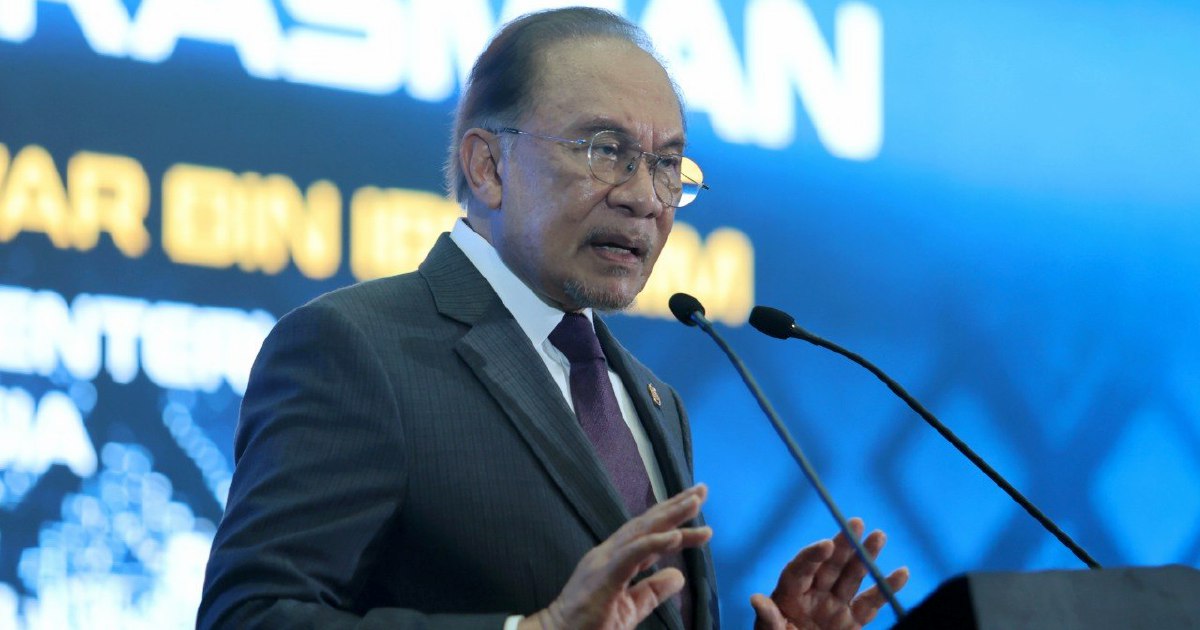
Prime Minister Datuk Seri Anwar Ibrahim has issued a pointed warning to Malaysian educational institutions that prioritizing institutional reputation over student welfare by suppressing bullying reports is unacceptable and counterproductive. Speaking in Nilai, Anwar underscored that schools harbour a fundamental responsibility to maintain transparent protocols when addressing incidents of bullying, rather than allowing reputational concerns to dictate their response to such serious matters.
The Prime Minister's intervention reflects growing national concern about the prevalence of bullying in Malaysian schools and the inadequacy of response mechanisms that sometimes obscure rather than address the problem. Anwar's statement serves as a direct reminder to educational administrators that concealing such incidents not only fails the immediate victims but perpetuates a culture where perpetrators operate with impunity, enabling further harassment and emotional trauma among the student population.
The significance of Anwar's remarks extends beyond simple admonishment. They signal a shift in government expectations regarding accountability within the education sector. By explicitly cautioning schools against covering up cases, the Prime Minister is effectively elevating the handling of bullying from a matter of administrative discretion into one where transparency and swift intervention become measures of institutional integrity rather than liability.
Malaysia has witnessed increasing documentation of serious bullying incidents in recent years, ranging from physical assault to psychological harassment conducted both in school premises and through digital platforms. The tendency for some institutions to handle such matters internally, away from public scrutiny, has historically allowed patterns of abuse to persist unchecked. Anwar's statement acknowledges this reality and repositions the narrative around how schools should manage these crises.
The emphasis on "swift action" in Anwar's warning is particularly significant. Delayed or muted responses to bullying allegations allow the affected student's distress to compound, potentially leading to severe mental health consequences, academic decline, and in extreme cases, tragic outcomes. Schools that suppress bullying reports effectively delay the protective interventions that victims desperately require, whether through counselling, separation from perpetrators, or external support services.
From a Southeast Asian perspective, Malaysia's educational landscape shares common challenges with neighbouring countries regarding bullying and institutional accountability. The region has seen growing awareness campaigns and policy initiatives aimed at combating school violence and harassment. Anwar's clear directive positions Malaysia as moving toward stricter oversight and enforcement of anti-bullying measures, aligning the country with international best practices that prioritize student protection over institutional image management.
The implications for school administrators are substantial. Educational leaders must now navigate a landscape where the government explicitly expects transparent reporting and intervention rather than internal suppression. This shift may necessitate revised protocols, enhanced staff training on bullying identification and response, and clearer channels for students and parents to report incidents without fear of institutional retaliation or minimization.
Parents and students themselves benefit from understanding that the Prime Minister's statement provides backing for those seeking accountability when schools attempt to downplay or conceal bullying situations. The warning legitimizes pushing back against institutional pressure to stay silent, creating space for families to escalate concerns to higher authorities when schools initially respond inadequately. This creates external pressure on schools to manage incidents professionally from the outset.
The effectiveness of Anwar's warning ultimately depends on implementation mechanisms. While the government can articulate expectations, converting them into operational reality requires support structures such as independent monitoring, clear consequences for institutions that violate reporting requirements, and adequate resources for schools to implement comprehensive anti-bullying programs. Without these supports, the Prime Minister's caution risks becoming a symbolic gesture rather than a catalyst for systemic change.
Educational institutions must recognise that transparency regarding bullying actually protects their long-term reputation far better than concealment. School communities increasingly expect accountability, and parents making educational choices for their children now weigh anti-bullying policies heavily. Schools that demonstrate serious, transparent approaches to addressing bullying gain parental trust and community respect, whereas those caught suppressing incidents face reputational damage far exceeding what transparent crisis management would have incurred.
Moving forward, the challenge lies in translating Anwar's directive into comprehensive policy frameworks and resource allocation. The Education Ministry, state education departments, and school management bodies must work collaboratively to establish clear guidelines specifying what constitutes reportable bullying behaviour, mandatory reporting timelines, protection measures for whistleblowers, and standardized intervention protocols. Without such institutional architecture, even well-intentioned warnings from political leadership struggle to generate meaningful change.
The Prime Minister's statement also implicitly calls for cultural transformation within the education sector. Schools must embrace a paradigm where protecting students and being transparent about challenges strengthen rather than undermine institutional reputation. This requires reframing how administrators and boards perceive institutional prestige, moving away from metrics focused solely on academic achievement and external appearance toward holistic measures that encompass student safety, wellbeing, and the ethical standards of the institution itself.

