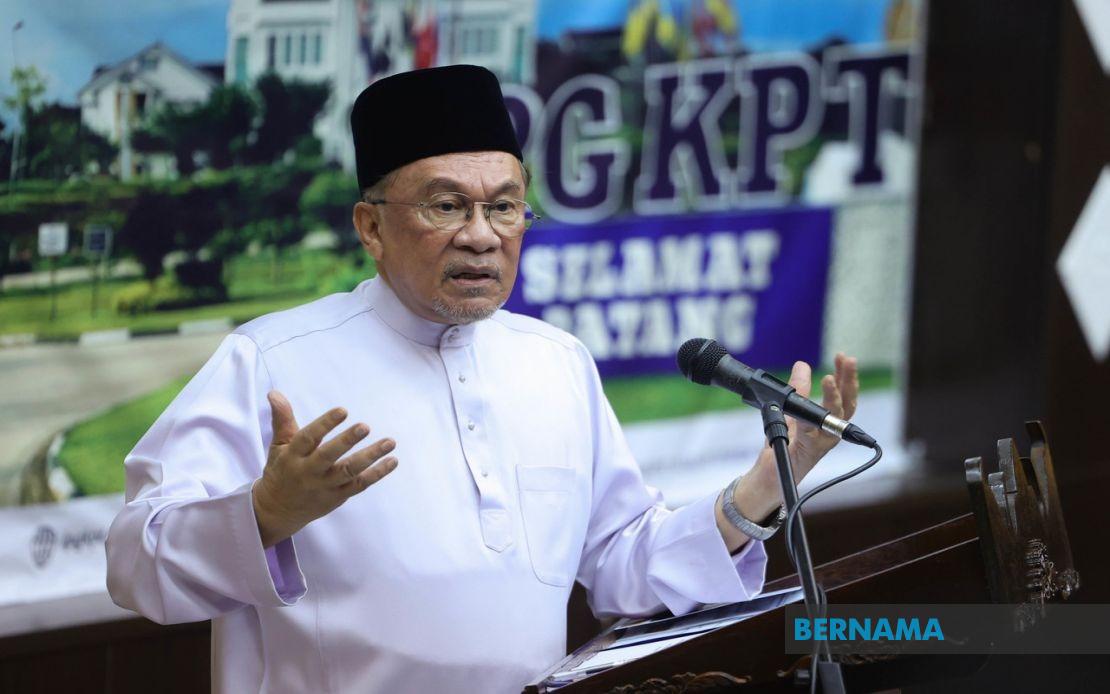
Prime Minister Datuk Seri Anwar Ibrahim has urged Malaysian schools to prioritise transparency when dealing with bullying, warning against the practice of hiding such incidents to preserve institutional reputation. Speaking in Nilai on July 17, the premier stressed that concealing bullying cases undermines victim protection and prevents effective resolution of what remains a persistent problem in the education system. Education Minister Fadhlina Sidek attended the remarks, signalling high-level commitment to addressing the issue.
Anwar challenged the perception that reporting bullying reflects poorly on school leadership, arguing that accountability lies not with those who surface problems but with those who ignore them. Using a concrete example, he noted that a school with 1,000 students reporting two bullying cases demonstrates responsible governance. The real failure occurs when administrators become aware of such incidents but take no action and subsequently cover up the matter to maintain the institution's standing in the community. This distinction carries important implications for how school principals and headteachers approach their duty of care.
The Prime Minister's intervention reveals a concerning pattern in Malaysia's education sector where reputational concerns sometimes override student welfare. By positioning transparency as a mark of institutional strength rather than weakness, Anwar seeks to reshape how schools view their obligations. The pressure to maintain pristine public images has historically led some Malaysian schools to resolve bullying incidents through informal channels, sometimes without proper documentation or follow-up, leaving victims without adequate support or assurance that perpetrators will face consequences.
Beyond the immediate issue of reporting, Anwar identified a deeper systemic problem: the failure of educational institutions to cultivate moral character and human values among students. He observed that despite increased access to religious education compared to previous decades, bullying persists, suggesting that knowledge transmission alone cannot address the problem. The observation points to a gap between curriculum content and practical implementation, where lessons in ethics and respect do not translate into behavioural change.
The Prime Minister challenged the prevailing emphasis on academic excellence and technical expertise as the primary measures of educational success. He questioned the logic of producing technically proficient professionals—whether IT specialists, engineers, or doctorate holders—without corresponding development of interpersonal compassion and understanding of shared humanity. This critique resonates with ongoing debates in Malaysian education circles about whether the system adequately prepares students for roles as responsible community members, not merely economic contributors. The rhetorical question about the value of advanced qualifications without moral grounding reflects concerns that educational institutions have prioritised measurable metrics over character formation.
Anwar placed significant responsibility on teachers, characterising them as guardians of educational spaces where future generations develop their values and worldview. He argued that educators must actively cultivate faith, ethical principles, and consideration for others alongside academic instruction. This framing acknowledges that bullying prevention cannot rely solely on disciplinary mechanisms or counselling services but requires sustained cultural work by teaching staff to model and reinforce respectful behaviour. Teachers thus emerge as crucial figures in transforming school environments from spaces where bullying might be overlooked into communities where such behaviour is actively discouraged and reported.
Despite identifying these systemic challenges, Anwar expressed confidence in Malaysia's teaching profession, describing its current standards as very high. He coupled this recognition with aspirational language about improving professional performance in line with efforts to elevate overall education quality. This balanced approach—acknowledging achievements while identifying areas for development—suggests an administration seeking to encourage rather than demoralise educators while pushing them toward higher standards of accountability and student protection.
The timing of Anwar's comments reflects growing public concern about bullying in Malaysian schools, following several high-profile cases that received media attention in recent years. By making these statements a matter of prime ministerial priority, the government signals that tackling bullying constitutes a core educational objective rather than a peripheral discipline issue. This positioning may encourage schools to develop more robust anti-bullying frameworks and reporting mechanisms that centre victim protection.
For Malaysian parents and student advocates, the Prime Minister's remarks provide political cover to challenge schools that attempt to minimise or conceal bullying incidents. The emphasis on transparency creates expectations that institutional leadership should welcome rather than resist reports of misconduct. This shift in rhetoric may gradually alter power dynamics between families and schools, empowering parents to demand accountability when their children face harassment.
Regionally, Malaysia's focus on bullying prevention reflects broader Southeast Asian concerns about student welfare in increasingly competitive education systems. Several neighbouring countries have undertaken similar efforts to establish clearer reporting requirements and protective frameworks. Anwar's remarks align with international trends emphasising that educational quality encompasses both academic outcomes and psychological safety, recognising that bullying undermines learning regardless of curriculum excellence.
Implementing these principles faces practical obstacles, however. Teachers managing large classes with limited support services may struggle to identify and document bullying comprehensively. School administrators facing pressure to maintain enrolment numbers and parental satisfaction may hesitate to report incidents that could damage their institution's reputation. Effective change will require corresponding investments in counselling services, teacher training, and clear protocols that protect both students and educators from liability when they report suspected bullying.
Moving forward, the Ministry of Education will likely develop more detailed guidelines operationalising Anwar's principles, translating the Prime Minister's exhortations into concrete policies that schools must follow. Success will depend on whether these guidelines include protection for whistleblowers and create consequences for administrators who conceal bullying rather than report it. The challenge lies in creating accountability mechanisms that motivate transparency without unfairly penalising schools or teachers for simply existing in environments where behavioural problems occasionally emerge.

