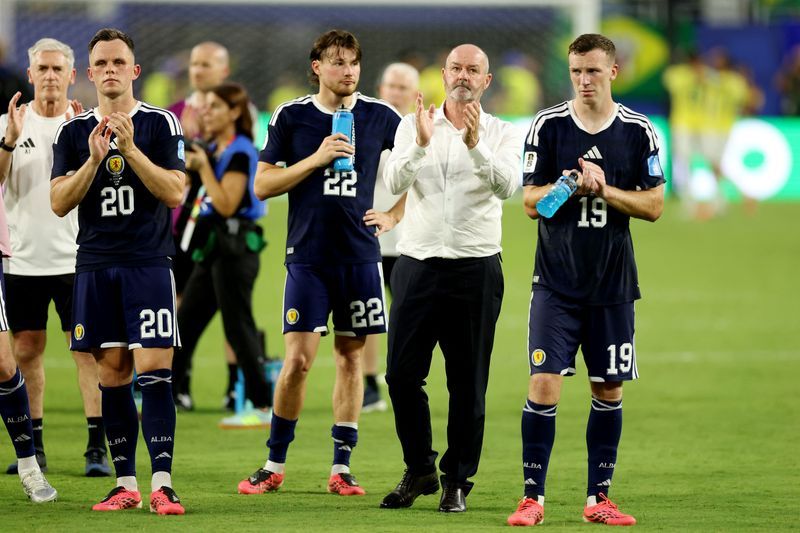
Scotland's long-awaited return to the World Cup stage looks set to end in disappointment after a convincing 3-0 defeat at the hands of Brazil in Miami on Wednesday, with national coach Steve Clarke acknowledging that his side's shortcomings were largely self-inflicted. Clarke's assessment reflects the harsh reality that despite technically retaining mathematical hope of advancing as one of eight third-placed teams, the Tartan Army's first appearance at football's premier tournament since France 1998 appears to be drawing to a premature close.
With three points accumulated from their opening matches, Scotland still occupies a precarious position in the overall standings for qualification from the group stage. However, Clarke's candid analysis suggests the mathematics offer false hope, as his team currently sits sixth among the third-placed finishers with 20 matches remaining across the remaining group fixtures. The likelihood of Scotland finishing outside the bottom two third-place positions has prompted the experienced manager to prepare his squad and supporters for an early departure from the tournament.
The Scotland manager was unsparing in his criticism of the defensive vulnerabilities that Brazil exploited throughout the encounter. Clarke emphasised that his players gifted the South Americans clear scoring opportunities that the world's most successful World Cup nation predictably capitalised upon. The first two goals, in Clarke's assessment, resulted from Scotland's own mistakes rather than Brazilian brilliance, a distinction that underscores the frustration he felt watching the performance unfold. He suggested that Brazil's third strike also stemmed from similar defensive lapses, painting a picture of a team that failed to maintain the discipline required at the highest level of international competition.
Yet Clarke's critique was not entirely one-sided, acknowledging that Brazil also squandered chances and that goalkeeper Angus Gunn produced several important saves that might have made the scoreline even more damaging. Scotland did create one or two attacking moments, though Clarke felt they lacked the precision and quality needed to trouble a Brazilian defence that is accustomed to handling threats from the world's best attacking talent. This suggests a side that showed occasional flashes of capability but could not sustain the intensity and sharpness required to compete with elite opposition.
Despite the clear frustration evident in Clarke's post-match comments, the former Chelsea defender was careful to distinguish between disappointment and anger toward the players who engineered Scotland's qualification to the tournament in the first place. Clarke voiced his displeasure that the squad had fallen short of the standards they are capable of achieving, a sentiment rooted in his regular exposure to Scottish football development over recent years. This measured response reflects an understanding that while the performance was inadequate, the qualification itself represented genuine achievement for a nation that has endured a 28-year absence from the World Cup.
More significantly, Clarke used the occasion to highlight structural deficiencies within Scottish football that extend far beyond the immediate tournament result. Observing the physical attributes, strength, and technical skill displayed by both Morocco and Brazil, Clarke argued that Scotland's development pathways and youth systems require fundamental reassessment. He suggested that Scottish football must prioritise the creation of players capable of performing on the world stage, rather than relying on domestic experience to prepare international representatives. This diagnosis points to a deeper challenge affecting the Scottish Football Association and its member clubs.
Clark emphasised that the young talent emerging from Scottish academies and clubs must be better equipped to handle the demands of international football at the highest level. The disparity in physicality and technical ability between Scotland and the tournament's elite nations represents an uncomfortable truth about where Scottish football currently stands in the global hierarchy. Rather than attributing the loss solely to tactical considerations or individual performance on the day, Clarke's analysis suggests that systemic improvements in player development would be necessary for Scotland to compete effectively at future World Cups.
The Scotland manager also took the opportunity to offer perspective on the contribution of the travelling supporters, often known as the Tartan Army, who have been among the tournament's most visible and vocal fan groups throughout the competition. While Clarke acknowledged their positive ambassadorial role and the vibrant atmosphere they have created, he argued that supporters should remember the foundational achievement represented by the players' successful qualification campaign. Clarke stressed that without this group's effort in reaching the tournament, Scottish fans would once again be watching the World Cup from their sofas rather than attending in person.
Clark's final comments served to reframe the broader narrative surrounding Scotland's participation, moving beyond the immediate disappointment of early elimination to recognise what the qualification itself meant for a nation starved of World Cup football. He reminded supporters that the players who failed to perform at the required standard on Wednesday were the same individuals who had engineered a return to global competition after nearly three decades in the wilderness. This perspective, while offering little comfort given the circumstances, provides some context for understanding Scotland's position in international football and the long-term project required to establish consistent World Cup qualification.

