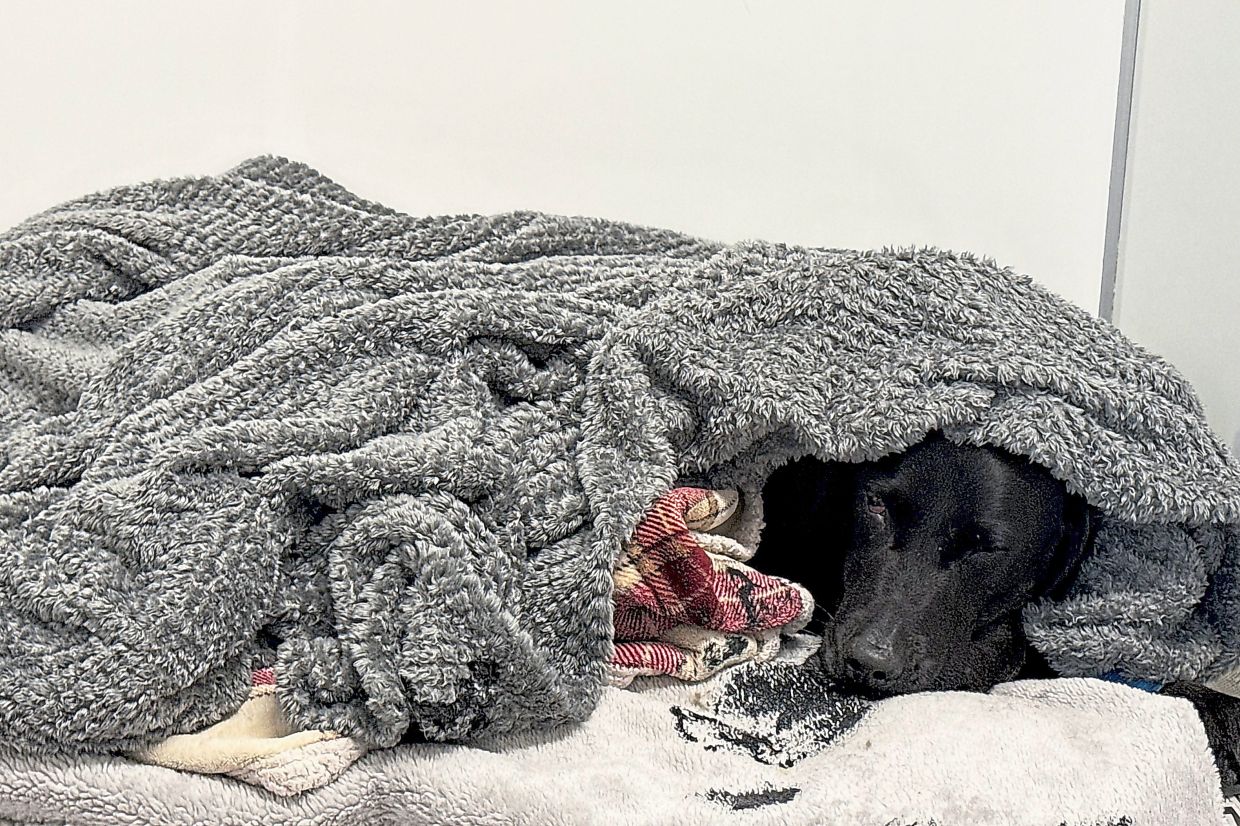
A routine mountain expedition turned into a veterinary emergency when a five-year-old black Labrador retriever named Tokyo fell gravely ill after apparently consuming cannabis along a hiking trail on Ben Nevis, Britain's highest peak. The incident, which unfolded during an ascent in early July, saw the dog collapse and become unable to walk, forcing her owner Christina Bluhme to call for immediate assistance while stranded at high altitude in deteriorating weather conditions. The rescue operation that followed showcased the critical role that mountain rescue volunteers play in responding to unexpected crises far from urban medical facilities.
Bluhme, an experienced canine trainer with 25 years of professional experience working with dogs, found herself facing an unprecedented situation when Tokyo began exhibiting alarming neurological symptoms. The Labrador started swaying unsteadily before losing the ability to move independently, leaving Bluhme convinced that her beloved companion was suffering from a serious medical emergency. The mysterious nature of Tokyo's condition only heightened the anxiety of the moment. Standing at over three hours into the climb near the 1,345-metre summit of Ben Nevis in the Scottish Highlands, Bluhme and her son Magnus were dealing with increasingly hostile environmental conditions, including driving rain and temperatures that had dropped to just 5°C. Her immediate decision to abandon the summit attempt and descend with her two dogs was undoubtedly the correct choice, though executing that descent with a completely incapacitated dog posed enormous practical challenges.
When Magnus telephoned for emergency services, the response from police was initially discouraging, with authorities expressing uncertainty about their capacity to dispatch a mountain rescue crew to their location. However, fortune intervened in the form of the all-volunteer Lochaber Mountain Rescue Team, which happened to be making their descent from the summit after assisting a helicopter in evacuating another injured hiker. These trained volunteers immediately responded to Tokyo's plight, placing the 25-kilogramme dog into their stretcher and executing a remarkably swift descent of the treacherous, rain-slicked rocky terrain. What might have taken significantly longer for Bluhme to accomplish alone was completed by the rescue crew in approximately one hour, with their expertise and physical conditioning enabling them to navigate the hazardous conditions at pace.
The collaborative preparation of local medical professionals proved equally vital to Tokyo's survival. Police had alerted Crown Vets in the nearby town of Fort William, ensuring that a veterinarian was positioned and ready for the dog's arrival. This advance coordination eliminated critical delays that could have proven fatal. Upon examination, the veterinary team initially considered various diagnostic possibilities, including spinal injury, but a senior veterinarian recognised the pattern of symptoms—drifting consciousness and profound neurological disturbance—as indicative of neurotoxin exposure. Consultation with poison control specialists confirmed what had seemed impossible just hours earlier: Tokyo had ingested cannabis.
The diagnosis of cannabis intoxication in pets has become an increasingly common clinical presentation across veterinary practices in developed nations. In the United States, cannabis toxicity entered the American Society for the Prevention of Cruelty to Animals' top ten list of toxins affecting animals for the first time in 2023, reflecting a dramatic surge in cases as legal and recreational cannabis use expands. The United Kingdom has likewise witnessed a rising trajectory of similar incidents, though the problem remains less documented than in North America. Dogs are particularly vulnerable to cannabis effects because they possess significantly greater density of cannabinoid receptors in their brains than humans do, meaning that even small quantities can produce profound and distressing neurological effects.
Tokyo received activated charcoal treatment to prevent further absorption of the cannabis compounds, and over the course of the following night, she made a complete recovery. By the morning after her rescue, the dog had returned to her normal behaviour and demeanour, with no apparent residual effects from her ordeal. Bluhme observed with relief and some personal irony that whilst her dog had bounced back to full health with remarkable speed, she herself remained emotionally affected by the traumatic experience. The £1,000 veterinary bill, equivalent to approximately RM5,445, represented an expenditure that Bluhme viewed as an absolute bargain when set against the alternative of losing a cherished family pet on a remote Scottish mountainside.
Beyond the individual drama of Tokyo's rescue lies a broader public health concern that carries implications for pet owners across the UK and Southeast Asia as attitudes toward cannabis become more permissive. In jurisdictions where cannabis use is decriminalised or medically legalised, discarded cannabis products frequently appear in public spaces frequented by both people and animals. Parks, trails, beaches, and other outdoor recreation areas present ongoing risks to unsupervised dogs that might encounter cannabis in any of several forms—dried plant material, edibles, concentrates, or oils. Pet owners and veterinary professionals are only beginning to develop standardised protocols for recognising and treating cannabis toxicity in animals.
For Malaysian readers, whilst cannabis remains strictly prohibited under national legislation with severe legal penalties for possession or use, the incident serves as a reminder of the medical preparedness required when pets consume unknown substances. The rapid identification and treatment provided by veterinary professionals in Scotland depended on accurate diagnosis, access to poison control information, and knowledge of appropriate emergency interventions. As mountains and natural areas throughout Southeast Asia attract increasing numbers of hikers and outdoor enthusiasts—many from diverse backgrounds—the possibility of encountering discarded drug materials, even in countries with strict prohibition regimes, cannot be entirely discounted.
The Lochaber Mountain Rescue Team's seamless coordination with veterinary services and police demonstrates how cross-sector cooperation saves lives in emergencies. The volunteers' training and physical capacity to transport a significant weight down a dangerous mountain in challenging conditions exemplifies the critical importance of well-funded, professionally-organised mountain rescue services. In regions without such infrastructure, outcomes in similar scenarios might prove markedly less favourable. The incident also underscores how even experienced animal professionals like Bluhme can face unprecedented situations requiring humility and swift decision-making.
Tokyo's recovery was complete and uneventful, but the incident has left lasting impressions on all involved. Bluhme's willingness to prioritise her dog's welfare over achieving a mountain summit—a challenging decision for any dedicated hiker—almost certainly preserved the animal's life. The seamless intervention of the rescue team at precisely the right moment proved equally decisive. For veterinary professionals, Tokyo's case adds to the growing body of evidence suggesting that cannabis toxicity warrants inclusion in standard diagnostic decision trees when animals present with acute neurological symptoms. As recreational and medical cannabis use continues evolving globally, such cases will likely become increasingly common, making preparedness and awareness essential for veterinarians, rescue services, and pet owners alike.

