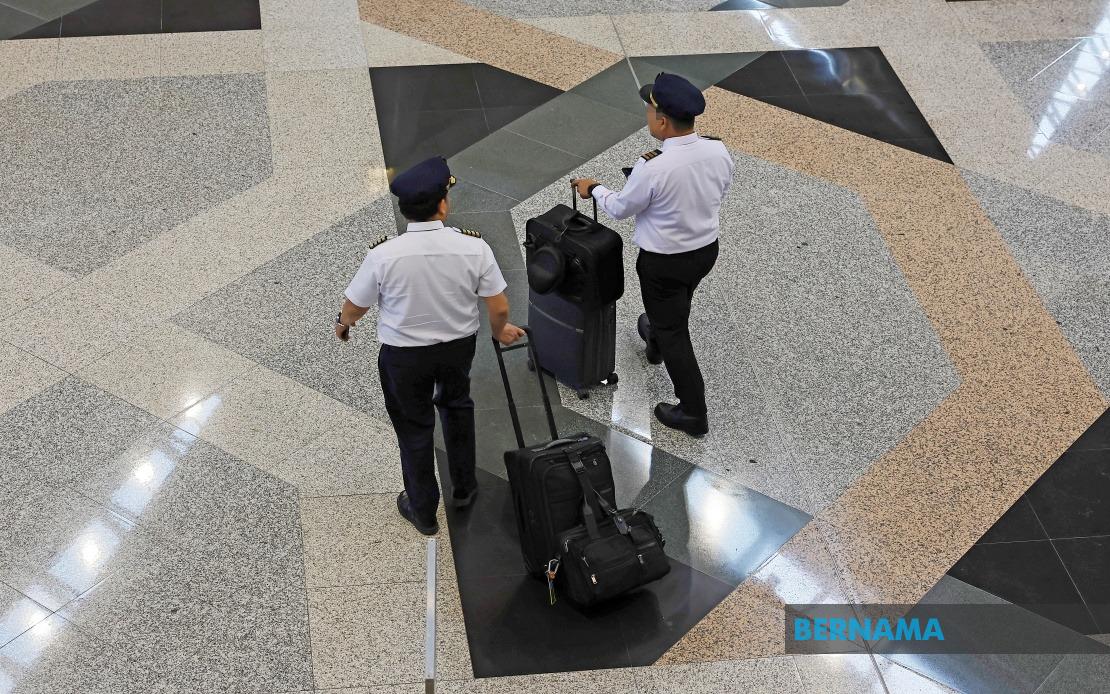
A prominent civil society leader has called for urgent action to strengthen security measures at Kuala Lumpur International Airport in the wake of a troubling incident involving a Malaysian pilot detained at Jakarta's main airport with suspected narcotics. Tan Sri Lee Lam Thye, heading the Alliance For A Safe Community, has urged relevant authorities to undertake a comprehensive examination of current screening protocols, particularly following the arrest of the 39-year-old pilot at Soekarno-Hatta International Airport's Terminal 3, where he allegedly attempted to transport 25 kilogrammes of drugs.
While carefully acknowledging the pilot's presumption of innocence pending legal proceedings, Lee has raised critical questions about how such a situation could occur at an international airport. The core concern centres on a fundamental security vulnerability: if prohibited substances were indeed present, how did they elude detection systems implemented at Malaysia's premier aviation hub before departure? This question strikes at the heart of public confidence in the nation's airport security infrastructure, a matter of considerable importance given Malaysia's standing as a significant regional aviation centre and the volume of passenger and cargo traffic processed daily through KLIA.
Lee's intervention reflects broader anxieties about potential gaps within existing screening frameworks. The incident suggests that either detection equipment may be insufficiently sensitive, screening personnel require enhanced training, or procedural gaps exist that allow contraband to slip through despite established protocols. Each scenario carries serious implications not only for Malaysia's international reputation but also for the safety and security of the travelling public. An undetected shipment of narcotics represents a breakdown in multiple layers of security that should operate independently to prevent such occurrences.
The call for investigation specifically targets airport personnel and flight crew, a sensitive area where familiarity with procedures and access privileges could potentially be exploited. Lee stressed the importance of ensuring that no individual, regardless of their professional status or rank, should be exempted from rigorous security scrutiny. This principle, while straightforward in concept, requires vigilant implementation and cultural reinforcement across the aviation sector to prevent normalcy bias or institutional blind spots that might develop over time.
Multiple agencies bear responsibility for strengthening this response, as Lee's recommendations encompass not just airport operators but also national law enforcement and aviation regulatory bodies. The Malaysian police, Civil Aviation Authority, and airport security operators must collaborate to conduct a systematic audit of existing procedures, identifying any procedural weaknesses, equipment limitations, or training deficiencies. Such a review should extend beyond merely technical considerations to encompass human factors, including staff morale, appropriate workload distribution, and the adequacy of security training programs.
For Malaysia's aviation sector, which has invested considerably in building international confidence following past incidents, such developments carry additional weight. Airlines operating from KLIA, airport concessionaires, and government agencies all have vested interests in maintaining the highest standards. International passengers and cargo clients make routing decisions based partly on perceived security standards, making any erosion of confidence economically consequential alongside the fundamental safety imperatives.
The incident also underscores regional challenges in combating drug trafficking, which has become increasingly sophisticated across Southeast Asia. Transnational criminal networks exploit transportation infrastructure and personnel vulnerabilities to move contraband across borders. A single successful smuggling attempt, even if ultimately foiled at the destination, demonstrates that Malaysian aviation infrastructure remains a potential vulnerability. Strengthening KLIA's defences contributes not only to national security but also to regional counternarcotics efforts.
Lee's emphasis on consistency in enforcement without exception reflects essential principles of effective security governance. When particular groups perceive themselves as subject to less stringent scrutiny than others, several negative consequences typically follow: public confidence diminishes, security protocols become less effective as human vigilance inevitably declines, and pressure builds for exemptions to spread more widely. Conversely, demonstrable commitment to uniform application of security measures, even when inconvenient or time-consuming, tends to strengthen overall system effectiveness and public acceptance.
The timing of this intervention is significant, as investigations into the pilot's case proceed through Indonesian judicial channels. Rather than awaiting formal conclusions, Malaysian authorities have an opportunity to undertake preventive action, addressing systemic vulnerabilities independent of individual culpability determinations. This proactive approach acknowledges that security effectiveness depends less on catching individual violations than on designing systems resilient enough to prevent violations from occurring.
Moving forward, the aviation sector should consider whether existing technology fully exploits available detection capabilities, whether staff numbers permit adequate attention to security procedures, and whether intelligence sharing between Malaysian authorities and regional partners could provide early warning of smuggling attempts. Enhanced cooperation with Indonesian counterparts, given the incident occurred at Jakarta's airport, might also yield valuable insights into smuggling methods and routes that could inform preventive strategies.
Ultimately, Lee's call reflects a fundamental principle that security measures require continuous refinement in response to emerging threats and demonstrated vulnerabilities. The aviation industry's evolution, changing smuggling methodologies, and personnel turnover all necessitate regular review and updating of procedures. Public confidence in Malaysia's aviation security, essential for maintaining the country's competitive position in regional and international aviation markets, depends on such diligence and transparency.

