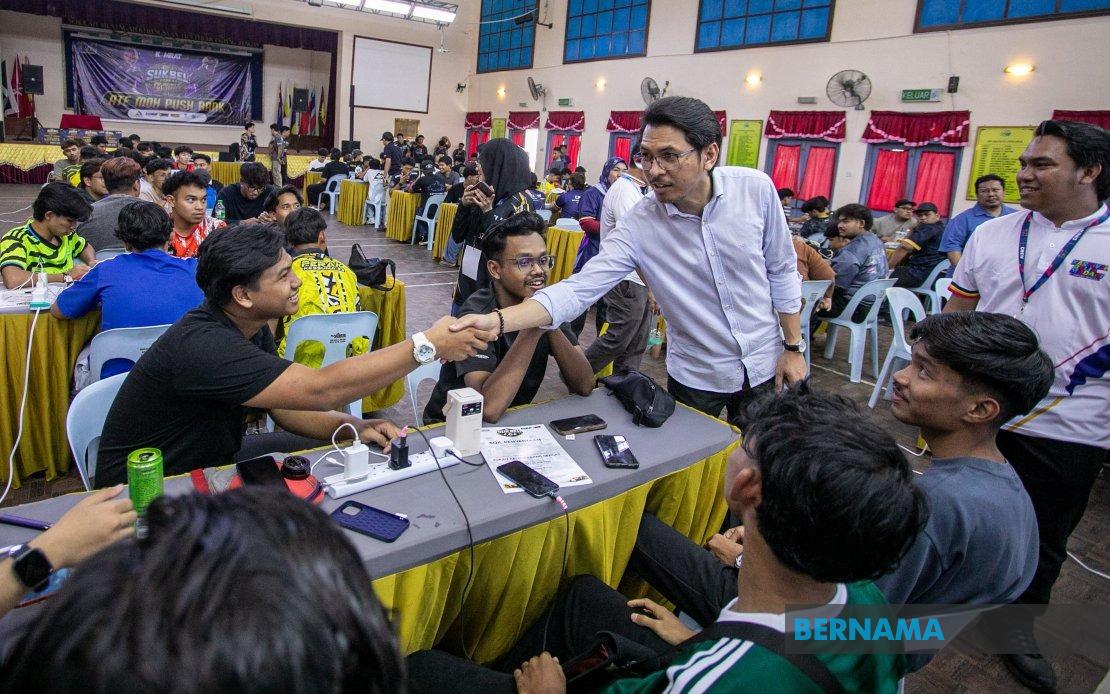
The Sejahtera MADANI initiative in Perak has reached a significant milestone, channelling RM2.3 million in direct assistance to approximately 2,000 beneficiaries across the state. Responding to the programme's early success, the government has committed an additional RM3 million to scale up operations and extend support to more vulnerable groups. The injection of fresh funding signals confidence in the welfare scheme's effectiveness while addressing gaps identified during its initial rollout phases.
Muhammad Kamil Abdul Munim, the Finance Minister's political secretary, outlined the strategic direction of the expanded initiative during a roadshow in the Padang Rengas constituency. Beyond simple cash transfers, the programme takes a holistic approach by combining financial aid with skills development and business support. This multi-pronged strategy recognises that poverty alleviation requires more than one-time payments; beneficiaries need tools and opportunities to generate sustainable income and enhance their socioeconomic mobility.
The initiative particularly targets three demographic groups facing persistent economic challenges. Micro-entrepreneurs operating at the grassroots level receive business equipment and productivity-enhancing tools to formalise and grow their ventures. Low-income earners benefit from direct financial assistance aimed at reducing their immediate hardship while creating fiscal space for healthcare and education spending. Students demonstrating academic excellence through strong Sijil Pelajaran Malaysia results receive laptops to facilitate their transition into tertiary education, addressing the digital divide that often hampers rural learners.
During the Padang Rengas roadshow held at the Millennium Hall in Lubok Merbau, the government formalised its commitment through tangible distributions. Thirteen high-achieving SPM students received laptops as they prepare to enter universities and colleges, while five micro-entrepreneurs were presented with business equipment tailored to their specific enterprise needs. These concrete handovers demonstrate that funding commitments translate into immediate benefits for beneficiary communities, building trust in government's welfare delivery mechanisms.
However, Muhammad Kamil acknowledged that the programme's original design carried inherent vulnerabilities. The initial framework delegated project prioritisation to local communities, granting them substantial agency in determining how funds would be deployed. This decentralised approach, while theoretically empowering villages and neighbourhoods to pursue development aligned with their own needs, proved susceptible to implementation challenges. Several initiatives failed to materialise as planned, raising concerns about project completion rates and public resource stewardship.
The government's response involves implementing tighter supervisory frameworks across all phases of project execution. Stronger oversight mechanisms will be deployed to detect irregularities early, preventing the accumulation of problems that could lead to complete project abandonment. This represents an implicit acknowledgement that community participation, though valuable for legitimacy and local knowledge integration, requires complementary institutional checks to ensure fiduciary responsibility. The balance between empowerment and accountability has become a central operational lesson.
Fraud prevention and leakage detection now occupy prominent positions in the monitoring strategy. Muhammad Kamil stated plainly that implementation flaws are inevitable in large-scale welfare programmes, but systematic observation can contain their scope and impact. By emphasising ongoing surveillance rather than punishment-focused audits, the approach attempts to create a culture of compliance while maintaining programme momentum. This reflects growing sophistication in Malaysia's public financial management, particularly within social safety net programming.
The Sejahtera MADANI initiative represents the MADANI Government's broader philosophy regarding targeted poverty reduction. Rather than universal subsidies or untargeted transfers that may benefit relatively affluent households, this scheme concentrates resources on demonstrable need and specific vulnerability. The emphasis on impact measurement and direct beneficiary tracing aligns with international best practices in welfare administration, where fungibility of funds and leakage to non-intended recipients constitute persistent challenges.
For Perak residents, the expanded allocation carries practical significance. The state has experienced relatively slower economic diversification compared to the Klang Valley and Penang, with pockets of rural poverty remaining entrenched despite overall national development. Programmes delivering both immediate relief and medium-term capability enhancement address both urgent hardship and structural constraints limiting upward mobility. The equipment provision to entrepreneurs and technology access for students represent investments in human and productive capital formation.
The regulatory refinements signal recognition that welfare spending must be insulated from the reputational risks associated with project failures and fund mismanagement. As Malaysian society becomes increasingly sophisticated in evaluating government performance, accountability in social expenditure has assumed heightened political salience. Beneficiary communities judge programmes not merely by amounts disbursed but by execution quality and the sustainability of benefits delivered. The supervisory enhancements attempted to address this performance expectation.
Looking ahead, the trajectory of Sejahtera MADANI will likely influence how subsequent welfare initiatives are designed and implemented across Malaysia. If the recalibrated approach successfully prevents leakage while expanding beneficiary numbers, it could establish a template for balancing community participation with institutional accountability. Conversely, if implementation gaps persist despite stronger monitoring, it may prompt broader restructuring of how the government channels welfare support through decentralised mechanisms.
The RM3 million supplementary allocation reflects confidence that foundational lessons have been absorbed and institutional capacity has been strengthened. By committing additional resources concurrent with supervisory upgrades, the government signals that programme failure prompts learning and adaptation rather than retrenchment. For Malaysian policymakers and development practitioners, the Sejahtera MADANI experience provides a practical case study in navigating the inherent tensions between empowering local communities and maintaining centralised accountability in welfare administration.

