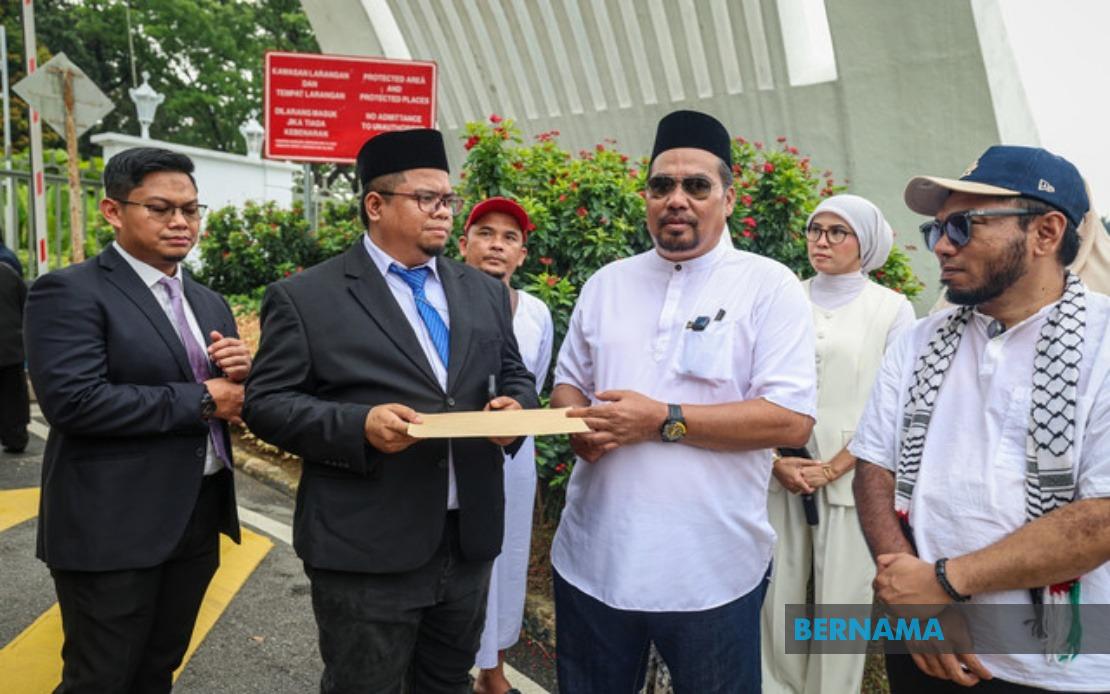
Social media activist network SEKPUR has escalated pressure on the government to pursue criminal accountability for those implicated in the mismanagement of Tabung Haji, Malaysia's pilgrimage fund, submitting a formal memorandum at Parliament following weeks of public scrutiny over the institution's governance failures. The group's intervention reflects growing public concern that the findings of the Royal Commission of Inquiry into TH's operations may not translate into meaningful prosecutions or systemic reform, particularly if high-ranking officials are involved.
The memorandum, handed to officials on August 11, came during a peaceful assembly at Parliament's main entrance coinciding with a special sitting of the Dewan Rakyat to debate the RCI report's implications. SEKPUR secretary Mohd Yani Alias made clear the group's position that political considerations should not shield individuals from consequences, stressing that accountability must transcend party loyalty or factional interests. His assertion that "TH belongs to the Muslim and Malay community" framed the matter not as a technical governance issue but as a breach of public trust affecting millions of Malaysians who contribute to the fund through monthly deductions.
The 211-page RCI report, released publicly on July 29, documented systemic weaknesses spanning the 2014 to 2020 period, a critical interval during which TH's investment portfolios contracted and financial reserves deteriorated. While Tabung Haji implemented three-quarters of the report's 25 recommendations by early August, SEKPUR's intervention suggests concerns persist that implementation without accountability represents incomplete justice. The group's decision to mobilize public pressure indicates skepticism that administrative reforms alone will address what the RCI effectively characterised as institutional mismanagement at multiple operational and strategic levels.
Beyond demands for prosecution, SEKPUR articulated broader anxieties about TH's financial trajectory and its capacity to serve depositors sustainably. The organization highlighted the institution's struggle to provide competitive hibah distributions—the annual bonuses credited to pilgrimage savings accounts—as depositors increasingly question whether their mandatory contributions generate adequate returns compared to alternative savings vehicles. This concern resonates particularly among younger Malaysian Muslims contemplating their investment of decades of salary deductions into a fund whose management has demonstrably failed them.
The activist group also spotlighted escalating haj costs, a perennial issue that compounds pressure on TH as a state-backed facilitator of religious obligation. Rising international airfares, accommodation expenses, and port fees have inflated the total cost of performing the pilgrimage, straining middle and lower-income households who depend on TH's installment schemes and subsidized arrangements. SEKPUR's memorandum connected this affordability crisis to governance failures, implying that stronger institutional stewardship might have preserved financial reserves sufficient to buffer pilgrims from cost spikes.
Transparency in haj quota allocation emerged as another focal point. Malaysia's annual allocation of pilgrimage slots—determined through bilateral negotiations with Saudi Arabia—has become increasingly contentious as demand vastly exceeds supply. SEKPUR's emphasis on transparency suggests frustration with opaque quota distribution mechanisms that, combined with TH's financial constraints, force prospective pilgrims into multi-year waiting periods. The group's intervention signals that public confidence in TH requires not only financial recovery but demonstrable institutional integrity across all operational dimensions.
The RCI's findings provide forensic documentation of how organizational dysfunction metastasized within Tabung Haji during the reference period. Inadequate oversight, questionable investment decisions, and insufficient internal controls created environments where misalignment between institutional objectives and management conduct flourished. SEKPUR's insistence that those responsible "must be brought to justice and face stern action" reflects recognition that administrative penalties or directorial resignations cannot substitute for criminal accountability if evidence of fraud or gross negligence exists.
For Malaysian policymakers, SEKPUR's mobilization represents a barometer of public impatience with incremental reform trajectories. The government's credibility on financial sector governance and Bumiputera institution stewardship hinges partly on whether the RCI process leads to prosecutions matching the scale of institutional failure documented. Conversely, if the report concludes without significant legal consequences, public trust in Malaysia's institutional accountability mechanisms will further erode, potentially extending skepticism to other government-linked entities managing essential services.
The intervention also reflects broader Southeast Asian patterns whereby citizens increasingly bypass formal institutional channels to demand accountability, leveraging social media mobilization to inject urgency into governmental processes. SEKPUR's strategy of combining peaceful assembly with formal memoranda demonstrates hybrid activism that respects procedural conventions while asserting that conventional channels require supplementary public pressure to generate decisive outcomes. This dynamic will likely intensify if TH's recovery remains glacial or if prosecutions fail to materialize.
Moving forward, the government faces mounting expectations to convert RCI recommendations into prosecutorial action. Minister Senator Dr Zulkifli Hasan, who received SEKPUR's memorandum, must navigate competing pressures: institutional reputation management, political sensitivities if investigations implicate influential figures, and public demands for justice that increasingly transcend partisan boundaries. The government's response to SEKPUR's memorandum will signal whether the RCI process represents genuine institutional reform or primarily a public relations exercise to contain reputational damage.

