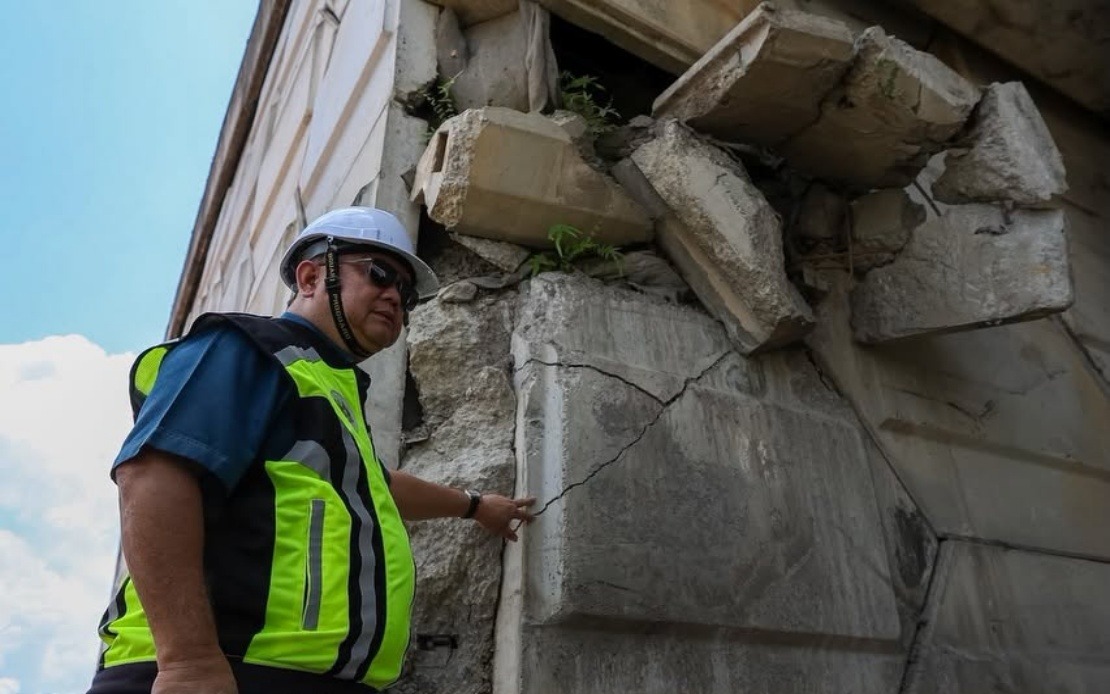
The Selangau-Mukah Interchange Flyover along the Pan Borneo Highway will gradually resume operations as repair work progresses, with Works Minister Datuk Seri Alexander Nanta Linggi emphasising that no section will reopen until safety standards are fully met. Speaking after an inspection of the damaged structure in Sibu on July 6, Nanta outlined a measured approach to restoring traffic flow on one of Sarawak's crucial transportation corridors, balancing the urgent need to reduce commuter disruption against the non-negotiable requirement for structural stability.
The thoroughfare was shut following a collision that compromised Ramp 1's structural integrity when a palm oil tanker struck the interchange. Technical assessments confirmed that the impact had caused significant damage to part of the retaining wall structure supporting the ramp, rendering the entire route unsafe for vehicle passage until repairs could be properly completed. The incident highlighted vulnerabilities in the infrastructure that serves as a vital link for commercial and personal traffic between Bintulu, Mukah, and Sibu.
Nanta articulated a three-pronged strategy for managing the crisis. The first priority remains maintaining rigorous safety standards without compromise, recognising that premature reopening could expose road users to catastrophic risk. Secondly, the minister pledged active oversight of the repair timeline to prevent unnecessary delays that would compound already substantial inconvenience to regular commuters. Thirdly, he committed to transparent communication with the public regarding affected routes, available alternatives, and the status of ongoing reconstruction work.
The closure has created considerable hardship for communities reliant on the Pan Borneo Highway, particularly residents and frequent travellers on the Bintulu-Mukah-Sibu corridor who now face significantly extended journey times through alternative routes. These delays have ripple effects across the regional economy, affecting commercial deliveries, business travel, and daily commuting patterns. Local businesses dependent on efficient logistics and workers commuting between towns have borne the direct cost of the disruption.
Nanta's acknowledgement of public concern, whether expressed through conventional media channels or social media platforms, signals recognition that government infrastructure decisions must incorporate community feedback. This reflects a shift toward more responsive governance in handling transport emergencies, particularly in Sarawak where road connectivity remains critical to economic development and social cohesion. The minister's willingness to address concerns demonstrates awareness of heightened public expectations around transparency and accountability in infrastructure management.
The controlled repair methodology will involve stabilising the retaining wall structure through engineering interventions designed to restore the ramp's original load-bearing capacity. Unaffected sections of the interchange may be opened progressively as their safety is verified, allowing partial restoration of traffic flow while dangerous areas remain sealed. This phased approach balances expediting partial relief for commuters against the risk of allowing unsafe sections to reopen prematurely.
The reconstruction process will require coordination between multiple agencies including the Public Works Department, contractors, and safety inspectors to ensure compliance with engineering standards and traffic management protocols. The timeline for completion remains dependent on the complexity of structural repairs, availability of materials, and weather conditions in Sarawak's tropical climate, which can affect construction schedules.
For Malaysian readers, the incident underscores the importance of infrastructure resilience and proper maintenance protocols for major transportation networks. As Malaysia continues investing in connectivity infrastructure, particularly pan-Borneo projects designed to integrate East Malaysian states more seamlessly with development corridors, ensuring structural soundness and safety remains paramount. The Pan Borneo Highway, launched in 2013 and substantially completed in 2018, represents significant national investment and is expected to facilitate economic growth across Sarawak.
The tanker collision also raises questions about traffic management, vehicle weight regulations, and signage clarity on major highways. Authorities may need to review safety measures preventing oversized or hazardous cargo vehicles from approaching sensitive infrastructure points. These considerations extend beyond Selangau-Mukah to encompass similar vulnerable structures throughout Malaysia's highway network.
Nanta's personal oversight of the reconstruction work signals ministerial-level commitment to resolution, intended to reassure the public that the issue receives adequate priority within government circles. However, residents expect not merely supervision but expedited completion, particularly as the closure enters its extended phase. The minister's guarantee that reopening will occur only upon confirmed safety restoration provides essential assurance, yet also implies an indeterminate timeline that may stretch into weeks or months depending on technical complexity.
Looking forward, this incident provides an opportunity to strengthen protocols for infrastructure inspection and maintenance that could prevent similar occurrences across Malaysia's expanding highway network. Regular structural audits, reinforced monitoring systems, and clearer communication frameworks between transport authorities and the public constitute lessons applicable nationally. As Malaysia develops increasingly complex transportation infrastructure, balancing rapid delivery against rigorous safety compliance will remain an ongoing governance challenge requiring sustained political attention and adequate resource allocation.

