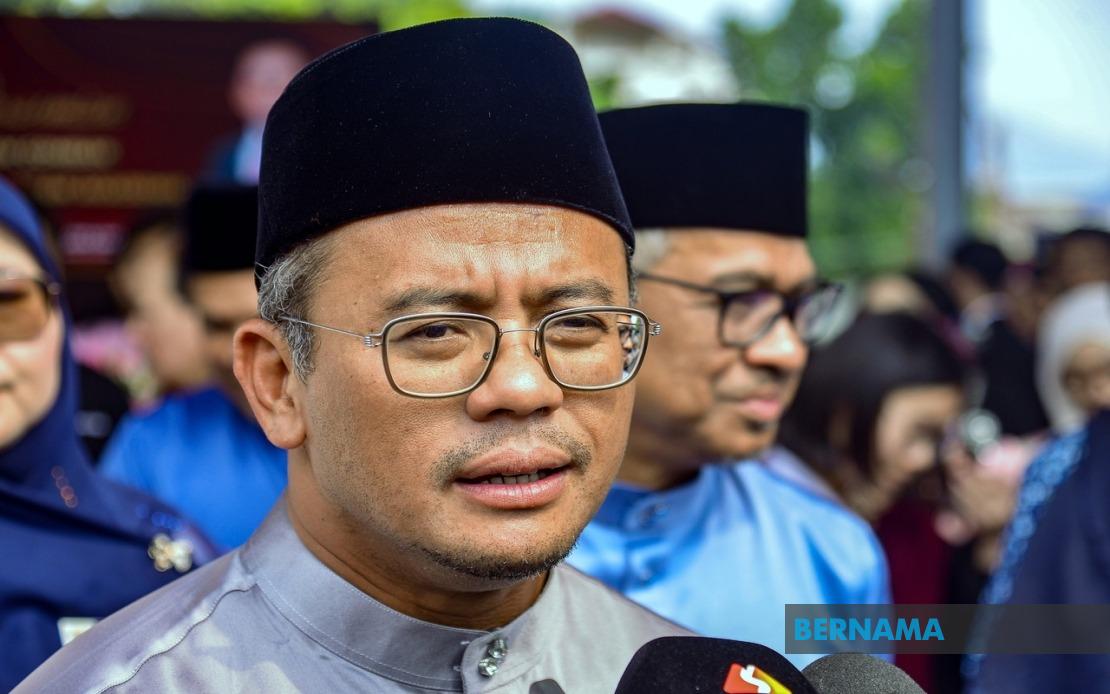
The Selangor government is positioning education as a cornerstone of its 2027 state budget, pledging to overhaul its support mechanisms while elevating student engagement in Science, Technology, Engineering and Mathematics disciplines. Menteri Besar Datuk Seri Amirudin Shari outlined the administration's determination to sustain academic performance across the state's substantial student population while creating pathways for meaningful community contribution through technical and scientific fields.
The scale of Selangor's educational landscape—encompassing approximately one million students—underscores why targeted investments in this sector carry outsized implications for the state and nation. A cohesive improvement in examination results and learning outcomes across such a large cohort would reverberate through the economy, workforce readiness, and Malaysia's competitive standing in an increasingly knowledge-driven global environment. Amirudin emphasised this multiplier effect, noting that collective academic excellence among these students would generate positive momentum for both society and the broader national agenda.
The strategic emphasis on STEM reflects broader concerns within Malaysian policymaking circles about workforce preparedness for emerging industries and technological disruption. By prioritising student participation in these fields during formative years, Selangor seeks to cultivate a pipeline of talent suited to high-value sectors that will dominate the economy over the coming decades. This forward-looking approach recognises that academic credentials alone are insufficient; students must develop practical competency and genuine interest in disciplines that drive innovation and economic growth.
Beyond examination performance, the budget framework incorporates mechanisms to translate classroom learning into tangible community benefit. This dimension reflects a growing pedagogical shift towards experiential education where students contribute meaningfully to their surroundings rather than pursuing credentials in isolation. Such integration helps students develop civic consciousness while applying their knowledge to real-world challenges, potentially increasing motivation and relevance in their studies.
School infrastructure remains a critical enabler of educational quality, yet Amirudin indicated that detailed assessment work is still underway. The state government is methodically gathering facility requirements across its education system before finalising capital allocations, with completion anticipated by September or October. This measured approach suggests recognition that rushed infrastructure decisions often lead to inefficient spending or misaligned priorities. Comprehensive infrastructure audits, though administratively demanding, ultimately yield better outcomes by matching investment to genuine needs.
A notable initiative gaining traction under state support is HIPSTERS, the Himpunan Pelajar Tingkatan Enam Selangor programme, which functions as an integrated support platform for pre-university students preparing for tertiary education pathways. The scheme extends practical assistance through book vouchers and complimentary internet data, removing financial barriers that frequently hinder disadvantaged students' academic progress. In 2026, the programme distributed vouchers to 10,000 Form Six students, representing a significant expansion from its earlier iteration when eligibility was restricted to university-level participants.
The broadening of HIPSTERS to encompass Form Six cohorts signals recognition that educational support must commence earlier in the student journey. Form Six years represent a critical juncture where foundational knowledge crystallises and trajectories toward higher education solidify. By intervening at this stage with targeted resources, the state addresses capability gaps before they compound through tertiary education and into employment prospects. The provision of data connectivity, in particular, acknowledges the modern reality that digital access fundamentally determines educational opportunity.
Selangor's openness to further programme expansion hinges on demonstrated need and student demand, suggesting a responsive rather than prescriptive approach to education policy. This flexibility allows the state to scale initiatives where evidence supports efficacy while avoiding costly universal rollout of underutilised schemes. Such pragmatism, when grounded in genuine feedback loops from schools and students, often produces more sustainable policy outcomes than rigid, one-size-fits-all mandates.
The education focus within the 2027 budget arrives at a time when Malaysian employers increasingly lament skills gaps among school and university leavers, particularly in technical domains. Selangor's multi-pronged strategy—combining infrastructure investment, STEM promotion, examination excellence, and student support services—attempts to address this disconnect comprehensively. By cultivating intrinsic motivation for learning alongside removing material barriers to participation, the state targets root causes rather than symptoms of educational underperformance.
For Malaysian readers and policymakers observing Selangor's approach, the 2027 budget priorities offer a template for education-centred development that extends beyond conventional examination-focused models. The integration of community service expectations, digital infrastructure access, and practical STEM engagement reflects evolving international best practice in secondary education. Whether Selangor's implementation succeeds in translating these ambitions into measurable improvements in student outcomes and labour market readiness will provide valuable lessons for other state governments similarly wrestling with educational transformation.
The success of these initiatives ultimately depends on execution quality, adequate resource allocation, and sustained political commitment beyond electoral cycles. Preliminary indications suggest seriousness of intent, yet the gap between budgetary commitment and classroom reality remains substantial. Monitoring framework effectiveness and maintaining budget discipline throughout implementation will determine whether the 2027 allocations genuinely catalyse the educational improvements Selangor's leadership envisions for its young population.

