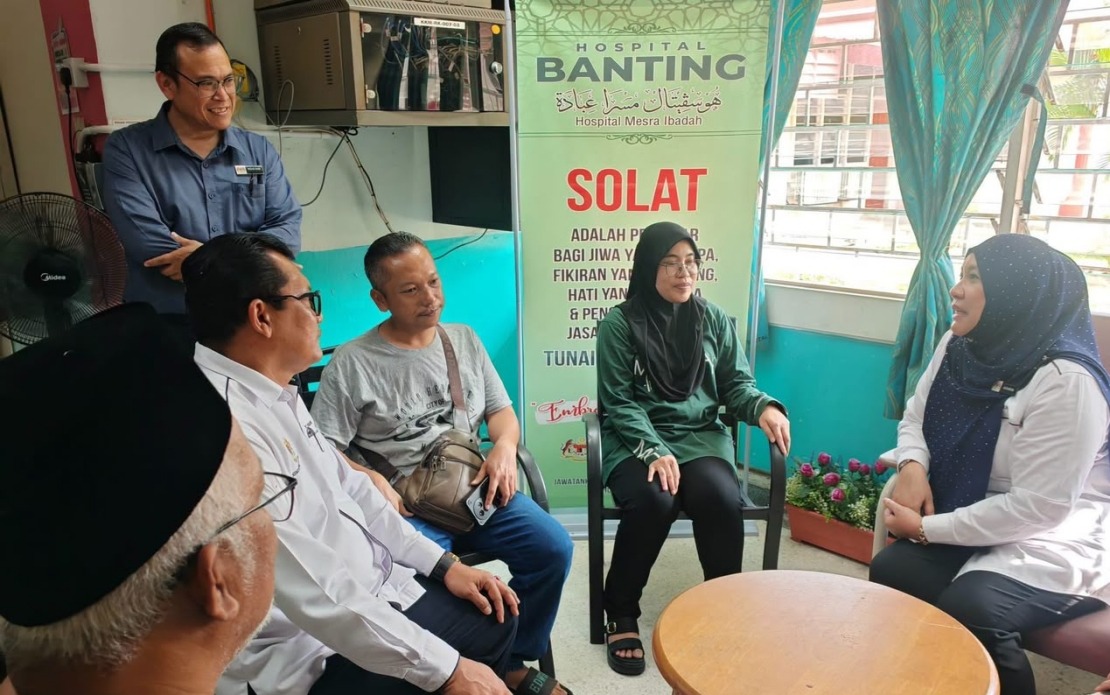
The Selangor State Education Department demonstrated its commitment to student welfare by conducting a direct visit to a 15-year-old girl hospitalised following a stabbing incident at a secondary school in Banting, Kuala Langat. The department's director, Wan Nor Ashikin Abu Kassim, led the visit to Banting Hospital on Sunday, 7 July, where she spent time with the injured student and her family members. The gesture underscores the government's responsiveness to campus security incidents and its intention to provide emotional support during what remains a deeply traumatic period for all involved.
According to the victim's father, the teenager sustained serious injuries that included a punctured lung and sixteen separate stab wounds across her body. These details paint a picture of an unusually brutal attack, raising immediate questions about the circumstances that preceded the violence and what might have motivated such an extreme response. The severity of the injuries has naturally prompted concern among parents and educators across the state regarding student safety protocols and school security measures currently in place.
During her hospital visit, Wan Nor Ashikin conveyed the department's full support and encouragement to both the student and her parents. The director's physical presence at the bedside, rather than relying solely on written statements or official communications, signals that the education authority recognises the importance of demonstrating institutional concern in moments of crisis. The JPN also pledged to maintain close cooperation with the injured student's family, hospital staff, and all agencies involved in investigating the incident, establishing a coordinated response framework.
The Selangor State Education Department published its remarks on social media, stating that it remains engaged in prayers for the victim's complete recovery. The post expressed hope that "all matters be eased" for the student and family, acknowledging the broader emotional and practical challenges that typically follow such traumatic events. This messaging reflects an approach that balances institutional responsibility with recognition of the personal dimensions of the crisis.
Police have detained a suspect believed responsible for the stabbing attack, and that individual has now been remanded for a period of four days commencing immediately from the announcement date. The remand decision enables investigators to conduct detailed interrogation and gather evidence while the suspect remains in custody. The four-day window provides law enforcement with sufficient time to establish the sequence of events, identify any witness testimony, and determine whether additional charges or an extended remand period may be necessary.
This incident represents a serious escalation in school-based violence concerns within Malaysia's secondary education system. While Selangor, as the nation's most densely populated state excluding the federal territories, frequently experiences various crime categories, the occurrence of violent assaults within institutional educational settings carries particular weight. School environments are meant to represent spaces of safety where young people can focus on academic and personal development without fear of physical harm.
The attack has inevitably sparked reflection among education stakeholders regarding existing security infrastructure at Malaysian secondary schools. While many institutions employ security guards and maintain locked entry points, the apparent ease with which this violence occurred suggests potential gaps in monitoring systems or response protocols. Parents and school administrators across the state will likely review their own security arrangements and consider whether additional measures are warranted.
Further investigation may reveal whether the incident stemmed from personal conflict between the student and the suspect, or whether other factors such as bullying or mental health concerns played a role. Understanding the root causes of such an extreme violent response is crucial for developing preventative strategies and ensuring that similar incidents can be mitigated in the future. School counsellors and psychologists will also play essential roles in helping both the injured student and her peers process the psychological impact of the event.
The coordinated response from the State Education Department demonstrates that Malaysian authorities are taking institutional accountability seriously. By immediately engaging with the victim and family, rather than adopting a purely investigative stance, the JPN signals that student welfare remains the central priority. This approach may help maintain trust between parents and educational institutions during a period when confidence in school safety could reasonably be questioned.
As the legal process unfolds and the injured student begins her recovery journey, the broader implications for school safety policy and campus security frameworks will merit serious consideration at both state and national levels. The incident serves as a stark reminder that educational institutions, despite their primary focus on academics, must also function as secure environments where physical safety is guaranteed.

