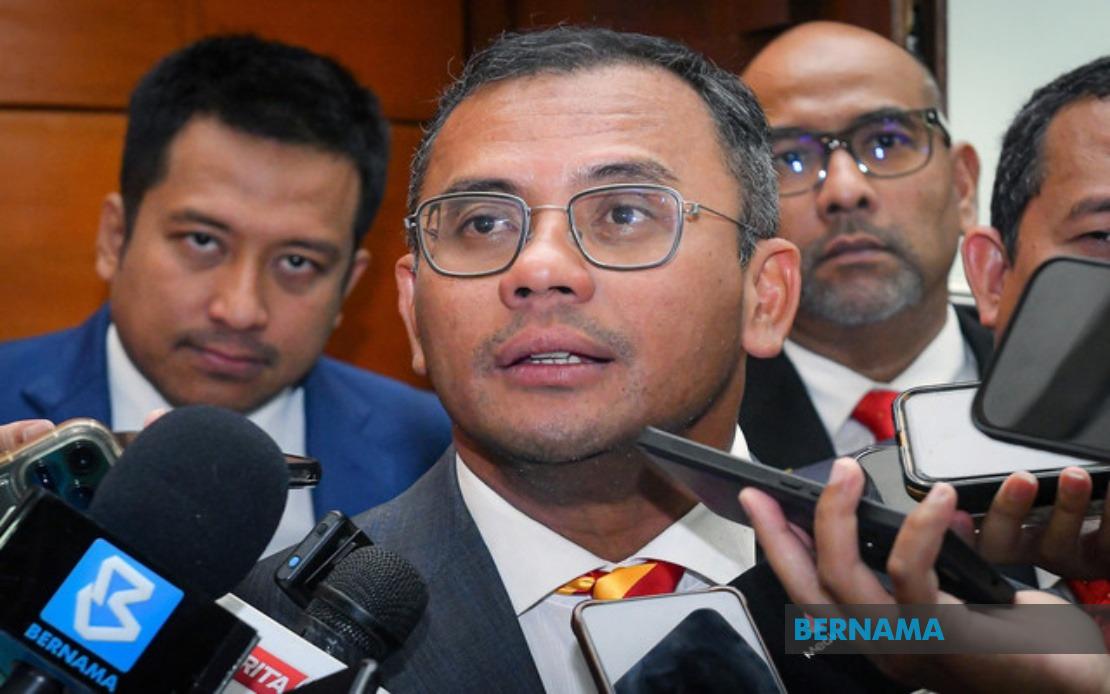
Selangor's state government has committed RM3.5 million towards a new research and development initiative designed to advance the economic and social priorities outlined in its Second Selangor Plan (RS-2). The funding allocation, announced following a grant handover ceremony at Bangunan Sultan Salahuddin Abdul Aziz Shah, represents a strategic investment in knowledge production that bridges academic research with governmental policy implementation. Menteri Besar Datuk Seri Amirudin Shari revealed that this initiative, branded as the Selangor Development Grant (SELidik) 2026, succeeds the previous Selangor Research Grant (GPNS) 2024 with an expanded remit covering research outputs that directly serve the state's developmental needs.
The programme structure demonstrates a deliberate approach to channelling research capacity towards specific government priorities. Two state-owned universities—Universiti Islam Selangor (UIS) and Universiti Selangor (UNISEL)—will receive RM2.5 million of the total allocation for the initial phase. During this foundational stage, researchers at these institutions are expected to develop tangible outputs including educational modules, software applications, and working prototypes that can be applied to real-world challenges. This emphasis on practical deliverables rather than purely theoretical outcomes reflects a growing trend among Malaysian public universities to demonstrate direct economic and social utility from publicly funded research.
The second implementation phase broadens the initiative's geographical and institutional scope by extending opportunities to other public universities throughout Selangor, with an additional RM1 million reserved for this expansion. This tiered rollout strategy allows the state government to assess the quality and relevance of research outputs from the initial cohort before committing resources more widely. The managed approach also reduces financial risk while building evidence of the programme's effectiveness, particularly important given public accountability expectations regarding state expenditure on research infrastructure.
Central to SELidik's design is its explicit linkage to the RS-2 framework, which was formally announced on August 7 and encompasses six major economic missions spanning 25 distinct policy areas. The research programme operates as an instrumental mechanism for the second-order planning phase, translating high-level strategic objectives into evidence-based policy interventions. Researchers can only apply for SELidik funding if their proposed studies directly address one of the six thematic pillars: Driving Selangor's Economic Leadership; Balanced Development and Equal Opportunities Across Districts; A Caring and Liveable State; Productive and Inclusive Human Capital; A Resilient and Strategic Sustainable State; and an Effective Government that is People- and Business-Friendly.
Menteri Besar Amirudin indicated that successful research outputs will be systematically channelled to the appropriate state standing committees, ensuring that academic findings directly influence policymaking rather than remaining confined to academic journals or institutional archives. This institutional feedback mechanism represents a potentially significant advance in research-policy integration, though its effectiveness will depend on the receptivity of standing committees and the quality of research proposals received. The involvement of Yayasan Selangor in programme management suggests a deliberate effort to establish independent institutional oversight, potentially insulating the research process from direct political interference whilst maintaining alignment with government objectives.
The initiative positions itself to generate returns through multiple channels beyond traditional academic metrics. Economic development constitutes the primary anticipated benefit, as research findings in areas like agricultural innovation, industrial specialisation, and business development could yield commercially viable applications. Human capital empowerment figures prominently, with the expectation that research engagement develops both academic expertise and practical problem-solving capabilities among university-based researchers and their graduate students. Academic excellence serves as a tertiary objective, though the emphasis on policy-relevant research rather than foundational inquiry suggests a pragmatic prioritisation that may reshape research culture within participating institutions.
The programme's openness to local researchers nationwide, rather than limiting participation to Selangor-based investigators, expands the potential talent pool and introduces cross-regional knowledge transfer mechanisms. However, the requirement that studies must directly address RS-2 themes and coordinate with relevant government departments creates structural constraints on research autonomy. This tension between academic freedom and instrumental policy research represents an ongoing challenge for government-funded research initiatives across Southeast Asia, where states increasingly seek tangible returns on research investments whilst universities navigate pressures to maintain independent scholarly inquiry.
Menteri Besar Amirudin's mention that SELidik may eventually extend to international universities if surplus funds materialise signals strategic flexibility, potentially positioning Selangor as a knowledge hub attracting regional and global research expertise. International collaboration could enhance research quality and introduce global best practices, though it also requires careful management to ensure that external partners prioritise research questions aligned with state developmental needs rather than their own institutional agendas. The conditional nature of this possibility suggests current resource constraints and a preference for building domestic research capacity in the near term.
The research areas prioritised historically—agriculture, innovation development, and related domains—reflect traditional economic strengths whilst suggesting future orientation towards emerging sectors within Selangor's development strategy. As Malaysia's economically largest state and primary driver of national GDP growth, Selangor's investment in research capacity influences not only regional but national innovation trajectories. The alignment between SELidik and RS-2 demonstrates how subnational governments increasingly function as innovation laboratories, testing policy approaches and research models that may subsequently influence national research and development strategy.
For Malaysian research institutions and individual investigators, SELidik 2026 creates new funding opportunities with explicit policy endpoints, requiring researchers to develop proposal-writing capabilities that bridge disciplinary expertise with governmental knowledge requirements. The RM3.5 million investment, whilst modest by international research standards, represents significant new domestic funding for Malaysian universities at a state level. This demonstrates growing recognition among subnational governments that systematic research investment constitutes a prerequisite for achieving ambitious economic targets, a lesson potentially applicable across other Malaysian states seeking to deepen local research capacity and evidence-based policymaking.

