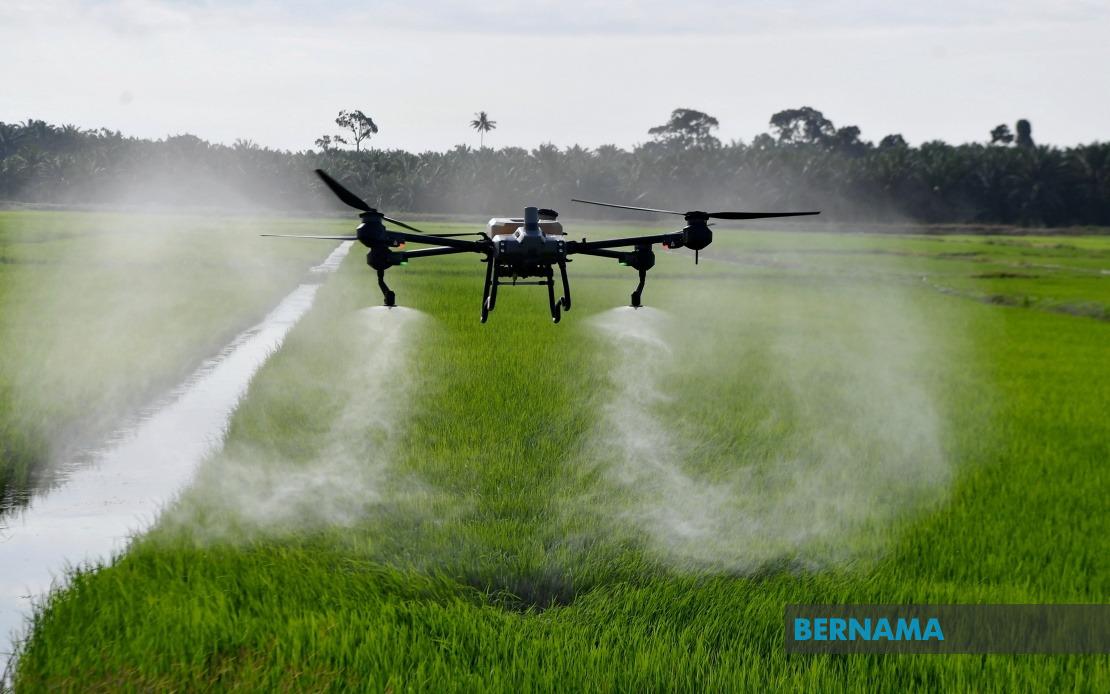
The Selangor state government has earmarked RM500,000 to catalyse growth within its emerging drone technology sector, representing a strategic investment aimed at positioning the state as a regional leader in unmanned aerial systems by 2027. The funding initiative encompasses infrastructure improvements for the Droneport-1000 project housed at Universiti Selangor, alongside targeted programmes designed to facilitate partnerships between local enterprises and international players seeking to establish operations within the state.
Dr Mohammad Fahmi Ngah, chairman of the Selangor State Islamic Affairs and Innovation Culture Committee, underscored the significance of this allocation during the pre-launch ceremony at Unisel Bestari Jaya, noting that the increased budget reflects the government's commitment to completing critical facility upgrades and establishing collaborative frameworks with the private sector. The focus extends beyond mere financial commitment, encompassing a comprehensive ecosystem development strategy that recognises the drone industry's multifaceted nature and its potential to generate substantial economic returns.
The Droneport-1000 represents the cornerstone of Selangor's drone ambitions, claiming the largest designated airspace corridor in Malaysia at 24 square kilometres with operational altitude reaching 1,000 metres. The facility currently undergoes certification procedures with the Civil Aviation Authority of Malaysia, a regulatory step essential for enabling commercial drone operations and establishing Selangor as a credible testing ground for industry participants. This scale of operation positions the airspace resource strategically within the context of regional competition, particularly against other Southeast Asian jurisdictions developing similar capabilities.
State officials have outlined an incentive structure intended to magnetise both established and emerging drone manufacturers and service providers. Matching grants and other financial inducements form part of a broader ecosystem strategy recognising that infrastructure alone proves insufficient without accompanying demand creation and market participation. This approach mirrors successful models adopted in other high-technology clusters globally, where governments have combined physical infrastructure investment with fiscal incentives to overcome initial market adoption barriers.
Beyond the hardware dimension, Selangor's drone sector strategy encompasses the entire value chain spanning software engineering, artificial intelligence applications, and semiconductor manufacturing. The integration of these components reflects an understanding that modern drone systems represent convergences of multiple advanced technologies rather than standalone mechanical platforms. Puchong's emerging semiconductor production capabilities provide particular relevance, suggesting vertical integration opportunities within the state's industrial landscape and potential cost advantages for local manufacturers.
The economic projection attached to Droneport-1000 emphasises the unlimited growth potential inherent in airspace utilisation and drone technology integration across multiple sectors including agriculture, infrastructure monitoring, telecommunications, and emergency management. Dr Mohammad Fahmi highlighted that Selangor's monitored area extends to ten times larger than Singapore's territory, a comparison underscoring the scale advantages available through modern drone surveillance technologies relative to traditional manual monitoring approaches.
Practical applications for drone deployment address longstanding governance challenges within Selangor's sprawling geography. Forest reserve encroachment, coastal erosion, and embankment failures represent recurrent issues where conventional monitoring methodologies prove labour-intensive and temporally limited. Drone-equipped artificial intelligence systems can compress detection timescales dramatically whilst reducing dependency on manual field surveys, enabling proactive rather than reactive management of environmental assets. This practical utility angle renders the investment directly relevant to voter concerns regarding resource management and environmental stewardship.
Universiti Selangor's involvement institutionalises the research-to-commercialisation pathway critical for translating academic innovation into market-ready products and services. The university's positioning as a facilitating institution between knowledge generation and commercial application creates structured opportunities for student engagement whilst simultaneously establishing pathways for intellectual property migration from campus laboratories to industry operations. This mechanism addresses a perennial gap within Malaysian innovation ecosystems where excellent research frequently fails to achieve commercial scaling.
Selangor Aviation & Technology Innovation, the chief implementing agency, frames Droneport-1000 explicitly as a bridging mechanism connecting multiple ecosystem dimensions. By positioning the facility as a nexus between industry practitioners, academic researchers, and emerging talent, organisers acknowledge that sustainable sector development requires simultaneous attention to supply-chain development, skills cultivation, and knowledge transfer. This holistic framing distinguishes the initiative from narrowly-focused infrastructure projects.
The timeline aspiring toward 2027 sector leadership provides a measured implementation window permitting phased capability development and iterative course correction as market conditions evolve. Malaysian regional positioning within global drone markets remains nascent compared to established centres in North America, Europe, and East Asia, suggesting that near-term competitive advantage accrues to jurisdictions combining supportive regulatory environments, skilled labour availability, and technological infrastructure investments. Selangor's multifaceted approach addresses each dimension simultaneously.
International participation assumptions embedded within the incentive structure acknowledge that drone technology remains globally distributed, with cutting-edge capabilities concentrated among established international firms. Attracting foreign direct investment and technology partnerships accelerates local capacity development beyond what domestic resources alone could achieve, whilst creating employment opportunities and introducing advanced practices into the regional ecosystem. This openness to international participation distinguishes developmental strategies premised on incremental organic growth.
The allocation's sufficiency for achieving stated objectives warrants scrutiny, as drone sector infrastructure development typically requires substantially larger sustained investments than single-year allocations suggest. However, positioning RM500,000 as initial capitalisation for a longer-term investment programme rather than comprehensive funding creates more realistic expectations. Subsequent budget cycles and private sector contributions will prove determinative regarding ultimate project success and sector maturation.

