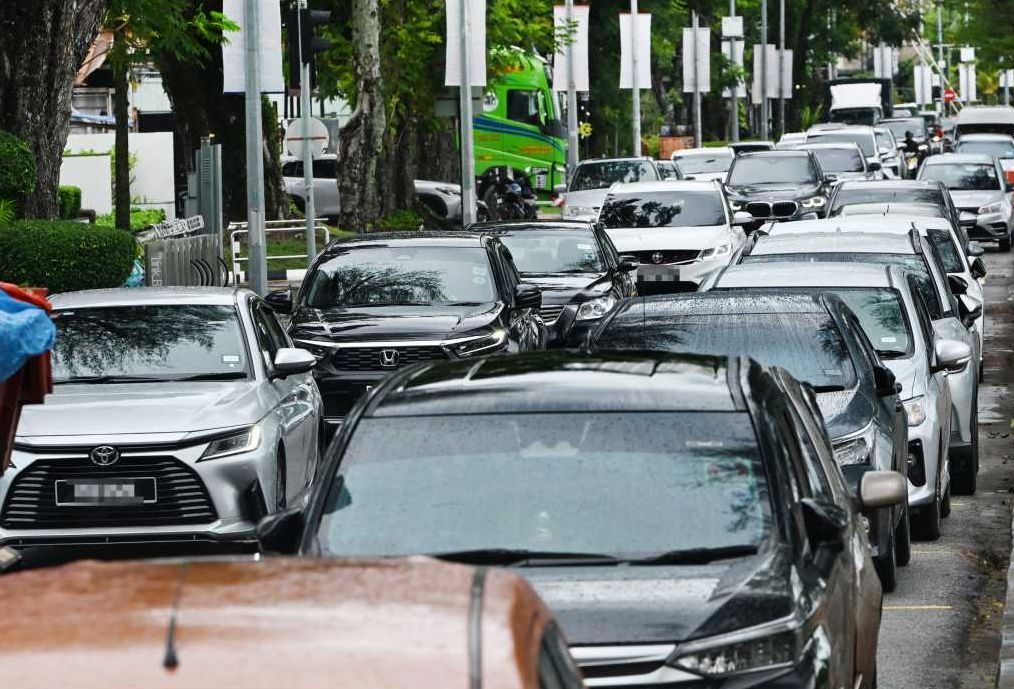
The Selangor government faces mounting pressure to disclose comprehensive details about a cyberattack that compromised its Intelligent Parking service, with Petaling Jaya MP Lee Chean Chung demanding answers on how the breach occurred, what citizen data was exposed, and what steps authorities are taking to prevent recurrence. Speaking Friday, Lee emphasised that residents deserve clarity on the financial impact of the incident and the concrete measures being implemented to strengthen security going forward. His intervention signals growing parliamentary scrutiny of how state-level digital systems are managed and protected in an era of escalating cyber threats.
The MP contends that if the state government fails to provide satisfactory explanations, legislative representatives should escalate the matter by requesting the Selangor Select Committee on Competency, Accountability and Transparency to conduct a formal public hearing. This procedural suggestion indicates that Lee views the incident as sufficiently serious to warrant formal parliamentary oversight, moving beyond routine ministerial responses. Such a hearing would create a public forum where officials could be questioned under structured parliamentary rules, potentially uncovering details that might otherwise remain confined to closed-door discussions between government agencies and private operators.
Central to Lee's concerns is the prospect that personal information belonging to Selangor residents may have been compromised through the breach. Citizens who have registered for the parking system would have submitted identifying documents and payment details, making the potential data exposure particularly troubling. The incident therefore raises urgent questions about how thoroughly private sector operators vet their cybersecurity protocols before being entrusted with sensitive citizen information, and whether state oversight mechanisms are sufficiently robust to catch vulnerabilities before they are exploited.
Lee's call for accountability on the SIP system reflects a broader pattern of his scrutiny toward the state's approach to digital infrastructure. In July 2025, he previously urged the Selangor government to immediately suspend the SIP system entirely, while calling for a comprehensive review of its strategic direction and implementation framework. That earlier intervention suggests Lee had already identified systemic concerns about how the parking service was structured and operated, making the recent cyberattack less an isolated incident and more a vindication of his pre-existing apprehensions about the model's fundamental vulnerabilities.
Under the current SIP arrangement, private concessionaires retain half of all parking revenue collected through the system. This financial structure creates incentives for private operators to prioritise revenue generation and system expansion, potentially at the expense of security investments and rigorous data protection practices. The revenue-sharing model means that any cost-cutting measures affecting cybersecurity infrastructure directly impact the private operator's profit margins, potentially creating misaligned incentives between profit maximisation and data safeguarding that serves the public interest.
Lee argues that Selangor's adherence to the SIP model fundamentally contradicts the federal government's strategic direction regarding digital governance. The Federal Government established GovTech as a dedicated institution to strengthen in-house digital capabilities across public agencies, reduce reliance on external vendors, and eliminate data silos that fragment government services. By continuing to outsource critical parking infrastructure to private operators, Selangor appears to be moving in the opposite direction from this coordinated national effort to build sustainable, government-controlled digital ecosystems.
The tension between federal and state digital strategies reflects a deeper philosophical disagreement about public sector capacity and accountability. The GovTech initiative rests on the premise that government agencies can and should develop their own technological expertise rather than perpetually depending on private sector vendors. Outsourcing to private operators typically locks jurisdictions into long-term contracts, creates dependency relationships that are difficult to exit, and disperses responsibility for system performance across multiple actors, making it harder to identify accountable parties when failures occur.
Lee emphasises that when citizens are required to entrust their personal data and financial transactions to government-administered digital systems, the state bears a fundamental obligation to ensure that public trust is never compromised through negligence or insufficient security practices. This principle reflects a social contract understanding whereby governments implicitly guarantee that they will protect citizen information as a core governmental responsibility, not a service that can be delegated away to reduce state budgets or administrative burden.
The Selangor parking breach arrives at a moment of heightened awareness about cybersecurity risks across Asia. Regional governments have recently experienced major incidents affecting everything from transportation systems to medical infrastructure, raising public consciousness about how thoroughly state agencies are protecting digital services. The incident in Selangor therefore carries implications beyond a single state, potentially influencing how other Malaysian jurisdictions evaluate their own outsourcing arrangements and cybersecurity oversight mechanisms for critical services.
For Malaysian citizens and residents in Selangor specifically, the incident underscores practical concerns about data protection standards across different government operators. Many residents may not be fully aware of which government systems are privately operated versus directly managed by state agencies, and the SIP breach may prompt broader questions about data security standards across multiple services. This awareness could eventually influence public expectations for transparency regarding how government contracts with private operators are structured and monitored.
The episode also highlights systemic questions about regulatory capacity. Even if private operators are contractually obligated to maintain cybersecurity standards, the state government must possess sufficient technical expertise to audit compliance and verify that operators are actually implementing promised security measures. Outsourcing parking operations does not eliminate state responsibility for citizen protection; it merely shifts the nature of that responsibility from direct service delivery to rigorous vendor oversight, a distinction that Lee's intervention implicitly suggests may be poorly understood or inadequately practiced in current arrangements.
Moving forward, the outcome of this controversy may influence how other Malaysian states approach digital infrastructure decisions. If the Selangor government provides transparent disclosure and implements meaningful reforms, it could establish a model for responsible crisis management. Conversely, if authorities resist scrutiny or deflect accountability to private operators, the incident may accelerate legislative efforts to impose stronger standards for digital service provision across Malaysia's federal system. The parking system breach therefore carries significance extending well beyond parking convenience, touching on fundamental questions about governance, accountability, and the proper relationship between public and private sectors in managing critical digital infrastructure.

