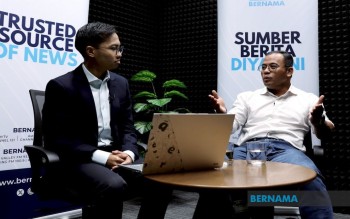
Aligned governance between Selangor and Negeri Sembilan presents a distinctive opportunity to forge a cohesive economic corridor that could substantially elevate the competitiveness of Malaysia's central heartland, according to Selangor Menteri Besar Datuk Seri Amirudin Shari. Speaking in Seremban recently, Amirudin articulated how the two neighbouring states' proximity and shared development ambitions position them uniquely to create an integrated ecosystem that attracts investment, generates employment, and strengthens regional industrial networks.
The geographical contiguity of Selangor and Negeri Sembilan, Amirudin explained, removes many conventional barriers that typically impede cross-border collaboration in Malaysia's federal system. Rather than operating as separate economic units competing for investors, the two states can strategically coordinate their development trajectories to create complementary advantages that neither could achieve independently. This geographical synergy, when coupled with administrative coherence between state governments, enables the rapid resolution of jurisdictional complications that might otherwise delay major infrastructure and industrial initiatives.
A particularly compelling illustration of this potential lies in the adjoining industrial precincts straddling both states. The Selangor Aero Park in Sepang sits in immediate proximity to development land across the border in Nilai, Negeri Sembilan, creating an unusually compelling proposition for investors seeking contiguous industrial space. Were both state governments to coordinate planning, zoning, and incentive frameworks, this boundary area could function as a unified aerospace and technology hub rather than two fragmented zones. Amirudin emphasised that such informal problem-solving between aligned administrations could circumvent the bureaucratic delays inherent in conventional inter-state negotiations, thereby accelerating project timelines and reducing compliance costs for operators.
The southward expansion trajectory already underway in Selangor—particularly concentrated around Sepang and Kuala Langat—naturally complements Negeri Sembilan's emerging technology infrastructure centred on Nilai. Rather than these developments occurring in isolation, coordinated planning could establish integrated supply chains, shared logistics networks, and clustered innovation ecosystems that attract multinational corporations seeking Southeast Asian manufacturing and technology bases. This alignment reflects a more sophisticated understanding of regional economic development than the traditional state-centric approach that has historically fragmented Malaysia's industrial landscape.
Infrastructure represents another critical dimension of this proposed alliance. The proposed Seremban Bypass would substantially improve connectivity between Negeri Sembilan's dispersed industrial zones and Selangor's major port facilities, including Westports and Northport, as well as emerging developments around Pulau Carey. Enhanced logistics infrastructure creates tangible efficiency gains for manufacturers and exporters based across both states, reducing transportation costs and transit times. When combined with existing major highway networks and the proximity of Kuala Lumpur International Airport, this infrastructure corridor creates a genuinely competitive platform for export-oriented industries and international commerce.
Amirudin highlighted how integrated development across state boundaries would substantially strengthen Malaysia's position in attracting high-calibre foreign direct investment. Multinational corporations evaluating regional headquarters or manufacturing operations increasingly prioritise locations offering consolidated infrastructure, predictable regulatory environments, and efficiently connected industrial clusters. A unified Selangor-Negeri Sembilan economic zone addresses these requirements more comprehensively than fragmented state-level initiatives. The sector diversification potential—spanning aerospace, advanced manufacturing, logistics, technology services, and specialised retail—could create a labour market sophisticated enough to absorb both entry-level and highly skilled workers, addressing a critical constraint in Malaysia's economic competitiveness.
The technology sector development in Nilai, when linked with Selangor's existing advanced manufacturing capabilities and port infrastructure, creates opportunities for integrated value-chain development across the entire spectrum of modern industry. Digital infrastructure, research partnerships between state agencies and private enterprises, and coordinated skills development initiatives could position the corridor as a legitimate Southeast Asian alternative to Thailand's Eastern Economic Corridor or Indonesia's Jabodetabek region. Such positioning would require sustained political commitment from both state governments, making electoral choices in Negeri Sembilan's upcoming 16th state election particularly consequential for determining whether this coordination continues or fractures along factional lines.
The manufacturing, logistics, and services sectors would experience particularly pronounced benefits from this cross-state alignment. Supply chains that currently fragment across state jurisdictions could be rationalised and optimised through coordinated infrastructure investment and regulatory harmonisation. Businesses operating across both territories would face fewer compliance redundancies and more standardised operational frameworks. This enhanced business environment translates directly into lower operating costs and greater profitability, creating competitive advantages that attract not merely routine manufacturing operations but higher-value activities including research and development, design, and management functions.
Amirudin's articulation of this vision represents a meaningful departure from traditional state-based economic competition that has characterised Malaysian federalism. Rather than regarding Negeri Sembilan as a competitor for limited investment resources, his framework explicitly recognises that coordinated development generates positive-sum outcomes benefiting both territories. This intellectual shift reflects broader trends within Southeast Asian governance, where successful economies increasingly recognise that regional economic integration—even within national borders—generates stronger growth trajectories than fragmented, parochial approaches. The Selangor-Negeri Sembilan corridor, if properly executed, could serve as a model for similar inter-state cooperation across the peninsula and potentially across the region.
The practical realisation of this corridor concept depends fundamentally on sustained political alignment between the two state governments. Administrative transitions or shifts in factional dominance could swiftly undermine coordination frameworks and infrastructure initiatives requiring multi-year implementation. This reality underscores why Amirudin specifically highlighted electoral outcomes in Negeri Sembilan as determinative for corridor viability. Voters in that state, whether consciously or not, will influence whether their government prioritises collaboration with Selangor or retreats into competitive state-level positioning. The economic consequences of that electoral choice will reverberate throughout the central region for years beyond the polling period itself.

