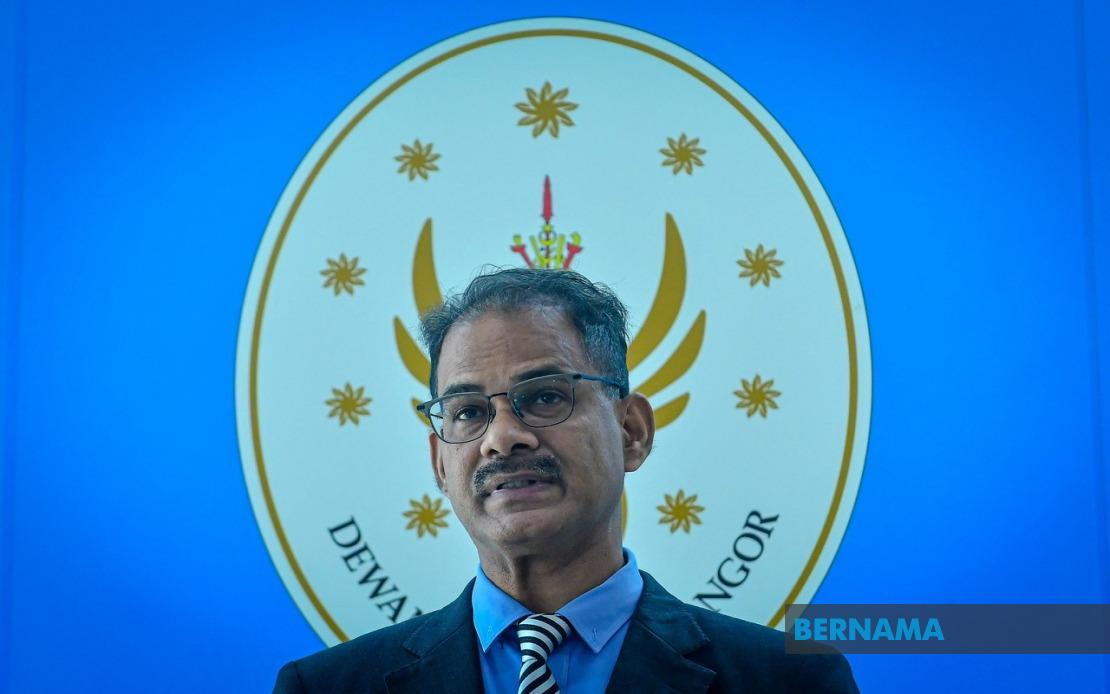
The Selangor state government is making a fresh push to reach military and police veterans who have not yet collected their RM200 shopping vouchers under the 2026 Warriors' Day initiative, concerned that many eligible recipients may miss out on the benefit entirely before the August 31 deadline arrives. V. Papparaidu, chairman of the Human Resources and Poverty Eradication Committee, disclosed that the uptake has been disappointingly sluggish since the programme launched on July 29, with only approximately 500 individuals having come forward to claim their entitlements from a total pool of 8,391 non-pensioned veterans deemed eligible for assistance.
The low participation rate has prompted state officials to examine why so many veterans have not engaged with the initiative despite its straightforward mechanics. Papparaidu highlighted a significant communication barrier affecting outreach efforts, explaining that when the state attempted to contact potential beneficiaries directly, contact numbers on file had frequently changed or become obsolete. This suggests that veteran records held by government agencies, whilst comprehensive in identifying eligible individuals, may not reflect current details, leaving many unaware that assistance awaited them. Beyond telecommunications challenges, he noted that residential mobility among the veteran population has complicated efforts to track down and notify recipients, indicating that some individuals had relocated without updating their information with authorities.
In response to these practical obstacles, the Selangor administration has taken the pragmatic step of relaxing procedural requirements to broaden access to the vouchers. Rather than insisting that only the named recipients collect their benefits in person, the state now permits authorised representatives or immediate family members to claim vouchers on behalf of eligible veterans. This flexibility acknowledges the reality that not every veteran may be in a position to visit State Legislative Assembly service centres personally, whether due to mobility constraints, health issues, or distance from their nearest office. The measure is intended to remove unnecessary barriers that might otherwise prevent deserving individuals from receiving support.
Crucially, the application process itself imposes no administrative burden on claimants. Papparaidu underscored that applicants do not need to complete forms or submit documentation because eligible recipients have already been pre-identified through a vetting process conducted by established institutional channels. The Department of Veterans Affairs (JHEV) and the Royal Malaysia Police (PDRM) compiled the initial lists of qualifying individuals based on their respective records, enabling the Selangor Economic Planning Unit (UPEN) to review these rosters for accuracy and completeness. Subsequently, each State Legislative Assembly service centre verified the information held in their districts, creating a validated database of beneficiaries. This streamlined approach means that eligible individuals need only present themselves at their local service centre with identification to collect their vouchers without navigating complex application procedures.
The government has allocated RM1.7 million in total funding to support this distributed assistance programme, with vouchers being dispensed through the network of State Legislative Assembly service centres across the state. These vouchers carry specific restrictions reflecting policy objectives to promote spending on essentials whilst discouraging purchases deemed socially undesirable. Beneficiaries may use their RM200 credit exclusively at supermarkets that have agreed to participate in the scheme, with redemptions limited to approved daily necessities such as food, household items, and personal care products. The voucher system explicitly excludes cigarettes and alcoholic beverages, embodying a paternalistic approach common to many targeted assistance initiatives that seeks to ensure public resources support health and welfare priorities.
From the state government's perspective, the initiative serves multiple objectives beyond simple income support. Officials frame the voucher programme as recognition of the sacrifices made by veterans in national service, intended to demonstrate continued state commitment to their welfare even after they have transitioned from active duty. For many non-pensioned veterans—those who did not qualify for formal pension arrangements—this targeted assistance may represent one of the few direct state benefits available to them. The initiative thus carries symbolic weight as a public acknowledgement of service, a dimension that state officials believe is equally important as the material benefit itself in affirming the government's values regarding those who have contributed to national security and stability.
The situation in Selangor reflects broader challenges facing governments across Southeast Asia in delivering benefits to dispersed populations with outdated contact information and administrative complexity. The disconnect between having comprehensive eligibility lists and achieving high participation rates is a well-documented problem in means-tested and targeted assistance programmes globally. The Selangor experience demonstrates that even when administrative hurdles are minimised and benefits are made accessible through decentralised service delivery networks, communication gaps and information decay can still impede uptake among vulnerable populations. The decision to permit proxy claims represents an appropriate adaptation to this reality, recognising that administrative convenience cannot always be prioritised when real people face genuine constraints in accessing entitlements.
For Malaysian veterans considering whether to engage with the programme, the straightforward nature of the process should remove hesitation. With the August 31 deadline now approaching and fewer than 10 days remaining, eligible individuals who have not yet collected their vouchers should contact their nearest State Legislative Assembly service centre to confirm their eligibility and complete the claim process. Service centres can be identified through the Selangor state government website or by consulting with local representatives. Given that the vouchers can be used flexibly at participating supermarkets for everyday necessities, the RM200 benefit represents a meaningful contribution to household budgets, particularly for individuals managing on limited fixed incomes.
The broader implications of this initiative extend beyond individual benefit transfers to questions about how government structures interact with veteran populations. The reliance on departmental records from JHEV and PDRM suggests that comprehensive identification of eligible recipients is achievable through institutional coordination, yet the communication challenges that emerged during implementation highlight the need for proactive outreach beyond passive notification. Future programmes might benefit from more aggressive publicity campaigns using multiple media channels, community partnerships with veteran organisations, and dedicated claim verification at community locations rather than centralised service centres. For Selangor specifically, the current initiative provides valuable data about veteran demographics and accessibility patterns that could inform design of subsequent programmes.

