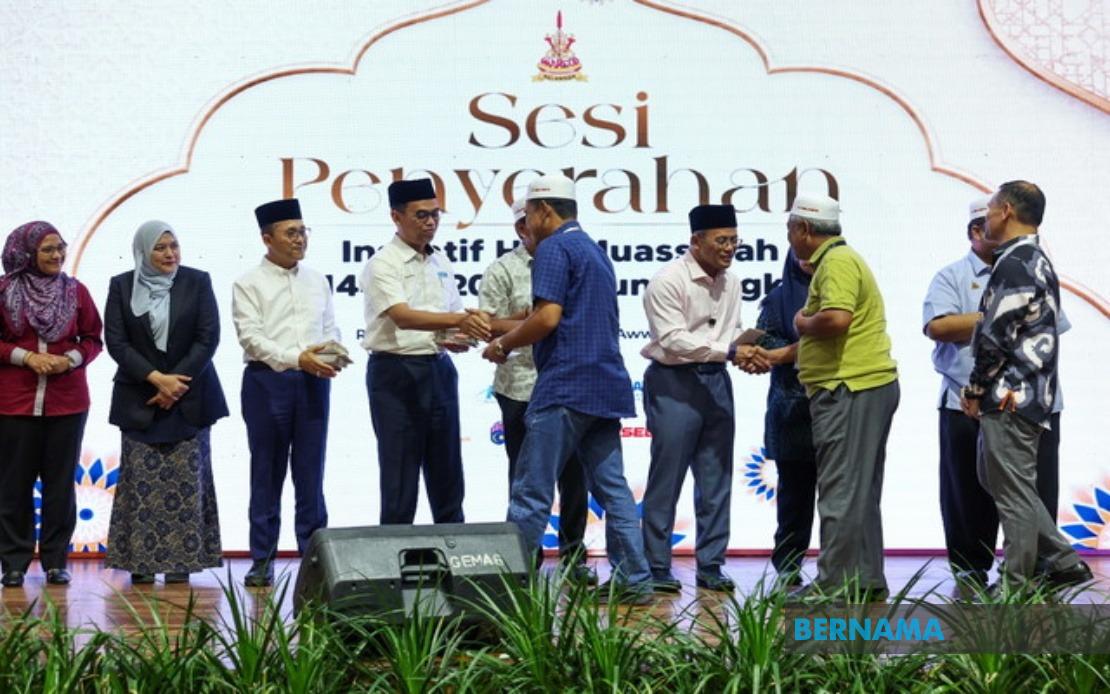
Selangor is pushing toward the finish line in distributing RM9 million across its 2026 Muassasah Haj Incentive Programme, with nearly 80 per cent of intended recipients having already received their allocated funds. Selangor Menteri Besar Datuk Seri Amirudin Shari confirmed that 4,800 pilgrims out of the planned 6,000 beneficiaries have collected their assistance cheques, with state authorities racing to track down and process the remaining 1,200 applicants before the close of September. The initiative, implemented through the Selangor Menteri Besar Incorporated Foundation, represents a sustained effort by the state administration to ease the financial burden on Muslim residents preparing for the annual pilgrimage to Mecca.
The programme distributes RM1,500 to each qualifying pilgrim, a sum deliberately calculated to offset the preliminary costs that precede departure. These funds are intended to cover essential expenses including religious garments, prescribed medications required for the journey, appropriate footwear and clothing suited to the Arabian climate, and miscellaneous preparation costs. For many middle and lower-income households in Selangor, this financial cushion proves meaningful in reducing the strain of simultaneous expenditures, particularly when household budgets are already stretched managing daily living costs and other obligations. The timing of such assistance assumes importance given that Haj departures typically occur within compressed seasonal windows, creating concentrated demand for these preparatory items.
Amirudin disclosed the disbursement progress during a ceremonial handover event held in Puchong's Putra Perdana Community Hall, where 259 recipients from the Dengkil state constituency received their assistance documents. This gathering formed part of a structured rollout across Selangor's constituencies, with state officials deliberately staging separate events to ensure ceremonial recognition of beneficiaries and to generate public awareness regarding the programme's availability. The presence of Deputy Housing and Local Government Minister Datuk Aiman Athirah Sabu, who simultaneously serves as Member of Parliament for Sepang, underscored the alignment between state-level initiatives and federal parliamentary representation in the region.
The challenge of locating and contacting the remaining 1,200 recipients highlights practical complications inherent in large-scale social assistance programmes across diverse constituencies. Address information may have shifted, contact details could be outdated, or eligible applicants might remain unaware they qualify for the scheme. State officials are actively pursuing these individuals to ensure equitable distribution and to prevent potential waste of allocated budgetary resources. This administrative pressure to achieve full disbursement by month's end reflects political commitments made to constituents and demonstrates the state government's intent to demonstrate competence in programme implementation.
Looking beyond the immediate 2026 cycle, Amirudin articulated ambitions to expand the per-capita assistance from RM1,500 toward RM2,000 in subsequent years. This projected increase, tentatively targeted for 2027 or 2028 depending on fiscal circumstances, would raise the total programme cost proportionally if the number of beneficiaries remained constant at 6,000 pilgrims. The Menteri Besar cautioned, however, that such expansion depends fundamentally on Selangor's revenue generation capacity and macroeconomic conditions beyond state control. This hedged optimism reflects realistic fiscal governance, acknowledging that state budgets face competing pressures from infrastructure, education, healthcare, and other portfolio demands.
The Selangor administration's prioritization of Haj preparation assistance reflects demographic considerations and electoral calculus specific to the state's landscape. Selangor's population encompasses substantial Muslim communities across diverse socioeconomic backgrounds, and Haj participation carries deep religious significance intersecting with cultural identity. By subsidizing preparatory costs, the state government positions itself as supporting pilgrims' spiritual aspirations while simultaneously addressing material hardship. This positioning carries electoral implications, as demonstrated support for faith-based welfare initiatives resonates with communities where religious observance remains a defining social marker.
Comparative examination reveals that similar initiatives exist across other Malaysian states, though scale and generosity vary considerably. Selangor's RM9 million allocation and 6,000-recipient scope ranks among the more substantial state-level programmes, reflecting the state's relatively strong fiscal position and urbanized, populous constituencies. Smaller or less resource-rich states may lack capacity for equivalent commitments, thereby creating variations in state-subsidized Haj support across the federation. These disparities occasionally generate discussion regarding equitable treatment of pilgrims regardless of residence, though state autonomy over budgetary allocation traditionally prevails in Malaysian federalism.
The programme's design—providing standardized, modest assistance rather than covering full Haj costs—reflects policy philosophy balancing state capability with individual responsibility. The RM1,500 represents meaningful but non-transformative assistance, requiring beneficiaries to secure additional resources through personal savings, family contributions, or bank financing. This approach differs from hypothetical scenarios where states might underwrite complete pilgrimage expenses, which would prove fiscally unsustainable and potentially create moral hazard regarding financial planning. The calibrated intervention recognizes that pilgrim costs substantially exceed state provision, while acknowledging state capacity and duty to assist vulnerable populations.
For Malaysian readers and particularly Selangor residents, this programme typifies evolving state welfare approaches that target specific populations around defined religious or social occasions. As Malaysian states increasingly develop targeted assistance schemes beyond federal programmes, scrutiny of programme efficacy, equity in distribution, and sustainability assumes heightened importance. The RM1,500 per-pilgrim assistance, though modest in absolute terms, represents tangible governmental recognition of pilgrimage as a priority social concern worthy of public subsidy.
The administrative challenge of completing disbursements by September 2024 will test state bureaucratic capacity and serve as a performance metric for programme management. Successful completion would demonstrate organizational competence and justify future programme expansion, whereas delays or incomplete distribution might invite scrutiny regarding administrative efficiency. The Menteri Besar's public commitment to September completion thus places accountability stakes on state officials tasked with locating and processing remaining recipients. This execution risk underscores how policy ambitions ultimately depend upon effective administrative implementation at ground level.
Looking forward, the proposed increase to RM2,000 per recipient would represent a 33 per cent enhancement to individual assistance, potentially yielding psychological and practical benefits for beneficiaries. However, this expansion hinges on revenue growth, electoral performance, and competing budgetary priorities. Whether Selangor can sustain or expand such programmes amid potential economic slowdown or changed political circumstances remains contingent on broader economic and political developments beyond current predictions. For Haj-bound pilgrims in Selangor, the current RM1,500 assistance provides immediate relief, while future expansions remain aspirational pending fiscal validation.

