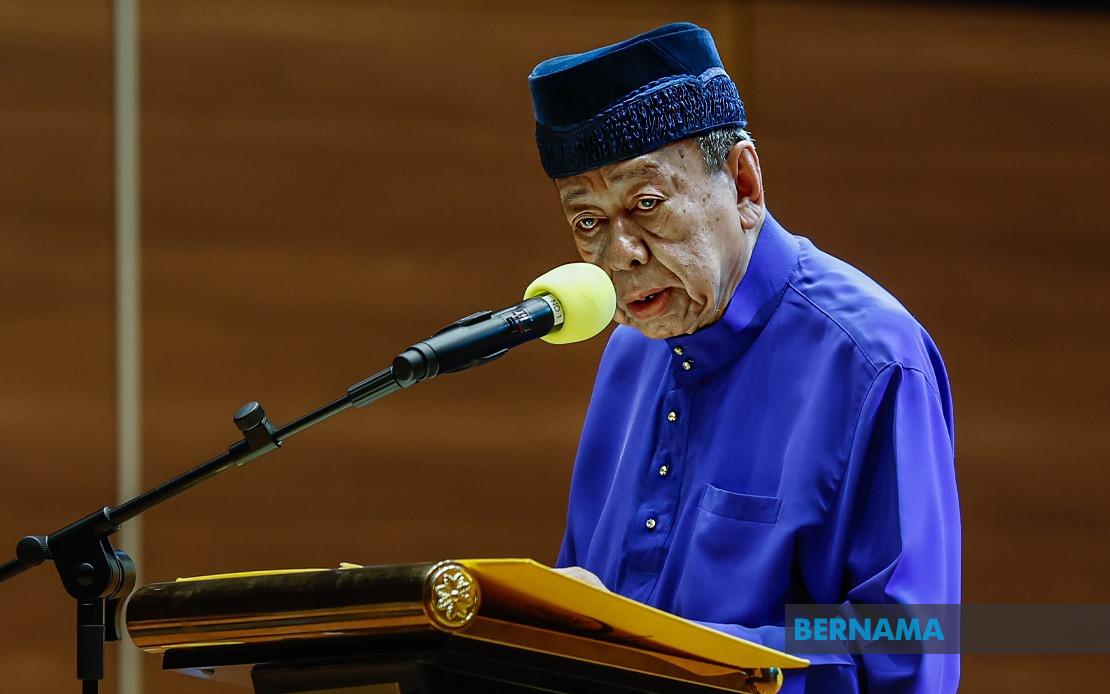
The Sultan of Selangor, Sultan Sharafuddin Idris Shah, has emphasised that Universiti Teknologi MARA must continuously refresh its educational offerings to equip graduates with skills demanded by an increasingly complex global economy. Speaking at the university's Royal Address 2026 ceremony in Shah Alam, His Royal Highness outlined a vision where UiTM balances its foundational commitment to Bumiputera advancement with the imperatives of contemporary economic competition. The challenge facing Malaysia's premier institution, he suggested, has fundamentally shifted from merely securing university places to ensuring that those who graduate possess the capabilities to excel in demanding international markets.
The Sultan identified several critical fields where UiTM must maintain curriculum excellence: digital technology, artificial intelligence, science, engineering, medicine, finance, accounting, law, and the creative industries. These disciplines, he noted, will shape Malaysia's economic trajectory and determine whether the nation can sustain competitiveness as industries undergo rapid transformation. His remarks reflect broader concerns across Southeast Asia about whether universities are adequately preparing graduates for roles that did not exist a decade ago. The technological acceleration affecting job markets globally means that institutional inertia carries substantial costs for both individual career prospects and national development objectives.
Central to the Sultan's message was a distinction between producing job seekers and creating job generators. While UiTM has successfully developed a Bumiputera professional class—evident in the presence of the institution's alumni across corporate and governmental leadership—the Sultan contended that future priorities must shift toward nurturing entrepreneurs, scientists, innovators, and business proprietors capable of operating at regional and international scales. This reframing reflects recognition that Malaysia's development stage requires not merely skilled employees but individuals who can establish enterprises, drive technological innovation, and contribute to wealth creation rather than merely distributing existing opportunities. The implication for regional economies is significant: as Southeast Asian nations compete for investment and talent, universities must prioritise developing graduates who can lead ventures rather than simply join them.
Language proficiency emerged as a specific concern in the Sultan's address. He urged every UiTM student and graduate to achieve competency in at least two foreign languages, recognising that linguistic capabilities constitute a competitive advantage in globalised labour markets and international academic collaboration. This prescription carries particular relevance for Malaysia, where English proficiency among tertiary graduates has been documented as uneven, and where regional integration through forums such as ASEAN increasingly demands multilingual capacity. The ability to communicate across linguistic boundaries affects not only individual employability but also Malaysia's capacity to participate fully in regional knowledge networks and cross-border professional communities.
A substantive portion of the Sultan's remarks addressed the constitutional foundations underpinning UiTM's institutional identity and mandate. Article 153 of the Federal Constitution, he explained, provides explicit provision for reservation of places in higher education institutions for Malays and natives of Sabah and Sarawak. Section 1A of the Universiti Teknologi MARA Act 1976 derives its authority from this constitutional framework. By anchoring UiTM's mission to constitutional principle rather than treating it as ordinary administrative policy, the Sultan established a legal and political framework within which institutional change must occur. This framing carries implications for ongoing debates about educational equity and institutional reform in Malaysia, suggesting that alterations to UiTM's foundational character would constitute constitutional matters rather than routine governance decisions.
The Sultan simultaneously articulated a measured position on the tension between UiTM's Bumiputera focus and broader educational rights. He emphasised that Malaysia's higher education system encompasses multiple institutions serving all citizens, and that UiTM's establishment reflected historical circumstances—specifically the educational and socioeconomic disparities affecting Malays and Bumiputera communities. This historical contextualisation matters because it suggests UiTM's mandate remains relevant precisely to the extent that documented gaps persist. His statement that UiTM's founding mandate remains incomplete while such disparities continue implies a contingent rather than permanent commitment, one that should evolve as circumstances change.
The Sultan's acknowledgement of UiTM's track record in producing accomplished professionals carries significant weight given his constitutional position. He noted that the institution's capacity to nurture Bumiputera talent into corporate leaders, senior government officials, and international figures now constitutes verifiable fact rather than aspirational rhetoric. This recognition validates the institution's fundamental approach while simultaneously suggesting that future excellence requires evolution rather than complacency. The distinction between defending institutional achievements and becoming complacent about shortcomings represents a critical analytical line that the Sultan drew throughout his address.
Industry partnerships featured prominently in the Sultan's recommendations for UiTM's future direction. He warned against producing graduates holding degrees yet lacking practical skills, workplace confidence, linguistic competency, critical thinking abilities, or sector-specific capabilities demanded by employers. This critique resonates with broader complaints from Malaysian and regional employers about gaps between academic training and practical requirements. The Sultan's exhortation to strengthen industry relationships implies that UiTM should move beyond theoretical instruction toward more integrated, apprenticeship-informed, and work-integrated learning models that enable students to acquire capabilities employers actively seek.
The timing of this royal address carries significance within Malaysia's contemporary educational and political context. Higher Education Minister Datuk Seri Dr Zambry Abd Kadir's presence at the ceremony alongside Raja Permaisuri Tengku Permaisuri Norashikin underscores the government's investment in the message. The Sultan's careful balancing of institutional innovation with constitutional fidelity suggests an effort to navigate between competing pressures: the need for educational modernisation to enhance graduate competitiveness, and the political and constitutional imperatives around Bumiputera advancement that remain central to Malaysia's social contract.
For regional stakeholders, the Sultan's remarks illuminate how Southeast Asian nations are grappling with the challenge of maintaining institutional identity while responding to globalising education markets and economic forces. UiTM's position as a flagship Bumiputera-focused institution makes these tensions particularly acute, but the underlying questions—how universities balance equity commitments with excellence, how they embed practical skills within academic rigour, how they maintain local relevance while operating globally—reflect challenges facing tertiary institutions across the region. The Sultan's framing suggests these need not be zero-sum trade-offs, but rather dimensions requiring simultaneous attention and creative institutional design.

