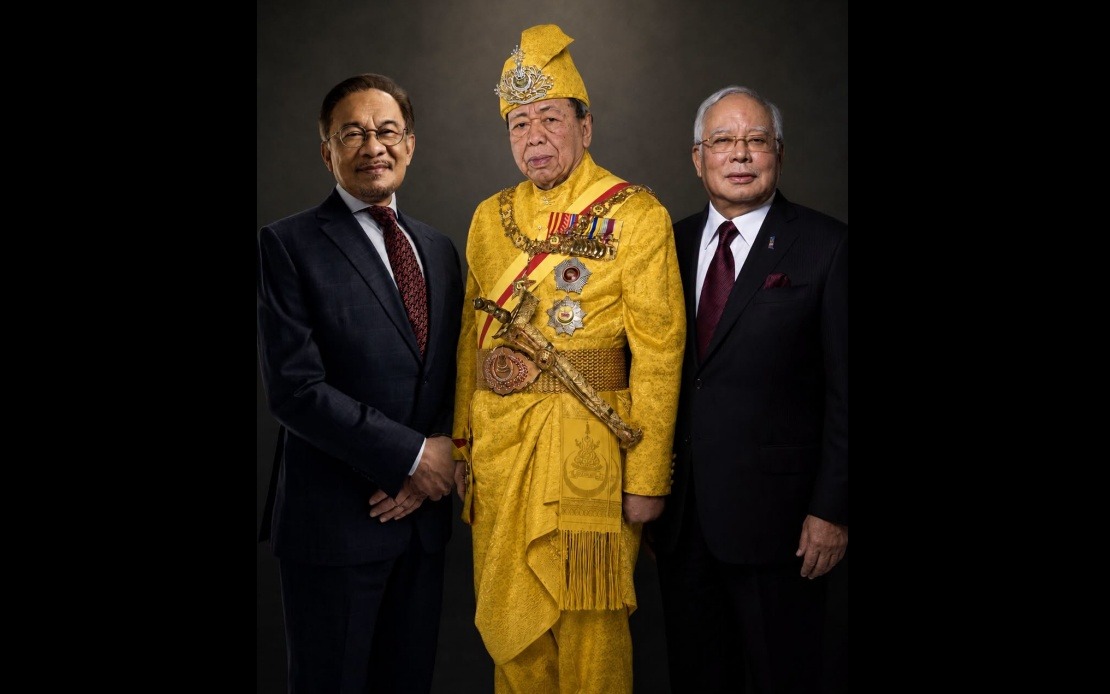
The Sultan of Selangor, Sultan Sharafuddin Idris Shah, has publicly thanked Prime Minister Datuk Seri Anwar Ibrahim for ensuring the Shah Alam Line LRT3 project reached completion and began operations this week, marking a significant milestone for transport infrastructure in the region. His remarks underscore the political will required to shepherd a major public works initiative through multiple administrations and unforeseen setbacks spanning more than a decade.
In a formal statement, the Sultan acknowledged specific interventions Anwar made after assuming the dual portfolios of Prime Minister and Finance Minister in 2022. Among these was the restoration of five train stations that had been eliminated from the original design during earlier financial constraints. Equally notable was Anwar's commitment to developing affordable housing complexes within proximity to LRT3 stations, a decision that extends the project's utility beyond merely solving transport bottlenecks to addressing the wider housing affordability challenge affecting middle and lower-income families across Selangor's urban sprawl.
The Sultan's emphasis on removing administrative obstacles carries particular weight given the project's contentious history. By directing that no further hindrances should emerge from any quarter, the royal statement effectively shields the initiative from bureaucratic delays or political opposition that might arise during the operational phase. This intervention signals to implementing agencies and contractors that the project enjoys unequivocal support from the state's highest authority, a crucial safeguard for long-term service reliability.
The genesis of the LRT3 project reveals how infrastructure planning often originates from ground-level grievances rather than grand visions. Sultan Sharafuddin recounted that citizens, particularly homemakers managing household schedules, had complained about husbands returning late due to Klang Valley congestion. The Sultan brought these concerns to then-Prime Minister Datuk Seri Najib Tun Razak, who recognized the need for a rail connection linking Klang, Shah Alam and Kuala Lumpur. This origin story demonstrates that genuinely responsive governance begins with listening to public hardship rather than imposing top-down development schemes.
The project's timeline illustrates the vulnerability of large infrastructure programmes to political transition and external crises. Following the 2018 change of government, the LRT3 experienced an 18-month delay while new administrations reassessed the initiative's viability and financial feasibility. Subsequently, the COVID-19 pandemic imposed a further 19-month disruption from 2020 to 2021, during which construction and manufacturing schedules fractured globally. These compounded delays forced difficult trade-offs: station dimensions were reduced, the number of train cars per set was trimmed, and five proposed stations were shelved from the original design.
What emerged from these constraints was a project substantially leaner than initially envisioned, yet more aligned with realistic budgeting and operational sustainability. The Sultan's insistence that LRT3 was conceived as a public utility rather than a prestige megaproject distinguishes it from infrastructure developments pursued primarily for symbolic impact. This distinction matters for Southeast Asian policy circles, where distinguishing essential connectivity investments from vanity projects remains a persistent challenge for capital allocation.
The transportation implications for the Klang Valley are substantial. The corridor suffers from among Malaysia's worst congestion, exacerbated historically by inadequate river crossings—only two bridges spanned the Klang River at the time the rail project was conceptualized. While the Najib administration's decision to abolish the Batu Tiga and Sungai Rasau toll plazas in 2018 provided immediate relief, eliminating tolls merely shifts congestion rather than reducing overall vehicle volumes. The LRT3 offers a genuine alternative, enabling commuters between Klang and Kuala Lumpur to bypass road networks entirely, with projected benefits for air quality, fuel consumption and household transport budgets across Selangor.
The Sultan notably resisted the temptation to attribute LRT3's success to any single administration or political figure, instead characterizing it as an outcome of sustained planning and intergovernmental cooperation spanning multiple regimes. This framing serves crucial purposes: it depoliticizes essential infrastructure, removing it from electoral contests and ensuring continuity regardless of electoral outcomes; it acknowledges that complex projects require institutional memory and commitment that transcend political cycles; and it establishes a precedent that large-scale works should be evaluated on delivery and public benefit rather than political credit-claiming.
Operational sustainability presents the next critical phase. The Sultan explicitly urged Prasarana Malaysia Bhd, the managing entity, to maintain rigorous service standards and prevent the degradation that has afflicted other transport assets in Malaysia. Regular maintenance regimens, staff training, spare parts availability and responsive problem-solving during the operational phase will determine whether LRT3 fulfills its promise or devolves into another underutilized infrastructure asset. The royal directive essentially puts Prasarana on notice that performance expectations are high and monitored.
The broader economic implications extend beyond commuter convenience. The Sultan identified LRT3 as a catalyst for development, anticipating that improved connectivity would strengthen economic linkages between Kuala Lumpur, Petaling Jaya, Shah Alam and Klang as regional growth centres. Infrastructure-led development strategies depend on such network effects: reliable transportation reduces logistics costs for businesses, attracts investment to accessible corridors, and enables labor markets to function more efficiently across broader geographies. For Selangor, which generates substantial national GDP and hosts critical manufacturing and services hubs, enhanced internal connectivity addresses a genuine constraint on productivity and competitiveness.
For Malaysian policymakers and regional observers, the LRT3 narrative illustrates how infrastructure persistence pays dividends. Projects spanning over a decade require managing shifting economic conditions, political transitions, technological changes and unexpected disruptions. Yet when pursued with sustained commitment and realistic adaptation—rather than abandonment at the first obstacle—they deliver public goods that justify the complexity. This lesson is pertinent as Malaysia and its Southeast Asian neighbours contemplate expanded transport networks, industrial corridors and digital infrastructure requiring similar long-term institutional commitment.

