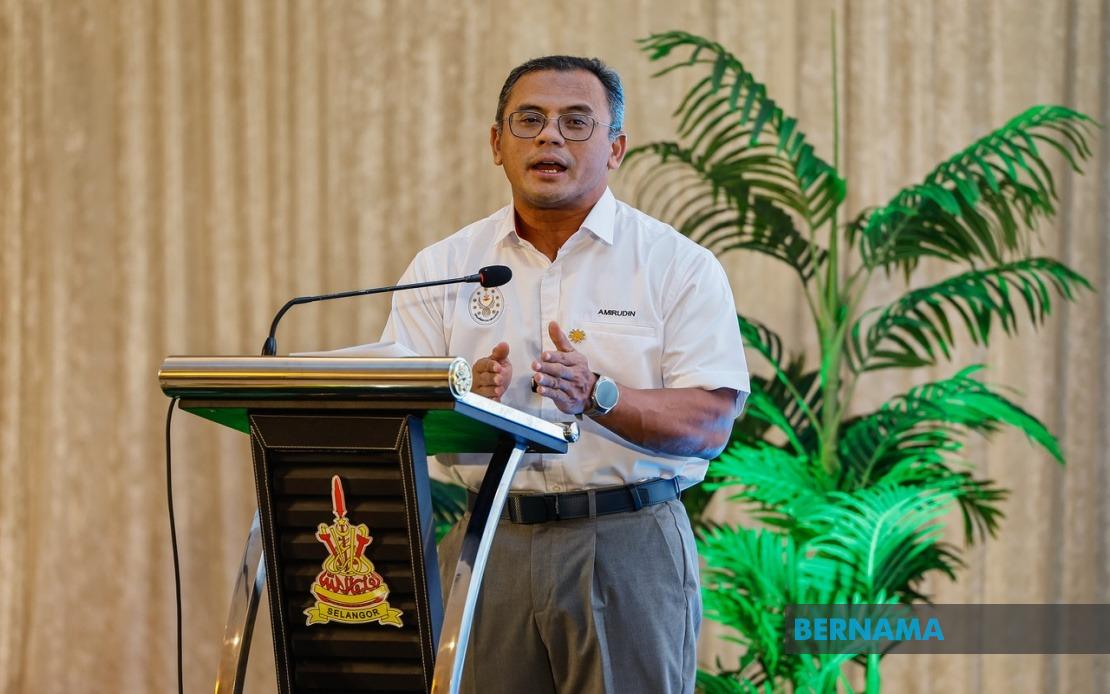
Selangor's state government has earmarked Taman Medan as the primary location for constructing a new hospital serving the Petaling Jaya area, a significant step towards bolstering healthcare infrastructure across the state's most populated districts. Menteri Besar Datuk Seri Amirudin Shari announced the development while launching the second phase of the Ambulans Kita Selangor (AKS) programme at the Sultan Salahuddin Abdul Aziz Shah Building in Shah Alam on July 15, signalling the government's commitment to addressing healthcare disparities in sprawling residential zones where medical facilities remain stretched.
The decision to prioritise Taman Medan reflects a strategic approach to serving high-density communities in surrounding areas including Puchong, Jalan Klang Lama, and Subang, where population growth has outpaced the expansion of hospital capacity. The state administration is currently navigating the land acquisition process, with negotiations underway at two potential sites. While purchase costs remain subject to final agreement, the Taman Medan location has emerged as the preferred starting point due to its superior accessibility and position within a heavily populated corridor, making it the logical choice to maximise the hospital's reach and benefit.
The Ministry of Health (MOH) has validated this selection, confirming that the Petaling Jaya Selatan (PJS) area represents the most strategically advantageous location compared to an alternative proposal in SS8, Kelana Jaya. This ministerial endorsement carries weight beyond mere state-level bureaucracy, as it positions the project within the federal health infrastructure framework and signals alignment between state and national healthcare planning. The convergence of state government initiative with federal health authority support substantially increases the likelihood of timely implementation and resource allocation.
Management of the hospital's design and development will fall entirely under MOH purview, utilising existing budgetary allocations to avoid compounding fiscal strain. This arrangement effectively positions the project as a federal undertaking leveraging state-identified land, a collaborative model that reduces bureaucratic friction and ensures that planning adheres to national healthcare standards. By delegating architectural and operational design to the MOH, the state government streamlines decision-making while maintaining its role as landowner and political champion for the initiative within Selangor communities.
The hospital construction initiative represents one pillar of a broader healthcare expansion strategy that Amirudin characterised as essential to managing demographic pressures on public medical services. As Selangor continues absorbing migration from other states and sustaining high natural population growth, existing hospital networks face mounting demand that threatens service quality and patient outcomes. Strategic facility placement in underserved high-density zones attempts to redistribute healthcare access more equitably across the state rather than concentrating resources in established urban centres.
Beyond hospital infrastructure, the government has elevated mental health to a prominent position within its public health agenda, recognising that psychological and emotional wellbeing issues increasingly drive both individual suffering and downstream social problems. Mental health disturbances correlate measurably with bullying incidents, criminal conduct, and substance-related difficulties affecting adolescents and young adults throughout Selangor. The state government is coordinating with both the MOH and Ministry of Education (MOE) to construct a comprehensive response framework that addresses mental health through prevention, early intervention, and community awareness rather than relying solely on clinical treatment.
The state administration is examining recent audit reports related to mental health outcomes, conducting a systematic review that will inform targeted policy adjustments and programme enhancements. Pending additional strategic documentation from the MOE, the MOH stands ready to mobilise its existing health clinic networks to amplify public education campaigns and demystify mental health discourse. This collaborative stance signals recognition that educational institutions represent crucial touchpoints for reaching youth populations, while health ministry networks provide clinical expertise and referral pathways essential for effective intervention.
The Ambulans Kita Selangor Phase 2 programme, now formally launched, extends ambulance services and medical transport support across the entire state through partnerships with St. John Ambulance. Building on pilot implementations across three initial districts—Petaling, Kuala Langat, and Kuala Selangor—Phase 2 now encompasses a comprehensive network spanning all government hospitals and 86 state health clinics distributed throughout Selangor's administrative districts. This expansion transforms medical transport from a fragmented, ad-hoc service into a systematic programme with consistent protocols and coverage.
Invested with approximately RM1 million in funding, the AKS initiative directly targets the financial obstacles preventing low- and middle-income households from accessing hospital care. Transportation costs represent a hidden but substantial barrier to medical service utilisation among economically vulnerable populations, with families frequently delaying or forgoing necessary treatment due to ambulance or fuel expenses. By subsidising or eliminating transport costs through organised ambulance services, the programme removes a significant friction point in the healthcare access chain, enabling timely hospital presentation and reducing complications arising from delayed care.
The convergence of hospital infrastructure development, mental health programme expansion, and enhanced medical transport services reflects a coordinated state-level health systems strengthening approach. Rather than pursuing isolated interventions, Selangor's government is attempting to address healthcare access through facility availability, service comprehensiveness, and logistical enablement simultaneously. For residents throughout the Klang Valley and surrounding districts, these initiatives promise material improvements in healthcare experience through shorter travel distances to hospital services, expanded mental health support options, and reduced financial barriers to emergency transport.
The Taman Medan hospital project timeline remains fluid pending completion of land acquisition negotiations, though the government's characterisation of the process as advancing suggests that acquisition should conclude within months rather than years. Once land ownership transfers to state or federal authorities, the MOH can commence formal hospital design, site planning, and construction contracting. Given Selangor's status as Malaysia's most populous state and the recognised capacity constraints in its current hospital network, rapid advancement of the Petaling Jaya facility would represent meaningful progress toward healthcare infrastructure adequacy.
For Malaysian healthcare observers, the Selangor government's integrated approach offers a model for state-level health systems improvement where fiscal constraints and federal funding limitations require strategic prioritisation. By identifying high-need geographic zones, securing ministerial endorsement for major facilities, and deploying complementary programmes addressing both clinical access and financial barriers, state administrations can leverage limited resources toward measurable population health improvements. The success or challenges encountered in implementing this Selangor initiative will likely influence health planning approaches across other state governments navigating similar populations pressures and service demands.

