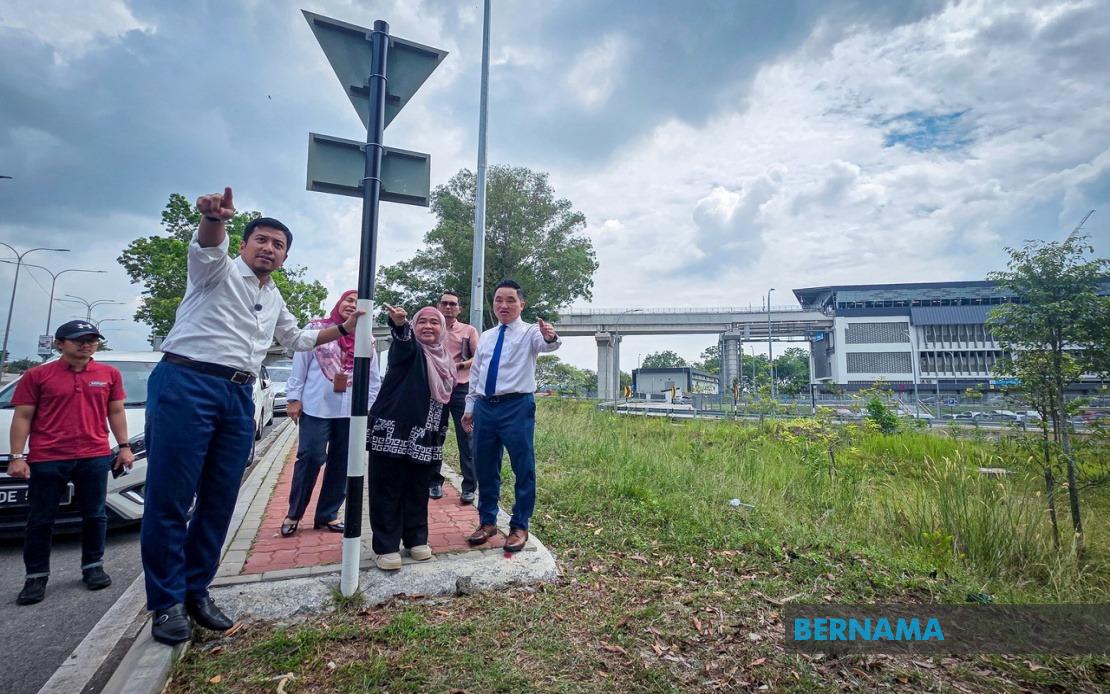
The Selangor State Government has committed to accelerating the completion of connectivity infrastructure surrounding the Shah Alam Line LRT3 stations, pledging to resolve ongoing deficiencies in pedestrian facilities that have hindered the commuter experience since the line's opening. State Local Government and Tourism Exco Datuk Ng Suee Lim made this announcement following an on-site inspection of the public connectivity network, signalling the administration's determination to transform the transit corridors into fully functional urban mobility hubs.
The state's immediate priority centres on remedying infrastructure gaps at two critical stations: Dato' Menteri Station and Shah Alam Stadium Station. These locations have emerged as focal points of concern, with pedestrian pathways and zebra crossing arrangements requiring urgent attention. According to Ng, these shortcomings were identified only after the stations commenced operations, a reality that underscores the challenges inherent in large-scale public infrastructure projects where design and operational realities sometimes diverge from initial planning assumptions.
For Dato' Menteri Station, the obstacles involve regulatory approvals and permit-related procedures that have delayed the installation of supporting facilities. The state government has issued a directive to Prasarana, the transport operator, to complete these outstanding works within a two-month timeframe. This compressed schedule reflects the government's acknowledgment that passengers should not endure prolonged substandard conditions while administrative processes unfold at their traditional pace.
The situation at Shah Alam Stadium Station presents a more complex scenario, as the resolution process is entangled with third-party developer involvement and formal tender procedures. Rather than circumvent established procurement protocols, the state has opted to maintain oversight of the process while preparing for a longer resolution timeline. Ng's statement that completed infrastructure projects naturally reveal operational weaknesses upon rollout suggests a pragmatic acceptance that perfect execution is rarely achievable in projects of this magnitude, but that responsive management can substantially mitigate user inconvenience.
Coordination across multiple governmental layers forms a crucial element of the remediation strategy. The Shah Alam City Council (MBSA) has been tasked with monitoring improvement progress, while development partners will participate in dedicated coordination meetings designed to accelerate facility completion. This multi-agency approach recognises that LRT3 connectivity extends beyond Prasarana's direct responsibility, encompassing urban planning, local governance, and private sector contributions that must work in concert.
Beyond these two stations, the state government has instructed all Local Authorities (PBT) operating districts containing LRT3 stations to undertake systematic reviews of connectivity facilities within their jurisdictions. This broader audit aims to identify latent problems before they accumulate into significant user complaints, establishing a proactive rather than reactive maintenance culture. The instruction signals that station-by-station remediation will continue across the entire line, not merely at the most visible problem areas.
The Royal Klang City Council (MBDK) has similarly received directives to implement monitoring protocols across its administrative territory. Municipal and state assemblymen have been positioned as feedback conduits, creating grassroots intelligence networks that can surface emerging issues rapidly. This democratisation of the monitoring process reflects contemporary approaches to infrastructure management that rely on distributed observation rather than centralised detection mechanisms.
The LRT3 Shah Alam Line represents a significant investment in the Klang Valley's public transport ecosystem, and its success hinges not merely on operational efficiency but on the quality of the passenger journey encompassing station access and circulation. Inadequate pedestrian infrastructure can effectively render even well-functioning transit lines inaccessible to segments of the commuting population, particularly those with mobility limitations. The state's intervention therefore carries implications extending beyond customer satisfaction into urban accessibility and social equity.
For Malaysian commuters, particularly those in the Klang Valley corridor, these commitments represent a test of government responsiveness to infrastructure shortcomings. The two-month deadline for Dato' Menteri Station improvements and the accelerated monitoring framework suggest seriousness, yet previous experiences with infrastructure completion timelines across Malaysia counsel cautious optimism rather than certainty. The involvement of multiple agencies and private developers introduces complexity that can stretch even well-intentioned schedules.
The broader context here involves managing stakeholder expectations around public transport quality during periods of rapid system expansion. The Klang Valley's growing reliance on rail infrastructure places mounting pressure on authorities to ensure that new lines operate seamlessly from inception. When deficiencies emerge, swift remediation becomes essential both to protect the modal shift agenda and to maintain public confidence in transport planning authorities.
Selangor's proactive stance contrasts with historical patterns where infrastructure shortcomings have persisted for extended periods pending bureaucratic resolution. The explicit timelines, high-level political involvement, and cross-agency coordination structures outlined by Ng suggest that this occasion may proceed differently. However, the ultimate test will emerge in coming months when project completion rates are measured against the ambitious targets now publicly articulated by the state government.

