The Selangor state government is preparing immediate intervention measures for roughly 400 workers whose livelihoods face upheaval following Panasonic AVC Networks Kuala Lumpur Malaysia Sdn Bhd's announcement that it will cease television production operations by the end of March 2026. State leadership, recognising the significance of this employment shock in one of Malaysia's most economically vibrant regions, has committed to engaging directly with the affected workforce within the coming week to chart pathways through this transition.
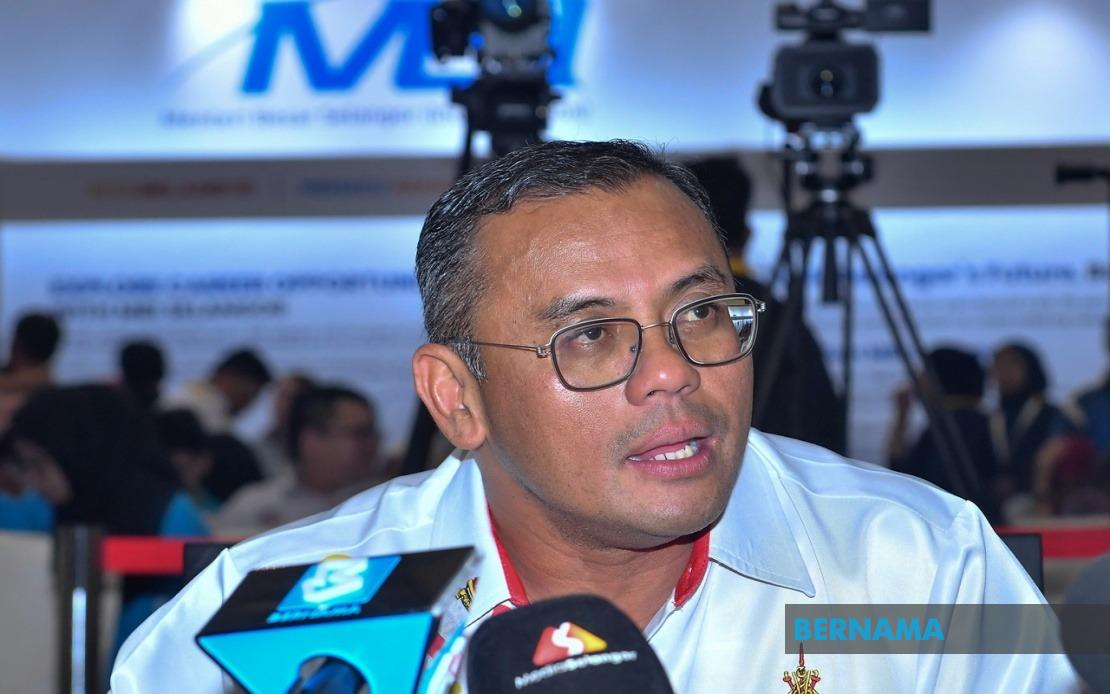
Menteri Besar Datuk Seri Amirudin Shari articulated the state's multi-layered approach during remarks at the Selangor Mega Jobcare 2026 programme in Shah Alam. The meeting, to be facilitated by State Human Resources, Poverty Alleviation, Indigenous & Minority Affairs Committee chairman V. Papparaidu and officials from the Social Security Organisation (PERKESO), will serve a dual purpose: gathering detailed intelligence about workers' circumstances while simultaneously presenting concrete support mechanisms. This strategy reflects a broader understanding among state policymakers that factory closures generate cascading effects beyond immediate job loss, affecting family stability, consumer spending, and community cohesion across the region.
The immediate relief measures announced represent the government's acknowledgment that displaced workers require bridging support before alternative employment materialises. Notably, the distribution of food baskets has been flagged as an early intervention initiative—a pragmatic recognition that wage loss creates immediate household pressure. Yet state officials have signalled that such humanitarian assistance, while necessary, constitutes merely the foundation of a more comprehensive employment facilitation programme. The emphasis on helping workers secure sustainable alternative positions within Selangor underscores a critical policy priority: retaining skilled labour within the state economy rather than watching it migrate to other regions or slip into protracted unemployment.
PERKESO's role in this equation carries particular significance for Malaysia's employment security landscape. Papparaidu highlighted a relatively recent initiative within the social security framework whereby retrenched workers gain access to structured income replacement that declines progressively over time. Under this mechanism, workers receive 80 per cent of their salary during the first month of joblessness, tapering to 50 per cent in the second month and settling at 30 per cent thereafter. This graduated approach attempts to balance immediate income protection with incentives for rapid reemployment, creating a financial cushion that extends beyond the narrow welfare assistance many industrial workers have historically relied upon. For Selangor residents confronting factory closures, this insurance-style benefit represents a qualitative shift in social protection, particularly important given the state's concentration of manufacturing employment.
The Panasonic announcement itself reflects broader technological and business restructuring within Malaysia's electronics manufacturing sector. The company's decision to concentrate production elsewhere and wind down Malaysian television manufacturing operations represents a narrowing of its local footprint, a pattern replicated across several multinational manufacturers reassessing regional production strategies. The timing—execution by March 2026—provides a window for both the affected workers and state authorities to plan responses, though this advance notice also signals the measured pace at which such transitions typically unfold in the industrial sector. Understanding this context helps situate the Selangor government's proactive engagement as a necessary counterweight to market forces that, left unmanaged, generate significant social friction.
Paralleling these retrenchment concerns, the state government has launched the Selangor Mega Jobcare 2026 programme, a career fair marshalling resources from 147 employers advertising more than 11,000 vacancies. Significantly, 62.2 per cent of these positions carry monthly compensation exceeding RM3,000, suggesting that alternative employment opportunities exist within the state's labour market at remuneration levels approaching or matching those likely commanded by manufacturing workers with production experience. This juxtaposition—simultaneous job losses in one sector alongside substantial hiring in others—illustrates the structural realities of modern industrial economies, where displacement and opportunity coexist. For affected Panasonic workers, such job fairs provide genuine pathways to reemployment, though successfully navigating the transition typically demands upskilling, geographic flexibility, or acceptance of roles outside manufacturing.
The intergenerational implications of factory closures warrant consideration for Malaysian policymakers. Panasonic's Selangor operations have historically served as an entry point to stable, formal-sector employment for workers across diverse educational backgrounds. The loss of such anchor employers reduces the scaffolding upon which less-qualified workers traditionally build economic security. This particular closure therefore carries implications extending beyond the immediate 400 affected individuals, touching broader questions about the sustainability of manufacturing-based employment in Malaysia as global production networks continuously shift. State governments confronting such developments must balance immediate worker support with longer-term investments in workforce transition and skills development.
The state government's emphasis on early intervention reflects emerging best practices in displacement management across Southeast Asia. Rather than awaiting mass retrenchment and then scrambling to respond, proactive engagement allows authorities to identify vulnerable subpopulations—workers approaching retirement, those with limited education, single parents—who require more intensive support. PERKESO's involvement ensures that social protection mechanisms operate in concert with employment facilitation rather than as separate administrative functions. This integrated approach, while still imperfect, represents a more sophisticated policy response than historical Malaysian experience with factory closures sometimes demonstrated.
For Selangor specifically, this episode illuminates both the state's economic dynamism and its vulnerabilities. As a magnet for foreign direct investment and manufacturing concentration, Selangor hosts numerous multinational operations whose investment decisions respond to global market conditions rather than local employment considerations. The relatively swift decision to exit television manufacturing reflects this reality. Simultaneously, the state's diverse industrial base and robust service sector provide alternative employment avenues that more economically dependent regions lack. State policymakers appear cognisant of this structural advantage and are weaponising it through proactive labour market interventions.
The broader regional context merits attention as well. Factory closures and workforce displacement affecting Malaysia occur within a Southeast Asian ecosystem experiencing steady manufacturing sector evolution. Thailand, Vietnam, and Indonesia all compete for investment flows, and individual closures often reflect comparative assessment of regional labour costs, regulatory environments, and infrastructure quality. Malaysia's response to such dislocations—particularly the sophistication of social safety net engagement—influences its competitive positioning for future manufacturing investment. Foreign investors evaluating operational locations consider not only baseline costs but also labour market stability and the policy environment surrounding workforce transitions.
Moving forward, the Selangor government faces the critical challenge of translating these announced support mechanisms into tangible outcomes for affected workers. Success will be measured not simply by the establishment of meeting schedules or the announcement of assistance programmes, but by concrete reemployment achievements within meaningful timeframes. The state's track record managing previous industrial transitions—data on wage replacement outcomes, job match quality, and labour retention following PERKESO assistance—will inform whether current initiatives represent genuine policy innovation or familiar gestures with limited practical impact.
Ultimately, the Panasonic situation encapsulates contemporary challenges confronting Malaysian policymakers: maintaining economic competitiveness in globalised production networks while providing genuine security to workers whose employment depends on multinational investment decisions beyond their influence. The state government's measured, multi-agency response suggests institutional learning about effective displacement management. Whether this translates into meaningful outcomes for the affected workforce will become apparent only after the retrenchments conclude and employment data crystallise.

