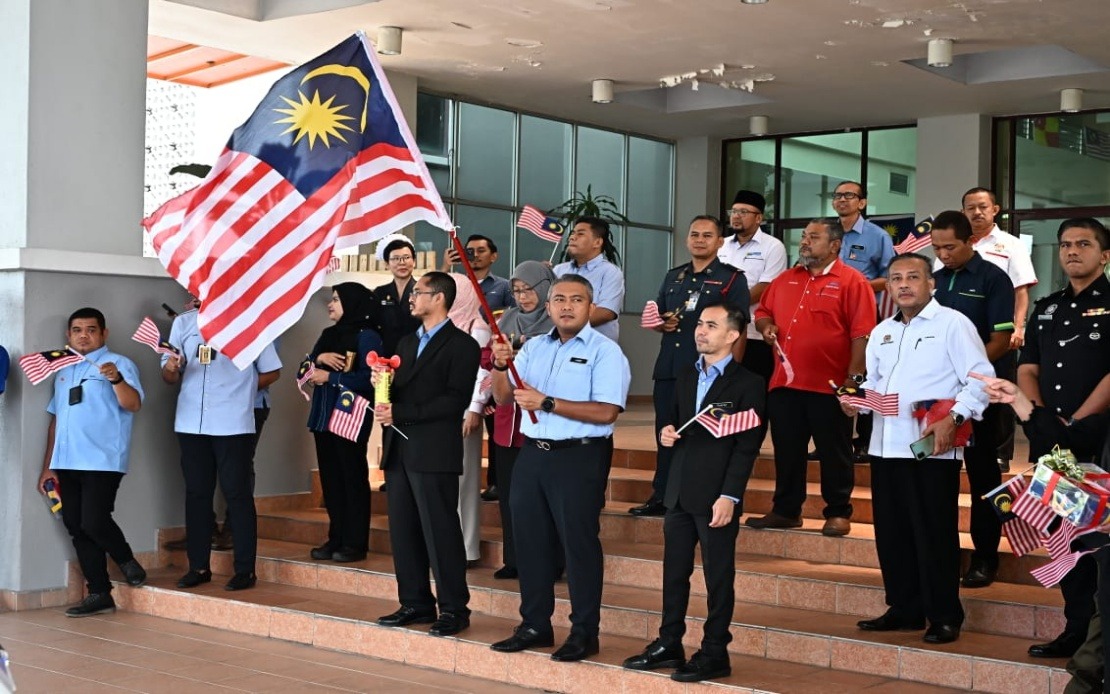
Selangor's Information Department is leveraging collaborative governance to deepen patriotism among the public through the Kembara Merdeka Jalur Gemilang (KMJG) X Arena Penggerak Komuniti (JAGO) 2026 initiative, an ambitious cross-sector campaign that brought together roughly 50 representatives from ten government agencies and private organisations across the state. The event held in Shah Alam on August 24 underscores a strategic pivot toward inclusive nation-building that transcends traditional departmental boundaries and recognises that fostering national pride is fundamentally a collective endeavour.
According to Herlina Ainizawati Zakaria, Assistant Director of the Selangor Information Department's Cyber Media Branch, the initiative represents JaPEN's commitment to strengthening patriotic sentiment ahead of National Day and Malaysia Day (HKHM) celebrations. The collaboration signals confidence that contemporary communications about national identity must be creative, inclusive, and strategically disseminated to resonate across diverse communities. By positioning patriotism as a shared responsibility rather than a government-imposed mandate, the department seeks to build authentic emotional connections to Malaysian identity rooted in historical appreciation and civic pride.
The KMJG X JAGO Selangor 2026 programme resurrects a long-standing tradition of physical flag relays, wherein the Jalur Gemilang is ceremonially transferred between symbolic locations throughout the state. This year's iteration expands considerably beyond ceremonial gesture, weaving patriotic messaging, community engagement, and unity promotion into a multifaceted platform. By maintaining the relay structure while broadening programming scope, organisers blend heritage with contemporary outreach methods, ensuring the campaign appeals to both traditionalists and younger demographics seeking meaningful civic participation.
Central to the campaign's design is amplification of the One House One Jalur Gemilang (1R1JG) initiative, which encourages households to display the national flag throughout National Month as a visible commitment to civic identity. Rather than positioning flag display as mere decoration, the campaign frames the Jalur Gemilang as both a profound symbol of national pride and a marker of individual identity. This subtle reframing acknowledges that patriotism, when voluntarily expressed through personal choice, carries greater psychological weight than top-down mandates. By encouraging homes to become sites of national celebration, the programme extends patriotic consciousness from institutional spheres into domestic spaces.
Three strategic pit-stop locations anchored the August 24 activities in Klang's Central Zone: Wisma Persekutuan Klang, the Klang District and Land Office, and AEON Bukit Tinggi Shopping Centre. The selection of these venues deliberately places the campaign at intersections of civic administration, commercial activity, and public gathering—spaces where ordinary Malaysians encounter state institutions, conduct commerce, and spend leisure time. By infiltrating quotidian settings with patriotic messaging, the campaign seeks organic integration of national identity into everyday consciousness rather than relegation to ceremonial occasions.
Participation from ten organisations reveals sophisticated stakeholder coordination spanning multiple governmental levels and commercial entities. The Klang Selatan District Police Headquarters, Klang Utara IPD, Klang Royal City Council, and Klang District Civil Defence Force represented security and municipal governance structures, while unnamed private-sector organisations contributed complementary expertise in community mobilisation and communications. This fusion of law enforcement, local administration, civil protection, and commercial actors reflects recognition that patriotic sentiment flourishes when cultivated through diverse institutional channels simultaneously.
For Malaysian readers and Southeast Asian observers, the KMJG X JAGO model offers instructive lessons in contemporary civic engagement. Rather than assuming patriotism emerges naturally from historical narrative or political rhetoric, Selangor's approach treats it as cultivatable through deliberate multi-stakeholder programming that acknowledges diverse community identities while emphasising common national purpose. This methodology proves particularly relevant in Malaysia's pluralistic context, where articulating inclusive patriotism without erasing communal particularities represents an enduring challenge.
The campaign's timing reflects strategic recognition that national consciousness requires periodic reinforcement, particularly as demographics shift and new citizens require integration into civic identity frameworks. By deploying agencies across multiple sectors and embedding patriotic messaging in spaces already frequented by citizens, the initiative minimises friction between message and audience. Rather than extracting Malaysians from routine to deliver patriotic content, the programme integrates national pride cultivation into existing behavioural patterns and institutional touchpoints.
The emphasis on communication innovation and creative messaging indicates growing sophistication in how state institutions approach nation-building. Traditional top-down patriotism campaigns often relied on repetition and authority. The KMJG X JAGO model, conversely, emphasises community participation, voluntary expression through home flag displays, and celebration of shared identity rather than compliance enforcement. This shift reflects broader global trends toward participatory governance and recognition that digital-age citizens expect agency in civic processes.
Looking forward, the success of cross-agency initiatives like KMJG X JAGO 2026 may establish templates for addressing other collective challenges requiring public participation and institutional coordination. Whether addressing environmental sustainability, public health, or digital literacy, the demonstrated capacity to mobilise diverse governmental and commercial stakeholders around unifying themes suggests Malaysian governance structures possess latent capacity for coordinated problem-solving beyond traditional sectoral silos. The patriotism campaign thus functions simultaneously as nationalist endeavour and organisational innovation.

