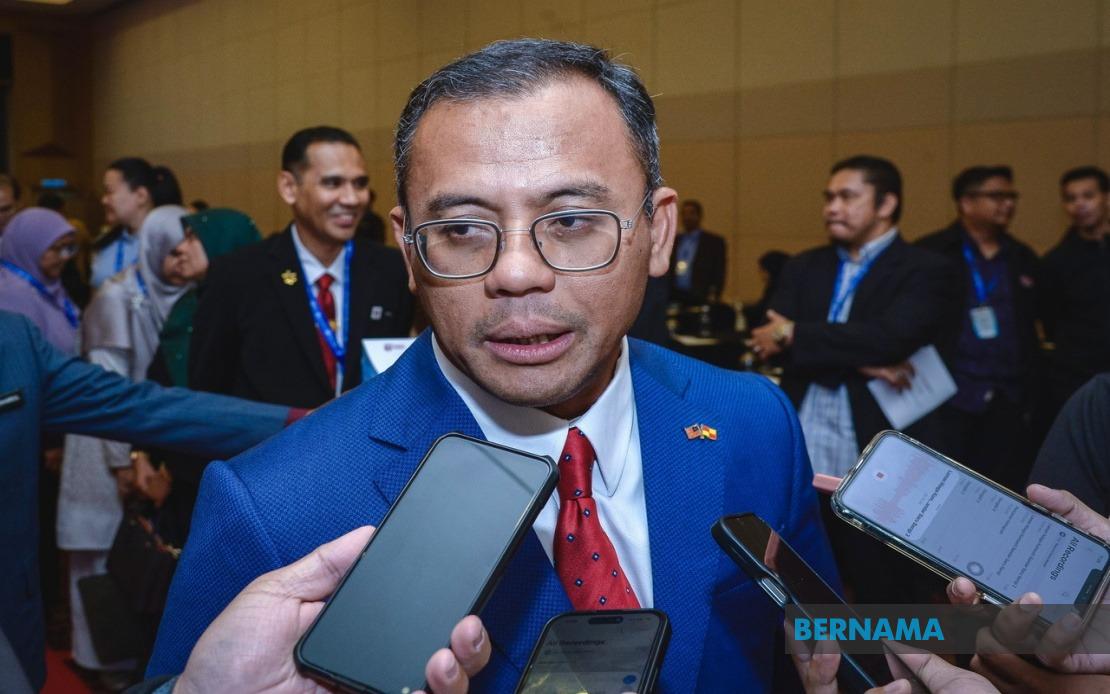
Selangor Menteri Besar Datuk Seri Amirudin Shari has issued a stark challenge to policymakers across the region: stop addressing citizens' challenges in isolation and start recognizing how everyday pressures intersect and compound. Speaking at the Human Ecology International Conference II 2026 in Bangi, Amirudin argued that effective governance requires understanding how ordinary families navigate an increasingly complex landscape where decisions in one policy domain ripple directly into others.
The core of Amirudin's message centres on a deceptively simple observation that carries profound implications for how Malaysia and its neighbours approach social policy. Citizens do not experience their struggles as bureaucratic categories. A working mother does not compartmentalize childcare, transport, healthcare and employment into separate mental boxes—these elements of her daily reality form a tangled web where inadequate public transport makes childcare more expensive, inflexible work arrangements complicate healthcare access, and housing costs cascade into every other budget line. Yet government institutions, shaped by sectoral portfolios and budgetary silos, often fail to recognize these connections.
The structural pressures facing contemporary families have intensified dramatically, Amirudin observed, with Malaysian households now contending with multiple simultaneous demands that previous generations did not encounter simultaneously. Rising living costs have compounded by housing shortages that force longer commutes, which then clash with caregiving responsibilities that increasingly fall on working parents rather than extended family networks. Simultaneously, employment patterns have become more volatile and less predictable, while rapid technological change disrupts both job markets and social infrastructure. These pressures do not operate independently—they amplify one another, creating cascading stress that generic policy interventions often fail to address.
Amirudin reframed the central question that should guide policymaking: governments typically ask whether families are merely "coping," but this standard is inadequate. A family scraping by while parents work multiple jobs with inadequate childcare and health services may technically be coping, yet their environment remains fundamentally unstable. The real measure of policy success should be whether families have genuine opportunity to thrive—to pursue education, invest in skills, maintain health, and contribute meaningfully to their communities. This distinction matters enormously because it shifts focus from survival to flourishing, from addressing crises reactively to building enabling conditions proactively.
The Selangor leader's prescription calls for a structural reorientation of how governments operate. Rather than permitting healthcare, transport, employment and education ministries to design policies in parallel universes, they must collaborate to understand how their decisions interact. A transport policy that reduces commute times for workers simultaneously improves childcare accessibility and reduces pressure on household budgets. An education policy that allows flexible work-study arrangements affects both employment patterns and social cohesion. Healthcare access that covers preventive care reduces emergency expenses and work absences. When designed with these connections visible, policy portfolios reinforce each other rather than working at cross-purposes.
Universities occupy a critical but often underutilized role in this transformation, according to Amirudin's vision. Research institutions typically engage with policymaking at the point where laws are written, but their involvement should span the entire policy cycle. Academics and researchers should participate in problem definition—helping distinguish real challenges from assumed ones—then collaborate on intervention design, implementation oversight, and rigorous evaluation of what actually works. Malaysian universities have the capacity to serve as honest brokers between government agencies and communities, conducting the complex research necessary to understand how policies function in real social settings rather than in idealized bureaucratic scenarios.
The conference itself represented an emerging regional response to these challenges. The Human Ecology International Conference II 2026, organized around the theme "Sustaining Human Well-being," brought together researchers, practitioners, policymakers and community members from Malaysia, Indonesia, the Philippines and beyond. This convening matters because human ecology—the study of how people interact with their social, economic and physical environments—offers an intellectual framework for the integrated thinking that Amirudin advocates. Unlike traditional academic disciplines that fragment knowledge by sector, human ecology demands understanding systems as wholes.
During the conference, Malaysian and regional institutions took concrete steps toward operationalizing this integrated approach. Universiti Putra Malaysia and the University of the Philippines Los Baños signed a memorandum of understanding facilitating collaboration. More significantly, participants launched the ASEAN Human Ecology Consortium, a regional platform explicitly designed to overcome the fragmentation that has characterized development efforts across Southeast Asia. This consortium will facilitate joint research spanning multiple countries, enabling scholars to examine how policies function across different social and economic contexts. Student and faculty mobility programs will expose researchers to how different communities experience similar challenges, while policy dialogue forums will connect academic findings directly to decision-makers.
The consortium structure addresses a persistent problem in Southeast Asian governance: policies designed in national capitals often fail to account for local variations in social structure, economic patterns and institutional capacity. When researchers from Malaysia, Indonesia and the Philippines collaborate, they can identify which policy principles translate across contexts and which require localization. They can also learn from each other's successes and failures—understanding, for instance, how Indonesia's community-based approaches to childcare might adapt to Malaysian urban contexts, or how the Philippines has managed transport challenges in sprawling metropolitan areas. This cross-pollination of experience and evidence accelerates the region's collective policy learning.
For Malaysia specifically, Amirudin's framework has particular resonance given the country's twin challenges of inequality and complexity. Malaysia's income disparities have widened despite strong overall economic growth, suggesting that policies designed in isolation are failing to reach vulnerable populations effectively. A mother in an urban informal settlement experiences not just housing inadequacy but also limited childcare options, reduced employment prospects, constrained healthcare access, and educational disadvantages for her children—these are not separate issues but manifestations of a disconnected policy environment. When Selangor and other states embrace integrated policymaking, they position themselves to address such compound disadvantage more effectively than incremental sectoral improvements can achieve.
The shift Amirudin articulates also carries implications for how Malaysia approaches its middle-income challenges. The country cannot sustainably progress toward high-income status if significant portions of the population cannot fully develop their capacities. A young person whose family struggles with transport costs cannot invest in skill development; a parent without accessible healthcare cannot maintain consistent employment; a student without adequate childcare support cannot complete education. These are not merely humanitarian concerns but economic imperative. When policymakers design integrated solutions, they unlock human potential that narrowly sectoral approaches leave dormant.
Regionally, the launch of the ASEAN Human Ecology Consortium signals that Southeast Asian governments are beginning to recognize that their development challenges share common roots in fragmented policymaking. All ASEAN nations face rapid urbanization, changing family structures, rising healthcare costs, transport pressures and technological disruption. Sharing research on how these interconnected challenges manifest differently across the region's diverse contexts—from Singapore's dense cityscape to Indonesia's archipelago to Malaysia's dualistic economy—can accelerate policy innovation. Countries can avoid costly policy mistakes that others have already made, and replicate approaches that have genuinely improved human well-being.
Amirudin's message ultimately rests on a foundational insight: effective governance requires seeing citizens as whole people navigating complex realities, not as collections of category memberships for different government agencies to manage. This perspective does not require abandoning institutional specialization or expertise—healthcare professionals remain necessary, as are transport engineers and education administrators. Rather, it demands that these specialists coordinate their work with genuine understanding of how their decisions affect ordinary people. When Malaysia's policymakers embrace this integrated vision, they move beyond reactive problem-solving toward proactive creation of environments where families and communities can genuinely flourish.

