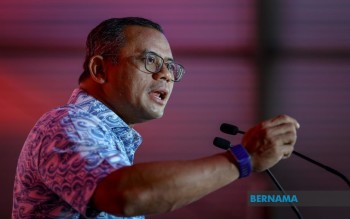
Selangor has emerged as Malaysia's undisputed economic engine, with its gross domestic product reaching RM460.1 billion in 2025 following an expansion of RM28 billion from the previous year. The achievement represents a decisive reaffirmation of the state's dominance, with Menteri Besar Datuk Seri Amirudin Shari noting that the expansion nearly doubled the economic growth recorded by any other state in the federation. This performance, unveiled through data released by the Department of Statistics Malaysia, positions Selangor as the nation's primary economic contributor and demonstrates the effectiveness of strategic state-level policy implementation in driving sustained development.
The state's expanded economy now represents 26.5 percent of Malaysia's total gross domestic product, an increase from 26.2 percent recorded previously. To contextualise this dominance: Selangor's economy is 1.7 times larger than that of Kuala Lumpur, whose GDP climbed to RM265.1 billion with an increase of RM13.2 billion, and 2.7 times the size of Johor's economy. For Southeast Asian observers, this concentration of economic output in a single Malaysian state underscores the region's broader pattern of economic clustering around major urban and industrial hubs, a phenomenon that shapes investment patterns and infrastructure development across the region.
The economic expansion outpaced Malaysia's national growth trajectory substantially. While the country's overall economy expanded at 5.2 percent, Selangor achieved a growth rate of 6.3 percent, demonstrating that the state's economy is expanding faster than the national average. This performance exceeded projections made through a collaborative forecast involving Universiti Putra Malaysia and the Selangor Research Institute, which had anticipated growth to approximately RM455.3 billion. The additional RM4.8 billion beyond forecasted levels suggests underlying economic momentum that may reflect stronger-than-expected investment inflows or sectoral performance.
Three primary sectors powered this expansion. The services sector contributed RM15.9 billion in additional economic value, underlining Selangor's transition toward a services-oriented economy. Manufacturing added RM5.3 billion, maintaining the state's position as a critical industrial base, whilst construction contributed RM3.7 billion, reflecting ongoing infrastructure development and property market activity. These sectoral contributions reveal an economy becoming increasingly diversified, reducing dependency on any single industry whilst maintaining traditional manufacturing strengths.
Within Malaysia's broader economic structure, Selangor commands remarkable proportions of key industries. The state accounts for 35.9 percent of all construction activity nationally, a dominance that reflects the concentration of major infrastructure projects and development activity within its boundaries. Manufacturing capacity within Selangor represents 32.8 percent of the national sector, up from previous levels, demonstrating both consolidation and growth in industrial concentration. The services sector, meanwhile, generated 27.1 percent of Malaysia's total services output, establishing Selangor as the hub for finance, logistics, technology, and professional services across the nation.
The achievement represents the culmination of strategic planning initiated through the First Selangor Plan, the state's five-year socioeconomic development blueprint spanning 2021 to 2025. During this period, Selangor's economy expanded by 33.94 percent, an increase exceeding one-third of its baseline. In absolute terms, the state's economy grew by RM116.6 billion, ascending from RM343.5 billion at the plan's commencement to RM460.1 billion at its conclusion. This trajectory illustrates how coordinated state-level policy, when aligned with private sector capability and workforce productivity, can generate substantial and sustained economic transformation.
For Malaysian policymakers and regional observers, this expansion carries implications extending beyond simple economic statistics. The concentration of economic growth within Selangor raises questions about regional equity and the balance between development clustering and inclusive growth across Malaysia's thirteen states. Whilst Selangor's success generates national revenues and employment opportunities, the disparity in growth rates between leading and peripheral states may contribute to internal migration pressures and uneven development patterns that Southeast Asian nations frequently confront. This dynamic becomes increasingly relevant as ASEAN members pursue strategies for more spatially distributed economic development.
Menteri Besar Amirudin acknowledged the contributions of state civil service personnel, industry participants, and the broader Selangor population to this economic achievement. However, he pointedly cautioned against complacency, establishing an ambitious subsequent target: positioning Selangor as Malaysia's first state to achieve a RM500 billion economy. This aspiration, requiring an additional RM39.9 billion in economic output, would necessitate continued expansion at rates matching or exceeding the 6.3 percent achieved in 2025. The target implicitly recognises that economic growth requires sustained effort rather than one-time accomplishments.
Invest Selangor, the state's investment promotion agency, characterised the performance as representing significant momentum progression from RM406.1 billion recorded in 2023. The state thereby achieved the distinction of surpassing the RM400 billion threshold for two consecutive years, a milestone reflecting not merely numerical expansion but also stability in growth trajectory. This consecutive-year achievement distinguishes Selangor from potential one-time fluctuations and suggests that underlying economic fundamentals remain robust. The agency reinforced that this performance further substantiates Selangor's role as the nation's largest economic contributor, with its 26.2 percent share of Malaysia's total GDP increasing from 25.9 percent previously.
Governance focus is turning toward ensuring that economic expansion translates into tangible improvements in living standards. Amirudin articulated a commitment to directing economic progress toward enhancing quality of life for Selangor residents, suggesting that policymakers recognise the political imperative of distributing economic gains across the population. This emphasis addresses a tension within rapid-growth economies: substantial GDP expansion can coincide with uneven income distribution, housing affordability challenges, and service capacity constraints if growth outpaces supportive infrastructure and social provision. The administration's stated prioritisation of living standards improvements suggests awareness of this dynamic.
The cooperation framework extending across public and private sectors represents an essential component of Selangor's continued trajectory. Economic growth of the magnitude achieved depends on coordinated action between government entities establishing regulatory frameworks and infrastructure, private enterprises generating production and employment, and the workforce providing productivity and innovation. The call for elevated productivity from both sectors acknowledges that achieving the RM500 billion target will require continuous efficiency improvements and innovation rather than merely incremental expansion of existing capacity. For regional economies observing Selangor's development model, the integration of strategic planning, sectoral diversification, and sustained public-private collaboration offers insights applicable to their own development aspirations.

