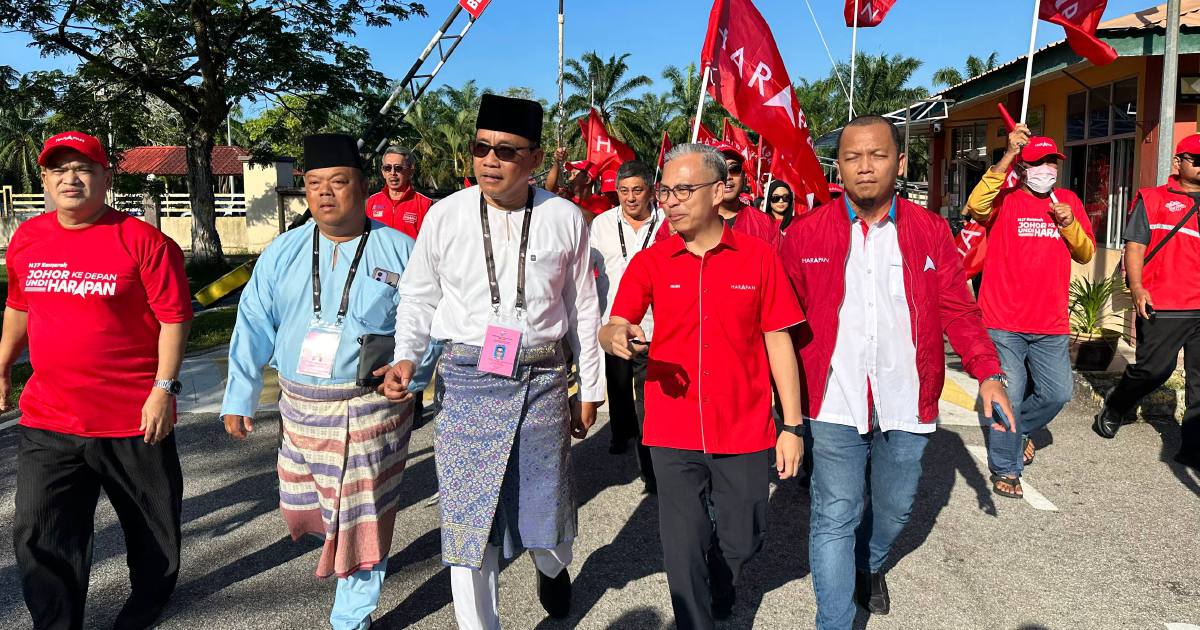
The Semerah state seat in Johor is shaping up as a two-way battleground between Barisan Nasional and Pakatan Harapan, based on preliminary indications from nomination proceedings held at Dewan Mahkota, Maktab Rendah Sains Mara in Batu Pahat. The nomination day saw energetic mobilisation from both rival coalitions, with supporters of the opposition alliance filling the venue with calls for "Reformasi" alongside religious recitations, underlining the intensity of competition in what appears to be a rematch of previous electoral contests in this constituency.
Semerah, located within the Batu Pahat parliamentary district, has emerged as a closely watched battleground in Johor's state-level politics. The apparent two-candidate race reflects broader patterns seen across several constituencies in Malaysia's most populous state by registered voters, where the traditional dominant coalition and the reformist opposition have engaged in increasingly competitive electoral contests. The constituency's demographics and voting patterns suggest it remains genuinely competitive, neither firmly in either camp's pocket.
The presence of organised supporter contingents from both camps at the nomination venue signals serious resource allocation and campaign intensity. Barisan Nasional's participation reflects the coalition's determination to maintain its historical stronghold in Johor, a state where it has governed continuously since independence except for a brief period following the 2018 general election. For Pakatan Harapan, contesting Semerah represents part of a broader effort to consolidate electoral support in Johor ahead of the state election, building on gains achieved during previous national contests.
The religious dimension evident in supporters' conduct at the nomination ceremony—with selawat being recited—illustrates how contemporary Malaysian electoral contests frequently interweave religious and political messaging. This reflects deeper voter concerns about governance, Islamic affairs administration, and moral leadership that candidates across both coalitions attempt to address. Semerah's electorate, like much of Johor, contains significant numbers of Malay-Muslim voters for whom these considerations carry substantial weight in voting decisions.
For observers tracking Johor's political evolution, the Semerah contest provides insight into whether recent trends favouring greater electoral competition will continue. The state has undergone notable shifts in recent years, with Pakatan Harapan making inroads that surprised many analysts accustomed to Barisan Nasional's near-monopoly. However, Barisan's recovery in certain constituencies during subsequent elections suggests the state's political landscape remains volatile and unpredictable, driven by local issues, candidate quality, and voter sentiment about national political developments.
The nomination process itself represents a crucial juncture where the field of candidates becomes formally determined. While early indications point toward a straight two-way contest in Semerah, the nomination period can occasionally produce surprises, with candidates withdrawing or additional aspirants submitting papers. The nomination day atmosphere provides journalists and political analysts with important signals about organisational strength, supporter enthusiasm, and the resources each camp intends to deploy.
Candidate selection proves particularly significant in constituencies like Semerah, where electoral margins often prove narrow. The choice of nominee by both Barisan Nasional and Pakatan Harapan reflects internal party dynamics, factional considerations, and strategic assessments about what candidate profile maximises electoral appeal. Local track records, community standing, and ability to articulate constituent concerns significantly influence voter behaviour in state elections, where issues often centre on bread-and-butter matters like infrastructure, education facilities, and local development rather than national policy questions.
Johor's state election campaign season typically generates substantial media attention and campaign activity across the state. Semerah's profile as a genuinely competitive seat means both coalitions will likely channel campaign resources here, deploying prominent leaders and coordinating ground-level volunteer networks. The constituency thus becomes a microcosm of larger coalition strategies, with national party leadership often visiting to address rallies and provide support to their chosen candidates.
Voters in Semerah will assess candidates and parties against the backdrop of state governance performance, local development outcomes, and their perception of which coalition better represents their interests. Johor's economy, employment opportunities, education quality, and religious administration constitute primary voter concerns. The rematch scenario between established rivals suggests both camps have retained organisational capacity and supporter loyalty, even as individual voters make decisions based on evolving circumstances and fresh evaluations of party performance.
The nomination day proceedings thus mark the formal commencement of what observers expect will be a keenly contested campaign. As Johor moves through its electoral cycle, Semerah's progression from nomination to polling day will merit close monitoring, particularly regarding whether turnout patterns and candidate campaigning intensity match the enthusiasm evident during nomination proceedings. The constituency's outcome will contribute to the broader picture of whether Barisan Nasional can consolidate control of Johor or whether Pakatan Harapan can extend its electoral presence in the state.

