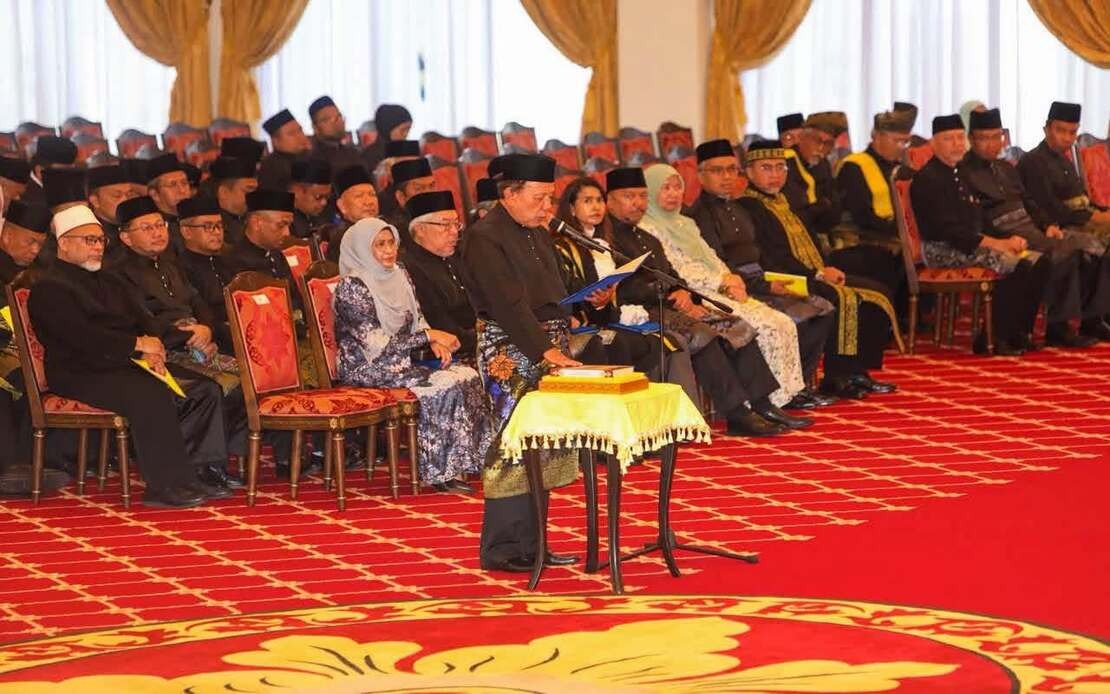
Datuk Ismail Lasim has assumed the role of Negeri Sembilan Menteri Besar following his ceremonial swearing-in before the Yang Dipertuan Besar of Negeri Sembilan, Tuanku Muhriz Tuanku Munawir, at the Istana Besar Seri Menanti. The 67-year-old legislator representing Juasseh has drawn congratulatory messages from senior government figures, signalling unified support for his leadership at a critical juncture for the state administration.
Deputy Prime Minister Datuk Seri Dr Ahmad Zahid Hamidi, who also serves as Rural and Regional Development Minister, took to social media to express his confidence in Ismail's appointment. In his message, Zahid acknowledged the weight of responsibility that comes with leading a state, framing the position as demanding both dedication and vision. The Deputy Prime Minister's public endorsement carries particular significance given his portfolio spanning rural development—an area central to Negeri Sembilan's future growth strategy. His remarks emphasised collaborative efforts between the state and federal governments to advance collective prosperity, reflecting the interconnected nature of contemporary Malaysian governance across different administrative levels.
Defence Minister Datuk Seri Mohamed Khaled Nordin similarly extended his backing, characterising the public's confidence in Ismail as a mandate to sustain development momentum. Mohamed Khaled's message stressed continuity, suggesting that Ismail's tenure should build upon existing foundations while driving fresh initiatives. The Defence Minister's particular focus on stability and shared prosperity indicates awareness of economic and social challenges facing the state. His invocation of religious blessing alongside policy expectations demonstrates how Malaysian leaders typically frame governance through dual lenses—practical administration and spiritual commitment.
Plantation and Commodities Minister Datuk Seri Dr Noraini Ahmad also contributed to the chorus of official recognition, describing Ismail's appointment as marking an inflection point for Negeri Sembilan. Her statement emphasised the transformative potential of new leadership while grounding expectations in pragmatic service delivery. As a cabinet member overseeing sectors with direct economic impact, Noraini's endorsement suggests alignment across portfolios supporting Ismail's agenda. Her invocation of divine guidance alongside ministerial blessing reflects conventional Malaysian political discourse that weaves together faith and governance.
Ismail brings substantial administrative experience to his new position, having accumulated nearly three decades in Negeri Sembilan politics. His electoral journey commenced in 1999 when he first won a state assembly seat, providing him with grassroots legitimacy accumulated over multiple election cycles. This longevity in electoral politics distinguishes him from leaders parachuted into positions without deep local experience. For Malaysian voters and stakeholders, such tenure typically signals familiarity with community needs and established networks capable of delivering services.
His prior service on the state executive council, which lasted for three consecutive terms until 2018, provided Ismail with hands-on administrative experience. During this period, he managed the education portfolio, assuming responsibility for formulating and implementing policies affecting human capital development across Negeri Sembilan. Education-focused background matters significantly for state leadership, as it reflects exposure to long-term strategic thinking and multi-stakeholder management. Schools, universities, and training institutions require coordinated planning across budgets, personnel, and communities—skills directly transferable to broader state governance.
The appointment carries implications for Negeri Sembilan's development trajectory over the coming years. The state has historically occupied a middle position within Malaysia's federal hierarchy—neither commanding the economic scale of Selangor or Kuala Lumpur nor bearing the infrastructure challenges of more remote states. This positioning allows room for differentiated development strategies emphasising quality-of-life improvements and strategic economic positioning. Ismail's education background suggests potential emphasis on skills development and knowledge-based economic diversification.
For the broader Malaysian political landscape, the succession demonstrates continuity within established party structures despite periodic leadership transitions. The unified backing from multiple cabinet portfolios suggests either consensual internal processes or coordinated messaging around state leadership changes. In a federation where state governments increasingly exercise considerable autonomy over education, land, and licensing matters, smooth leadership transitions help maintain policy consistency and investor confidence. The ceremonial nature of the swearing-in, conducted before Tuanku Muhriz, reinforces constitutional conventions governing state governance.
The congratulatory messages from federal ministers also reflect standard contemporary political communication, where social media platforms enable rapid, public declarations of unity. Such posts serve multiple audiences simultaneously—reassuring state stakeholders while signalling party cohesion to the broader electorate. For investors and business communities monitoring political stability, ministerial-level endorsements carry weight suggesting regime stability and predictable governance.
Ismail's appointment occurs within Malaysia's broader context of evolving federalism, where state administrations navigate relationships with federal authorities while managing constituent expectations. His experience working within this framework across multiple electoral cycles positions him to understand the intricate balance required to secure federal resources while maintaining state autonomy. The education portfolio experience particularly matters here, as education policy involves coordination between federal and state authorities through complex statutory arrangements.
The coming months will test whether the goodwill expressed in these initial congratulatory messages translates into substantive support for Ismail's policy initiatives. State-level challenges—ranging from economic diversification to infrastructure maintenance—require federal partnership, particularly regarding funding and regulatory coordination. Ismail's task involves not merely inheriting his predecessor's agenda but establishing his own leadership identity while navigating relationships with cabinet colleagues competing for resources and policy priorities.
Negeri Sembilan's positioning between more economically dominant states and more rural regions creates distinctive opportunities for demonstrating governance quality. Success in Ismail's tenure could provide a model for balanced development approaches elsewhere in Malaysia, while difficulties would expose vulnerabilities in state-level administration. The ministers' explicit expressions of confidence suggest expectations for visible progress on development metrics—employment generation, infrastructure improvement, and social service delivery—by which his leadership will be judged.

