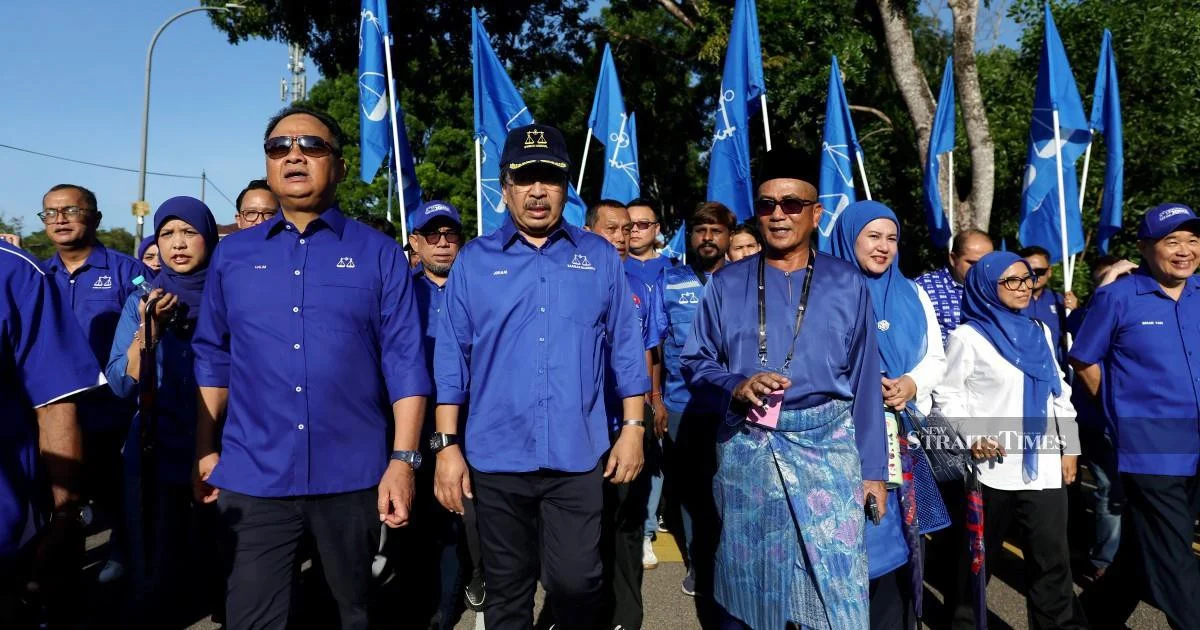
The Johor state election campaign intensified as Umno's leadership hierarchy demonstrated its commitment to defending key constituencies. Datuk Seri Johari Abdul Ghani, serving as vice-president of the party that anchors Barisan Nasional, travelled to Johor Baru to mobilise grassroots support for the coalition's nominee in the Tiram seat, a visible signal of the alliance's determination to consolidate its position in the crucial southern state.
Johari's presence at the Taman Pelangi Indah community hall underscored Barisan Nasional's strategy of deploying senior national figures to reinforce local campaigns during the run-up to the Johor poll. By dispatching a high-ranking party official to canvas for the Tiram candidate, Umno aimed to communicate both unity within the coalition and the importance it placed on retaining the state's legislative seats. Such high-profile interventions typically signal areas where the ruling alliance perceives competitive pressure or seeks to consolidate existing advantages.
The Tiram constituency holds significance within Johor's political landscape as part of the state assembly's overall composition. Barisan Nasional's electoral dominance in Johor has been a defining feature of Malaysian politics, though the party has faced mounting challenges from opposition coalitions in recent electoral cycles. The decision to station a senior party leader in the constituency reflected calculations about where resources and attention should flow during the campaign season.
Johari's track record within Umno positions him as a weighty endorsement for any candidate receiving his backing. As vice-president, he represents the party's governing structure and carries influence over member mobilisation and resource allocation. His campaign work on behalf of the Tiram nominee projected confidence in that candidate's viability and signalled internal party consensus around the selection of nominees across contested seats.
For Barisan Nasional broadly, maintaining legislative control in Johor carries implications beyond state-level governance. The state's consistent support for the coalition has provided crucial political stability and demonstrated the alliance's continued relevance in retaining support among significant voter blocs. Any erosion of the party's hold on Johor seats would reverberate across Malaysian politics and strengthen the hand of opposition groupings in seeking to challenge federal government policies and parliamentary seats.
The campaign rhythm in Johor reveals how Malaysian political parties calibrate their efforts across constituencies, with national leaders rotating through areas deemed competitive or strategically important. Umno's deployment of senior figures like Johari suggests the party was taking no risks with constituencies it had traditionally controlled. This approach reflected lessons learned from previous election cycles, where complacency in supposedly safe seats had occasionally produced unexpected results.
Background to the Johor election environment included recent shifts in voter sentiment and demographic changes within constituencies. The state had witnessed realignment of political allegiances in certain areas, prompting Barisan Nasional to invest more heavily in ground operations and leadership presence. Johari's campaign visit formed part of this broader effort to reinvigorate campaign machinery and demonstrate party vitality to supporters.
For Malaysian voters, particularly in Johor, the visibility of senior national politicians during state campaigns carried multiple messages. It signalled which parties possessed organisational depth and resources to deploy across the federation, and which candidates could claim backing from party hierarchies capable of delivering on promises related to development funding and government attention. In the Malaysian political system, proximity to high-ranking party figures often translated into perceived leverage for attracting investment and resources to constituencies.
The Barisan Nasional coalition's approach to the Johor election illustrated the alliance's continuing reliance on traditional party structures and hierarchical endorsement mechanisms for mobilising electoral support. As Malaysian politics increasingly fragmented and voter behaviour became less predictable, such visible displays of senior leadership support remained an important campaign tool for anchoring support among established party bases.
Johari's campaign engagement in the Tiram seat represented a microcosm of the wider competitive landscape shaping the Johor election. Umno's investment in high-profile campaigning signalled ongoing determination to retain the state, even as broader Malaysian political currents continued to shift and voter preferences evolved. The presence of national party figures in state contests reflected the interconnected nature of Malaysian electoral politics, where state and federal contests intersected in voter calculations and party strategy.

